Books like The Only Good Indians, from the Rez to a Florida reform school
Six horror novels, two of them by Stephen Graham Jones: four Blackfeet friends who shot into an elk herd, a professor handed her ancestor’s century-old diary, a boy sent to a Florida reform school in 1950, a rare-book dealer in New York who has just become a father, a mother and daughter held at Camp Minidoka in 1944 and a young woman whose boyfriend dies on the reservation where she grew up. Read the first page of each.
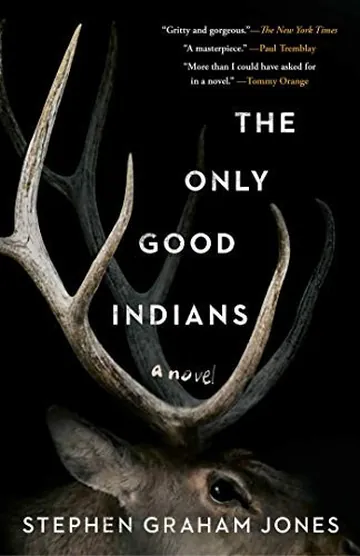
The first page of The Only Good Indians
The headline for Richard Boss Ribs would be INDIAN MAN KILLED IN DISPUTE OUTSIDE BAR.
That’s one way to say it.
Ricky had hired on with a drilling crew over in North Dakota. Because he was the only Indian, he was Chief. Because he was new and probably temporary, he was always the one getting sent down to guide the chain. Each time he came back with all his fingers he would flash thumbs-up all around the platform to show how he was lucky, how none of this was ever going to touch him.
Ricky Boss Ribs.
He’d split from the reservation all at once, when his little brother Cheeto had overdosed in someone’s living room, the television, Ricky was told, tuned to that camera that just looks down on the IGA parking lot all the time. That was the part Ricky couldn’t stop cycling through his head: that’s the channel only the serious-old of the elders watched. It was just a running reminder how shit the reservation was, how boring, how nothing. And his little brother didn’t even watch normal television much, couldn’t sit still for it, would have been reading comic books if anything.
Continue reading
Instead of shuffling around the wake and standing out at the family plot up behind East Glacier, everybody parked on the logging road behind it so they’d have to come right up to the graves to turn their cars around, Ricky ran away to North Dakota. His plan was Minneapolis—he knew some cats there—but then halfway there the oil crew had been hiring, and said they liked Indians because of their built-in cold resistance. It meant they might not slip off in winter.
Ricky, sitting in the orange doghouse trailer for that interview, had nodded yeah, Blackfeet didn’t care about the cold, and no, he wouldn’t leave them shorthanded in the middle of a week. What he didn’t say was that you don’t get cold-resistant because your jackets suck, you just stop complaining about it after a while, because complaining doesn’t make you any warmer. He also didn’t say that, first paycheck, he was gone to Minneapolis, bye.
The foreman interviewing him had been thick and wind-burned and sort of blond, with a beard like a Brillo pad. When he’d reached across the table to shake Ricky’s hand and look him in the eye while he did it, the modern world had fallen away for a long blink and the two of them were standing in a canvas tent, the foreman in a cavalry jacket, and Ricky already had designs on that jacket’s brass buttons, wasn’t thinking at all of the paper on the table between them that he’d just made his mark on.
This had been happening more and more to him the last few months. Ever since hunting went bad last winter and right up through the interview to now, not even stopping for Cheeto dying on that couch.
Cheeto hadn’t been his born name, but he had freckles and orange hair, so it wasn’t a name he could shake, either.
“…a sharp, remarkable horror story out of a crisis of cultural identity…”
Publishers Weekly
Content note: graphic violence
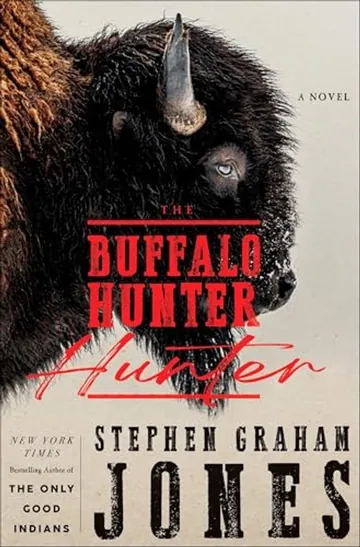
The first page of The Buffalo Hunter Hunter
A dayworker reaches into the wall of the parsonage his crew’s revamping and pulls a piece of history up, the edges of its pages crumbling under the fingers of his glove, and I have to think that, if his supervisor isn’t walking by at just that moment, then this construction grunt stuffs that journal from a century ago into his tool belt to pawn, or trade for beer, and the world never knows about it.
If this works out, though, then I owe that dayworker my career.
In January, I wasn’t exactly denied tenure, but I was told that, instead of continuing with my application, I consider asking for the extension I’m currently on. The issue wasn’t my teaching—I’m the dayworker of Communication and Journalism, covering all the 1000- and 2000-level courses—it was that my publications aren’t up to University of Wyoming “standards for promotion.” See: get a book under contract, Etsy, and then we’ll talk.
Continue reading
And, if you don’t? Then all your schooling, all your dreams of being a professor, they’re smoke, and you’re out in the cold.
Until that random dayworker reached into that wall. Until what he found wrapped in mouse-chewed buckskin wound up in the hands of Special Collections librarian Lydia Ackerman of Montana State up in Bozeman, and she was able to read the scripty hand enough to glean a name from the very front page: “Arthur Beaucarne.”
It’s not far from there to me, that surname not exactly being common.
And, because technically that journal belongs to me—well, my father then me, but my father in his facility down in Denver’s not exactly compos mentis—Lydia Ackerman’s been sending me the digitized pages as they’re processed, the original being a century too delicate to handle. But I don’t think she does it out of kindness. It’s to keep me from showing up unannounced again.
“Etsy?” she asked when I did show up like that in May, breathing hard from the stairs. She was looking from my ID to me, to see which was the typo. It’s Betsy, really, I didn’t say, but a boy with a speech impediment in kindergarten . . . who cares?
“The last name,” I told her, as politely as I could.
So, I was led back to the workbench they conserve delicate literary artifacts on, was made to mask up, glove up, bootie up, and then sit like that through a lecture about the lignin content of old paper and the homemade inks of the late nineteenth century, and how this particular ink had aged into acid that was eating away the brittle old paper it was written on, meaning the individual letters collapse into hopeless crumbles from just the slightest breath—thus the case the journal’s enclosed in. It’s for humidity and temperature, Lydia Ackerman explained like giving a tour to second-graders, but mostly it’s to keep any breeze from punching those black letters from the pages, effectively erasing this amazing find from history.
“It’s also for dust,” Lydia Ackerman leaned forward to say in some sort of confidence, like “dust” was a profanity in this particular room.
“A weirdly satisfying and bloody reckoning with some of America’s most shameful history.”
Kirkus Reviews
Content note: graphic violence
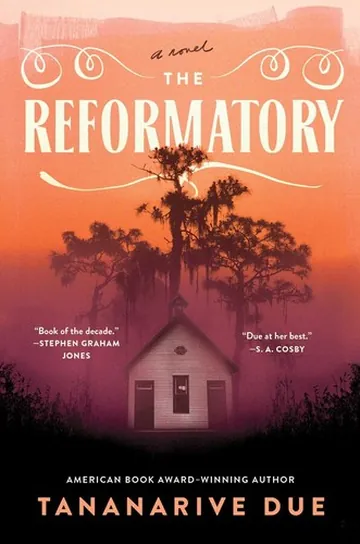
The first page of The Reformatory
Robert Stephens held his breath and counted to three, hoping to see Mama.
Some mornings his nose tickled with a trace of talcum powder or Madam C. J. Walker’s Glossine hair grease, and he felt . . . something hovering over him, watching him sleep. His groggy brain would think . . . Mama? If he gasped or sat up too quickly, or even wiped the sleep from his eyes, it was gone like a dream. But sometimes, when the June daylight charged early through the thin curtain and broke the darkness, movement glided across the red glow of his closed eyelids like someone walking past his bed. He felt no gentle kisses or fingertips brushing his forehead. No whispers of assurances and motherly love. Nothing like what people said ghosts were supposed to be, much less your dead mama. That morning he was patient, counting the way he’d practiced—one one thousand, two one thousand, three one thousand—and slitted his eyes open.
Continue reading
A woman’s shadow passed outside of the window above him, features appearing in the gaps between the sheets of tinfoil taped across the glass. In a white dress, maybe. Maybe. Moving fast, in a hurry.
“Mama?”
The shadow didn’t stop, or turn around, or step inside the room through the wall to show her face. His hope that she would say something to him died before it was fully awake. That’s how fast she was gone. Always.
Robert jumped from his mattress to peek through a gap in the foil, but of course she wasn’t there. Nothing was visible except the old chicken coop, long empty. And it was an ordinary day again, with Mama in heaven and Papa in Chicago—starting out wrong already. Robert had given up trying to convince his older sister, Gloria, that Mama was visiting him, unless she was just jealous that he still had a piece of her that she didn’t. But it was such a small piece, not even enough to touch or hold.
Since Robert and Gloria lived downwind of the McCormacks’ turpentine camp, the sweet scent of cooking breakfast ham filled the cabin like a shout. Robert’s violent hunger overpowered any happiness he’d won from the quick-moving shadow that could have been Mama’s ghost, but probably wasn’t. That day started the same as the rest: the vaguest shadow and the smell of meat. Robert’s empty heart whimpered and his empty stomach roared.
Later on, when the bad thing would happen and the judge would ask him, “Why’d you do a fool thing like that?”—and in the days to come he would cry himself to sleep in secret with the same question—the answer rested squarely with the frying ham at the turpentine camp. The camp was down the path from the two-room, ninety-year-old oak-and-brick cabin their grandfather built on the patch of land Master Powell had given him to die on when he was no longer useful—and luckily Papa had just fixed the leaky roof before he was chased off to Chicago. The money Papa sent the first week of the month never lasted long enough to keep the pantry stocked, so he and Gloria couldn’t afford regular meat anymore except on Sundays. After church, Gloria might surprise him with a squirrel or rabbit she’d trapped, or she’d chop up a handful of smoked pork from Miss Anne in her greens so he could remember the taste of something other than cornmeal and soup. And the camp was no more than a quick run from their cabin—close enough to smell the food, but as far away as the moon.
“A novel that reminds its readers that racism forges its own lasting, unbearable nightmares.”
Kirkus Reviews
Content note: child abuse, racist violence
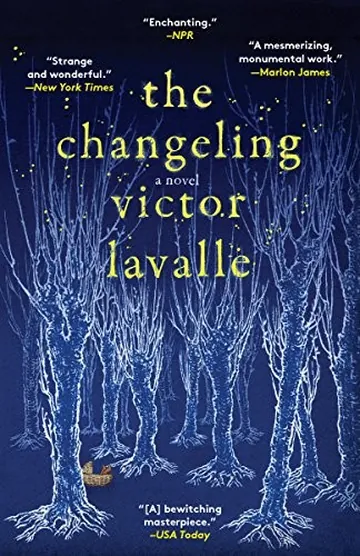
The first page of The Changeling
This fairy tale begins in 1968 during a garbage strike. In February New York City’s sanitation workers refused to pick up trash for eight straight days. One hundred thousand tons of garbage filled the sidewalks, spilled into the streets. Rats ran laps alongside morning joggers. Rubbish fires boiled the air. The five boroughs had been given up for dead. Still, there was some cracked magic in the air because that was when Lillian and Brian met. Each had journeyed from far-flung lands to find one another in Queens. Neither could’ve guessed the wildness that falling in love would unleash.
Lillian Kagwa emigrated from Uganda while Brian West arrived from the only slightly less foreign territory of Syracuse. This daughter of East Africa and son of upstate New York met at a cut-rate modeling agency on Northern Boulevard. Neither was a client.
The week of the garbage strike Lillian got hired as a secretary at the agency, greeting guests at the front desk. A pleasant sight for folks strolling sidewalks saddled with week-old waste. Brian, a parole officer, had been paying occasional visits to the agency’s founder, Pavel Aresenyev, one of his parolees, who’d spent four years in prison for fraud. Brian didn’t believe Pavel had gone legit. But that week Brian became focused less on Mr. Aresenyev and more on the new secretary who greeted him when he arrived. Meeting her felt like finding a rose growing in a landfill. Brian dropped by the modeling agency four times that week.
Continue reading
Despite his immediate attraction, Brian had a habit of mispronouncing Lillian Kagwa’s last name, and Lillian kept mistaking Brian for other white men. Hardly kismet. Still Brian West—short, stocky, and persistent—simply wouldn’t quit. And on the days when he didn’t show up, Lillian, to her own surprise, found she missed him.
Lillian Kagwa had come from Jinja, the second-largest city in Uganda, where she’d lived through the country’s emancipation from Britain and its eventual homegrown rule by Milton Obote. Obote used the army and his secret police, the General Service Unit, to rule the land. They spread wickedness wherever they went.
In 1967 Lillian and three cousins were traveling to the capital, Kampala, when they were pulled over by three men claiming to be agents of the GSU. The four cousins sat quietly as the agents inspected their identification, then demanded the only male cousin—Arthur—come out and open the trunk. Arthur didn’t want to leave Lillian and his sisters and hesitated. In that moment, one agent leaned in and casually shot Arthur in the stomach.
Lillian and her cousins were temporarily deafened by the sound, blinded by the muzzle flash, but Lillian still sensed the agent who’d fired the gun pawing inside the car to pull out the keys. Lillian, at the wheel, shifted the car into drive and shot off before her senses had returned to her, weaving across the two-lane road like a drunk. The agents fired at the car but couldn’t pursue it; their own vehicle had run out of gas. They’d set up the checkpoint to steal a suitable vehicle and would have to wait for another.
Lillian reached Kampala in half an hour, speeding the whole way. Arthur died long before that. An incident like this hardly counted as newsworthy. Uganda, as a whole, was going buckwild, and Lillian Kagwa wanted out. One year later Lillian secured a visa to the United States.
“A smart and knotty merger of horror, fantasy, and realism.”
Kirkus Reviews
Content note: harm to a child

The first page of The Fervor
The island is windy and perpetually damp. Nothing but stone and tree and ocean, everywhere you look. Harrowing. You wouldn’t know it’s right off the coast of Shikotan, a bigger island broken off the northern tip of the country. It’s so completely isolated, it feels like the end of the world.
We arrived only yesterday and already the cold sea air has seeped into my bones and softened the pages on which I now write. You shouldn’t have come, the locals tell me. You shouldn’t have brought your wife and child. It isn’t safe.
Yuriko and Meiko have not complained, though this place could hardly be considered a vacation destination. They know the importance of this sabbatical from the Central Meteorological Observatory to further my study of the jet stream. This is my last chance, my superiors said when they approved this research trip. They are not convinced that the winds I have discovered are of any importance.
Continue reading
Other scientists have ignored my work. The world has not taken notice of my papers. It is not too late to take up some other research topic. “You are still a young man,” my supervisor told me before I was to leave. “You can find something else with which to make your mark.” They want me to stop making my measurements so they can use the money to pay for other work. I know that my discovery will prove to be important one day. My work on the jet stream will be my greatest contribution to mankind, I feel the truth of this in my heart. Shikotan Island is my last chance to prove that there is something to “Wasaburo’s Winds.” We have discovered that Shikotan also houses a colony for undesirables, the mad and the deformed, the people that society does not wish to see. They are sent here to this lonely outpost—to be studied and cared for, in theory. In reality, there is no other place for them to go. This is the place they are sent to die. Because I am a scientist, I was expected to pay a visit to the hospital. But beyond such obligations, I was curious, hoping to understand what afflicts these patients, and how it may connect to the terrible lore of this place. I wanted to see them for myself. All the patients I encountered were distracted or deranged. Many violen. The sounds of their wailing and the rattling of their doors carried on the wind. The man in charge said that everyone seems to get worse very quickly after arriving. He speculated that it had to do with the isolation. Even the attendants themselves tend to descend into a kind of madness here. For that reason, few leave the hospital alive. But this year, he told me, things have gotten inexplicably worse. New arrivals have plunged rapidly into madness. He has no idea what is causing it. He advised me to send my family back to the mainland immediately and to stay as briefly as possible myself. The island, the locals say, is cursed.
“Well gosh darnit, wouldn’t you just.”
Archie Mitchell gripped the gearshift of his 1941 Nash 600 sedan, but he could feel the loose spin of his tires over mud.
The late autumn rains had softened Dairy Creek Road into little more than a dark rivulet woven through the dense ponderosas and junipers blanketing the mountainside. Uncertainty spun in his gut. They should have known better than to take these logging roads this time of year.
“The kids, Arch,” Elsie warned from the passenger seat. Her blond waves, her pink lips. Hazel eyes darted to the rearview mirror.
“Horror readers looking for sharp social commentary should snap this up.”
Publishers Weekly
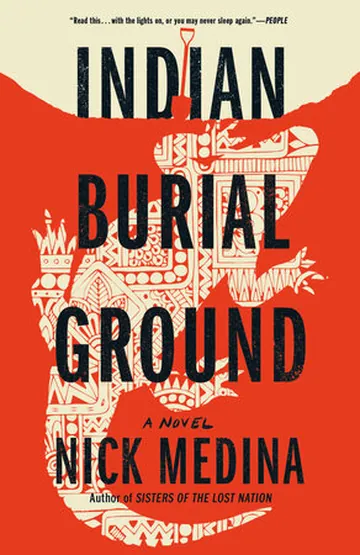
The first page of Indian Burial Ground
She couldn’t feel her feet. Not her knees or her hips either. Running like a Thoroughbred in a race, no one would know that she’d been limping just thirty minutes earlier, from her front door to her Jeep, favoring her left ankle, swollen and plum purple.
Maximus bore the blame for her sprain. If the damn dog hadn’t snatched her phone from her hand, she wouldn’t have chased him yesterday in the yard, and she wouldn’t have rolled her ankle on the knot of wood—probably chewed up by old Maximus himself—hidden in the grass. Pain had made her grimace with each tender step thereafter, but now, despite the force of her wide, rapid strides driving her feet hard against the asphalt, she didn’t feel any pain at all.
Just worry and dread.
He might still be alive, she thought. Please, let him be alive.
It couldn’t have taken her more than a minute to run down the road to the Grand Nacre Casino and Resort, which was glittering in the light of the descending sun. She would have called for help from the Jeep if she could have found her phone. It’d been in the cupholder beside her when she’d set off for work, earlier than usual because the bum ankle would slow her down—thanks again, Maximus—but after she’d swerved the Jeep to the left in a desperate Hail-Mary-hold-tight attempt to avoid the inevitable, the cupholder was empty, the Jeep was on its side, and the man she’d tried not to hit was partially wrapped around the base of the tree trunk that’d prevented him from flying into the woods that bordered the road.
Continue reading
Sounds from the impact remained within her. Taylor Swift singing “Anti-Hero,” silent now. The deafening crash of the Jeep. The report of the man’s ribs meeting metal. The sickening crack of his skull against glass. Its top down, she’d clung to the Jeep’s steering wheel as the vehicle, toppling in slow motion, rolled onto its side like her ankle on that knot of wood.
Call an ambulance, she’d shrieked at Caleb Guidry, ragged nails between his teeth, at the security station just beyond the casino’s sliding glass doors.
What’s wrong, Lena? A piece of nail shot from his mouth. Used to her flirty smiles as she enticed high rollers to her blackjack table through the swing shift hours, he’d never seen her so worked up before.
She’d shouted other things at him in response
. . . Man . . .
. . . Hit him . . .
. . . Up the road . . .
HURRY!
before turning right around and pounding the pavement again.
Please don’t be dead. She wondered if Caleb had summoned the ambulance yet. The resort had medics on-site. It wouldn’t take them long to arrive.
I’m alive, had been her first thought after the toppled Jeep touched down, relief and disbelief swelling within her. Her fingers made quick work of disengaging the seat belt that had kept her head from cracking against the ground, an old commercial surfacing in her mind.
This is your brain on drugs.
Questions
Quick answers
Which other one is by Stephen Graham Jones?
The Buffalo Hunter Hunter. Kirkus calls it an ambitious, century-spanning American gothic.