Haunted house books, from the Overlook Hotel to a Charleston house full of puppets
A winter caretaker’s job at a Colorado hotel, a brother and sister clearing out their parents’ house, a family who knock and say they used to live here, a Vermont house called Baneberry Hall and a girl with something in her closet. Read the first page of each.
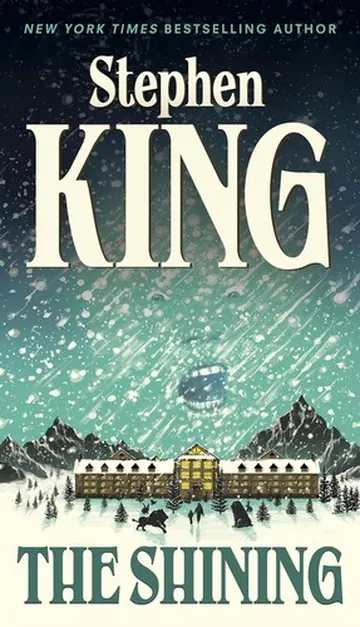
The first page of The Shining
Jack Torrance thought: Officious little prick.
Ullman stood five-five, and when he moved, it was with the prissy speed that seems to be the exclusive domain of all small plump men. The part in his hair was exact, and his dark suit was sober but comforting. I am a man you can bring your problems to, that suit said to the paying customer. To the hired help it spoke more curtly: This had better be good, you. There was a red carnation in the lapel, perhaps so that no one on the street would mistake Stuart Ullman for the local undertaker.
As he listened to Ullman speak, Jack admitted to himself that he probably could not have liked any man on that side of the desk—under the circumstances.
Ullman had asked a question he hadn’t caught. That was bad; Ullman was the type of man who would file such lapses away in a mental Rolodex for later consideration.
Continue reading
“I’m sorry?”
“I asked if your wife fully understood what you would be taking on here. And there’s your son, of course.” He glanced down at the application in front of him. “Daniel. Your wife isn’t a bit intimidated by the idea?”
“Wendy is an extraordinary woman.”
“And your son is also extraordinary?”
Jack smiled, a big wide PR smile. “We like to think so, I suppose. He’s quite self-reliant for a five-year-old.”
No returning smile from Ullman. He slipped Jack’s application back into a file. The file went into a drawer. The desktop was now completely bare except for a blotter, a telephone, a Tensor lamp, and an in/out basket. Both sides of the in/out were empty, too.
Ullman stood up and went to the file cabinet in the corner. “Step around the desk, if you will, Mr. Torrance. We’ll look at the hotel floor plans.”
He brought back five large sheets and set them down on the glossy walnut plane of the desk. Jack stood by his shoulder, very much aware of the scent of Ullman’s cologne. All my men wear English Leather or they wear nothing at all came into his mind for no reason at all, and he had to clamp his tongue between his teeth to keep in a bray of laughter. Beyond the wall, faintly, came the sounds of the Overlook Hotel’s kitchen, gearing down from lunch.
“Top floor,” Ullman said briskly. “The attic. Absolutely nothing up there now but bric-a-brac. The Overlook has changed hands several times since World War II and it seems that each successive manager has put everything they don’t want up in the attic. I want rattraps and poison bait sowed around in it. Some of the third-floor chambermaids say they have heard rustling noises. I don’t believe it, not for a moment, but there mustn’t even be that one-in-a-hundred chance that a single rat inhabits the Overlook Hotel.”
Jack, who suspected that every hotel in the world had a rat or two, held his tongue.
“Of course you wouldn’t allow your son up in the attic under any circumstances.”
“No,” Jack said, and flashed the big PR smile again. Humiliating situation. Did this officious little prick actually think he would allow his son to goof around in a rattrap attic full of junk furniture and God knew what else?
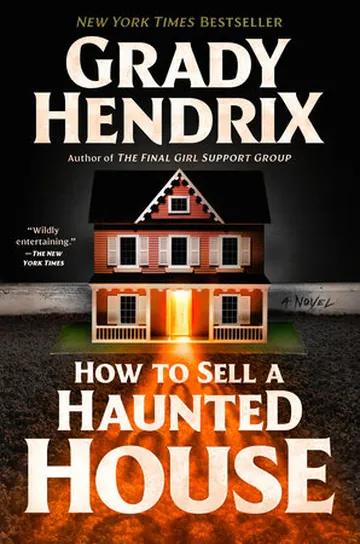
The first page of How to Sell a Haunted House
Louise thought it might not go well, so she told her parents she was pregnant over the phone, from three thousand miles away, in San Francisco. It wasn’t that she had a single doubt about her decision. When those two parallel pink lines had ghosted into view, all her panic dissolved and she heard a clear, certain voice inside her head say:
I’m a mother now.
But even in the twenty-first century it was hard to predict how a pair of Southern parents would react to the news that their thirty-four-year-old unmarried daughter was pregnant. Louise spent all day rehearsing different scripts that would ease them into it, but the minute her mom answered and her dad picked up the kitchen extension, her mind went blank and she blurted out:
“I’m pregnant.”
She braced herself for the barrage of questions. Are you sure? Does Ian know? Are you going to keep it? Have you thought about moving back to Charleston? Are you certain this is the best thing? Do you have any idea how hard this will be alone? How are you going to manage?
Continue reading
In the long silence, she prepared her answers: Yes, not yet, of course, God no, but I’m doing it anyway, yes, I’ll manage.
Over the phone she heard someone inhale through what sounded like a mouthful of water and realized her mom was crying.
“Oh, Louise,” her mother said in a thick voice, and Louise prepared herself for the worst. “I’m so happy. You’re going to be the mother I wasn’t.”
Her dad only had one question: her exact street address.
“I don’t want any confusion with the cab driver when we land.”
“Dad,” Louise said, “you don’t have to come right now.”
“Of course we do,” he said. “You’re our Louise.”
She waited for them on the sidewalk, her heart pounding every time a car turned the corner, until finally a dark blue Nissan slowed to a stop in front of her building and her dad helped her mom out of the back seat, and she couldn’t wait—she threw herself into her mom’s arms like she was a little kid again. They took her crib shopping and stroller shopping and told Louise she was crazy to even consider a cloth diaper service, and discussed feeding techniques and vaccinations and a million decisions Louise would have to make, and bought snot suckers and diapers and onesies, and receiving blankets and changing pads and wipes, and rash cream and burp cloths and rattles and night-lights, and Louise would’ve thought they’d bought way too much if her mother hadn’t said, “You’ve hardly bought anything at all.” She couldn’t even blame them for having a hard time with the whole Ian issue. “Married or not, we have to meet his family,” her mom said. “We’re going to be co-grandparents.”
“…wildly entertaining haunted house tale…”
Publishers Weekly
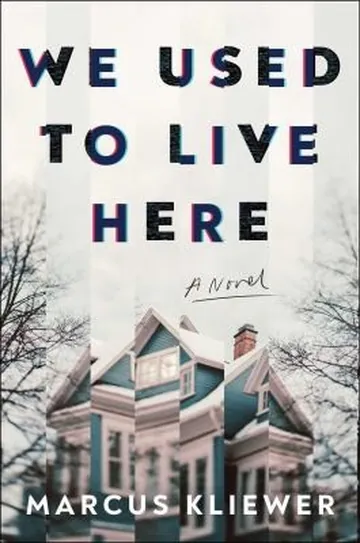
The first page of We Used to Live Here
They’d rung the doorbell unannounced on a chilly Friday night.
The strangers on Eve Palmer’s doorstep seemed harmless enough. Yet Eve, ever cautious, peered through the blinds and debated whether to open the door. It was a family of five, middle-class, wrapped in sturdy winter jackets. The parents were in their early forties, Eve guessed. A tall father with broad shoulders and a square jaw. A petite blond mother with cold blue eyes and a silver cross necklace. Between them, three kids lined up by height—one girl, two boys. All in all, they seemed the kind of brood that would cap a Sunday-morning sermon with brunch at Applebee’s. Eve was more than a little familiar with this crowd.
Concluding they were no serious threat, she opened the door.
“Hello miss.” The father smiled. “Sorry to bother you so late. I just— I grew up in this house . . .”
Continue reading
“Oh, uh, wow,” said Eve.
“We were passing through, wanted to stop by.”
Was he expecting her to invite them inside? That was just about the last thing Eve wanted to do. Her girlfriend, Charlie, would be home any minute now—they had a whole evening planned: eating leftover chicken and playing drunken Scrabble. A family of strangers wandering around didn’t exactly fit that agenda—
“My dad grew up here,” the daughter declared with pride. She was clearly the youngest—no more than seven years old. Clutching a bright green pen and a Blue’s Clues notebook.
“He just told her that,” one of the preteen brothers snorted. This one was tall for his age, with cold blue eyes and platinum-blond hair just like his mother.
The father ignored the chatter and continued. “I know this is completely out of the blue—but I was hoping to give the kids a quick tour? Show them where their dad grew up.”
Eve hesitated. “Inside the house?”
“Just a quick look around,” the father said. “Only if it’s not a problem. We’d need maybe ten, fifteen minutes. Tops.”
Eve stared past him, considering the request.
The surrounding forest echoed with creaks and groans as a slow mountain breeze swept across the yard and brushed over her face. It was a cold night—the type of chill that sunk into your skin, lay dormant for a while, then started scraping against your bones like chalkboard fingernails. Winter was out there, lurking around in the shadows, but the first snow had yet to fall.
It was then that something, or rather the lack of something, caught Eve’s attention. There was no vehicle. Nothing by the old crooked shed at the edge of the woods. Nothing by the alcove where the frosted lawn met the gravel. She looked down the long winding driveway. Nothing. This was more than a little strange, especially considering the cold and the fact that they were in the middle of nowhere. A bizarre image flashed through her mind: the family, hand in hand, wandering out of the darkening trees.
“Where’s your car?” Eve asked.
“A frighteningly good debut.”
Kirkus Reviews
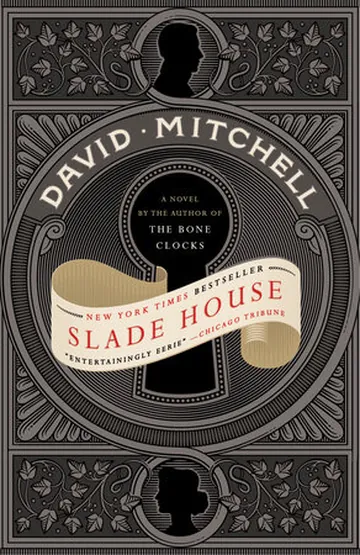
The first page of Slade House
Whatever Mum’s saying’s drowned out by the grimy roar of the bus pulling away, revealing a pub called The Fox and Hounds. The sign shows three beagles cornering a fox. They’re about to pounce and rip it apart. A street sign underneath says WESTWOOD ROAD. Lords and ladies are supposed to be rich, so I was expecting swimming pools and Lamborghinis, but Westwood Road looks pretty normal to me. Normal brick houses, detached or semidetached, with little front gardens and normal cars. The damp sky’s the color of old hankies. Seven magpies fly by. Seven’s good. Mum’s face is inches away from mine, though I’m not sure if that’s an angry face or a worried one. “Nathan? Are you even listening?” Mum’s wearing makeup today. That shade of lipstick’s called Morning Lilac but it smells more like Pritt Stick than lilacs. Mum’s face hasn’t gone away, so I say, “What?”
Continue reading
“It’s ‘Pardon’ or ‘Excuse me.’ Not ‘What?’”
“Okay,” I say, which often does the trick.
Not today. “Did you hear what I told you?”
“‘It’s “Pardon” or “Excuse me.” Not “What?”’”
“Before that! I said, if anyone at Lady Grayer’s asks how we came here, you’re to tell them we arrived by taxi.”
“I thought lying was wrong.”
“There’s lying,” says Mum, fishing out the envelope she wrote the directions on from her handbag, “which is wrong, and there’s creating the right impression, which is necessary. If your father paid what he’s supposed to pay, we really would have arrived by taxi. Now…” Mum squints at her writing. “Slade Alley leads off Westwood Road, about halfway down…” She checks her watch. “Right, it’s ten to three, and we’re due at three. Chop-chop. Don’t dawdle.” Off Mum walks.
I follow, not stepping on any of the cracks. Sometimes I have to guess where the cracks are because the pavement’s mushy with fallen leaves. At one point I had to step out of the way of a man with huge fists jogging by in a black and orange tracksuit. Wolverhampton Wanderers play in black and orange. Shining berries hang from a mountain ash. I’d like to count them, but the clip-clop-clip-clop of Mum’s heels pulls me on. She bought the shoes at John Lewis’s sale with the last of the money the Royal College of Music paid her, even though British Telecom sent a final reminder to pay the telephone bill. She’s wearing her dark blue concert outfit and her hair up with the silver fox-head hairpin. Her dad brought it back from Hong Kong after World War Two. When Mum’s teaching a student and I have to make myself scarce, I sometimes go to Mum’s dressing table and get the fox out. He’s got jade eyes and on some days he smiles, on others he doesn’t. I don’t feel well knitted today, but the Valium should kick in soon. Valium’s great. I took two pills. I’ll have to miss a few next week so Mum won’t notice her supply’s going down. My tweed jacket’s scratchy. Mum got it from Oxfam specially for today, and the bow tie’s from Oxfam, too. Mum volunteers there on Mondays so she can get the best of the stuff people bring in on Saturdays. If Gaz Ingram or anyone in his gang sees me in this bow tie, I’ll find a poo in my locker, guaranteed. Mum says I have to learn how to Blend In more, but there aren’t any classes for Blending In, not even on the town library notice board. There’s a Dungeons & Dragons club advertised there, and I always want to go, but Mum says I can’t because Dungeons & Dragons is playing with dark forces. Through one front window I see horse racing. That’s Grandstand on BBC1. The next three windows have net curtains, but then I see a TV with wrestling on it.
“…delicious ghost story…”
Kirkus Reviews
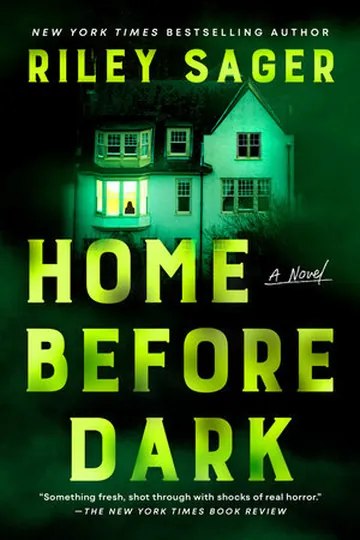
The first page of Home Before Dark
Every house has a story to tell and a secret to share.
The dining room wallpaper might hide pencil marks charting the growth of children who lived there decades before. Under that sun-faded linoleum could be wood once trod by soldiers from the Revolutionary War.
Houses are always changing. Coats of paint. Rows of laminate. Rolls of carpet. They cover up a home’s stories and secrets, rendering them silent until someone comes along to reveal them.
That’s what I do.
My name is Maggie Holt. I’m a designer and, in many ways, a historian. I look for each house’s story and attempt to coax it out. I’m proud of the work I do. I’m good at it.
I listen.
I learn.
I use that knowledge to design an interior that, while fully modern, always speaks to the home’s past.
Every house has a story.
Ours is a ghost story.
It’s also a lie.
Continue reading
And now that yet another person has died within these walls, it’s finally time to tell the truth.
“DADDY, YOU NEED TO CHECK FOR GHOSTS.”
I paused in the doorway of my daughter’s bedroom, startled in that way all parents get when their child says something truly confounding. Since Maggie was five, I suppose I should have been used to it. I wasn’t. Especially with a request so unexpectedly odd.
“I do?”
“Yes,” Maggie said, insistent. “I don’t want them in my room.”
Until that moment, I had no idea my daughter even knew what a ghost was, let alone feared one was occupying her bedroom. More than one, apparently. I noticed her word choice.
Them.
I blamed this new development on the house. We had been in Baneberry Hall almost a week by then—ample time to have noted its eccentricities but not long enough to have gotten used to them. The sudden shifting of the walls. The noises in the night. A ceiling fan that, when it spun at full speed, sounded like the clicking of teeth.
Maggie, as sensitive as any girl her age, was clearly having trouble adjusting to it all. At bedtime the night before, she’d asked me when we’d be returning to our old home, a sad and dim two-bedroom apartment in Burlington. Now there were ghosts to contend with.
“I suppose it can’t hurt,” I said, humoring her. “Where should I look first?”
“Under the bed.”
No surprise there. I had had the same fear when I was Maggie’s age, certain something awful hid in the darkness inches below where I slept. I dropped to my hands and knees and took a quick glance under the bed. All that lurked there was a thin coat of dust and a single pink sock.
“All clear,” I announced. “Where next?”
“The closet,” Maggie said.
I’d assumed as much and was already making my way to the bedroom closet. This section of the house—dubbed “Maggie’s wing” because it contained not just her bedroom but also an adjoining playroom—was located on the second floor, under the eaves of the sloped roof. Because of the room’s slanted ceiling, one half of the closet’s old oak door slanted as well. Opening it made me think of a storybook cottage, which was one of the reasons we decided the space should belong to Maggie.
“Nothing in the closet,” I said, making a show of yanking the chain dangling from the closet’s single lightbulb and peering between hangers draped with clothes. “Anywhere else?”
Maggie aimed a trembling index finger at the massive armoire that stood sentinel a few feet from the closet. It was a relic from the house’s past. An odd one. Over eight feet tall. Its narrow base gradually widened to a formidable midsection before suddenly tapering off again at the top. Crowning it were carvings of cherubs, birds, and strands of ivy that climbed the corners. I thought that, much like the closet door, it gave Maggie’s room a touch of literary magic. It brought to mind voyages to Narnia.
But when I cracked open the armoire’s double doors, Maggie sucked in a breath, steeling herself for whatever terror she thought waited inside.
“Are you sure you want me to open it?” I asked.
“No.” Maggie paused, and then changed her mind. “Yes.”
I pulled the armoire doors wide open, exposing a space occupied by only a few frilly dresses my wife had bought with the hopeful notion that our tomboy daughter might someday wear them.
“It’s empty,” I said. “See?”
From her spot in bed, Maggie peered into the armoire before letting out a relieved sigh.
“…outstanding supernatural thriller…”
Publishers Weekly
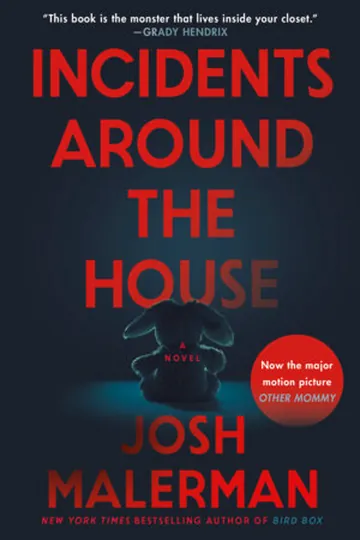
The first page of Incidents Around the House
Bela, Mommy says to me. Eat.
I’m not hungry, I say.
But still. Eat.
I’m not—
I’ve got minutes, only minutes. Then work. Remember? That’s the place I go to make all the little money so we can buy things like food. So, you? Eat the food. Help me out here.
Little money? I ask.
Sometimes it feels that way, hon. Like the money I make is physically smaller than what other people get.
I eat. Mommy always gives me oatmeal. Daddo never gives me breakfast because one time he gave me eggs and sausage and I ate till I threw up and Mommy got mad at him and so now only Mommy gives me breakfast. But Daddo does the dishes.
I love you, Mommy says. Bela?
My mouth is full of oatmeal.
Say I love you too, Mommy says. Don’t make me ask you to say that, ‘kay?
Kay.
I love you, Bela.
Continue reading
Love you too.
What’s on your mind? she asks.
Nuthin’.
But there is something on my mind. I’m looking at the recycle bin.
Bela, Mommy says. Eat.
Where does it go? I ask.
Where does what—
But she looks to where I’m looking.
Are you seriously asking me about recycling right now?
I nod. She looks impatient.
I don’t know where it goes, she says.
Is it a better place?
Better place than what?
Than where we are?
Mommy looks at me the way she does when I say something that surprises her.
I don’t know what that means, Mommy says. The whole point is that it comes back, as . . . something else, I guess.
Something else. I think of carnations.
But she doesn’t need to tell me again. I eat. Then she’s up from the table.
Be good for your daddo, Mommy says.
When will you be home? I ask.
I don’t know yet. Might be late. I don’t know.
She looks frazzled. That’s the word Daddo uses when Mommy looks like this. She’s wearing her brown leather coat. Her black pants. I don’t have to go anywhere because it’s still summer. Daddo works all the time. Mommy’s schedule is all over the place. That’s how she says it.
Bye, Bela, Mommy says.
Bye.
She leaves the kitchen. Daddo is in the den working already, and I don’t hear her say goodbye to him before she leaves out the front door. I go quietly upstairs to my room. I wait for a second by the table with the flowers in the hall. Other Mommy is already standing outside my closet doors. I don’t want her to make the face I think she’s about to make. She gets impatient like Mommy does. I know she wants to talk about carnations. I go into my bedroom. And I wave at her. And I sit on the end of my bed, where I know she likes to talk. She’s been coming out of the closet a lot more lately. She walks over to me now. Sometimes it’s like she floats. She sits on the bed too. Slowly. Next to me. And she asks:
Can I go into your heart?
The first time I told Mommy and Daddo about Other Mommy they laughed. It was good-night time and I told Mommy good night and then I said it again and Mommy said,
Why did you say that twice, Bela? And I said,
I was saying good night to Other Mommy. They both smiled and their eyes got wide and Daddo made a funny sound like from a spooky movie. Then Mommy’s smile went away and she asked,
Who’s Other Mommy, Bela? But I was embarrassed. So I said,
I’m tired! Daddo laughed again and shut the light and they left my room, but I saw Mommy look back once through the crack in the door.
Her eyes looked right at mine. Then she and Daddo went to their own bedroom. Then Other Mommy made the grunting sound she makes when she stands up on the other side of my bed, in the space between my bed and the wall, when she’s been crouched down there on the carpet waiting for them to leave.
“Screwy but scarrry!”
Kirkus Reviews
Questions
Quick answers
Which one is funny as well as scary?
How to Sell a Haunted House. Publishers Weekly calls it a wildly entertaining haunted house tale about a brother and sister clearing out their parents’ house.