Southern noir, from a back-road drag race in Virginia to a contested will in Mississippi
Six crime novels from the American South: a former getaway driver pulled into one more job, two ex-con fathers going after the people who killed their sons, the first Black sheriff of a Virginia county with a bloody past, two sisters in a Georgia farmhouse after their home is firebombed, a Mississippi lawyer defending a handwritten will and a girl in Mississippi who wants to know who killed her brother. Read the first page of each.
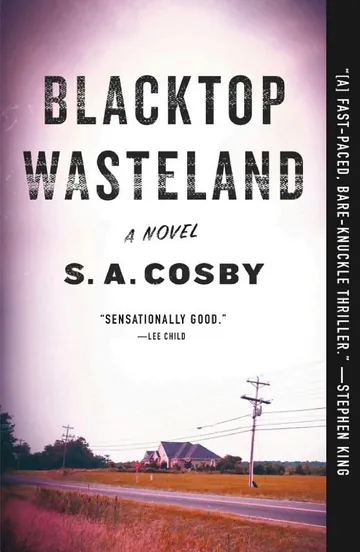
The first page of Blacktop Wasteland
Beauregard thought the night sky looked like a painting.
Laughter filled the air only to be drowned out by a cacophony of revving engines as the moon slid from behind the clouds. The bass from the sound system in a nearby Chevelle was hitting him in his chest so hard, it felt like someone was performing CPR on him. There were about a dozen other late-model cars parked haphazardly in front of the old convenience store. In addition to the Chevelle, there was a Maverick, two Impalas, a few Camaros and five or six more examples of the heyday of American muscle. The air was cool and filled with the scent of gas and oil. The rich, acrid smell of exhaust fumes and burnt rubber. A choir of crickets and whippoorwills tried in vain to be heard. Beauregard closed his eyes and strained his ears. He could hear them but just barely. They were screaming for love. He thought a lot of people spent a large part of their life doing the same thing.
Continue reading
The wind caught the sign hanging above his head from the arm of a pole that extended twenty feet into the air. It creaked as the breeze moved it back and forth.
CARTER SPEEDE MART the sign proclaimed in big black letters set against a white background. The sign was beginning to yellow with age. The letters were worn and chipped. The cheap paint flaking away like dried skin. The second “E” had disappeared from the word “SPEEDEE.” Beauregard wondered what had happened to Carter. He wondered if he had disappeared too.
“Ain’t none of y’all motherfuckers ready for the legendary Olds! Y’all might as well go on back home to your ugly wives and try and get some Tuesday night pussy. For real though, y’all ain’t got nothing for the legendary Olds! She does 60 in second. Five hundred dollars line to line. Huh? Y’all mighty quiet. Come on, the Olds done sent many a boy home with his pockets lighter. I done outrun more cops than the Duke boys in the Olds! You ain’t just beating the Olds, homeboy!” a guy named Warren Crocker crowed. He was strutting around his ’76 Oldsmobile Cutlass. It was a beautiful car. A dark green body with chrome Mag rims and chrome trim that ran across its surface like liquid lightning. Smoked-out glass and LED lights emitted an ethereal bluish glow like some bioluminescent sea creature.
Beauregard leaned against his Duster as Warren pontificated about the invincibility of the Oldsmobile. Beauregard let him talk. Talk didn’t mean anything. Talk didn’t drive the car. Talk was just noise. He had $1,000 in his pocket. It was all the profits from the last two weeks at the garage after most of the bills had been paid. He was $800 short on the rent for the building that housed his business. It had come down to a choice between the rent or glasses for his youngest. Which wasn’t really a choice at all. So, he had reached out to his cousin Kelvin and asked him to find out where the nearest street race was being held. Kelvin still knew some guys who knew some guys who knew where the money races could be found.
That was how they found themselves just outside of Dinwiddie County ten miles from the fairgrounds where legally sanctioned drag races were held. Beauregard closed his eyes again. He listened to Warren’s car idle. Under the sound of the boasting and dick swinging, Beau heard an unmistakable ticking.
Warren had a bad valve in his engine. That left two possibilities. He knew about it but thought it was an acceptable defect that could be overcome by the sheer power of his motor. Maybe he had a nitrous boost on it and didn’t care about one funky valve. Or he didn’t know it was bad and was just talking a lot of shit.
“Cosby is definitely a writer to watch.”
Publishers Weekly
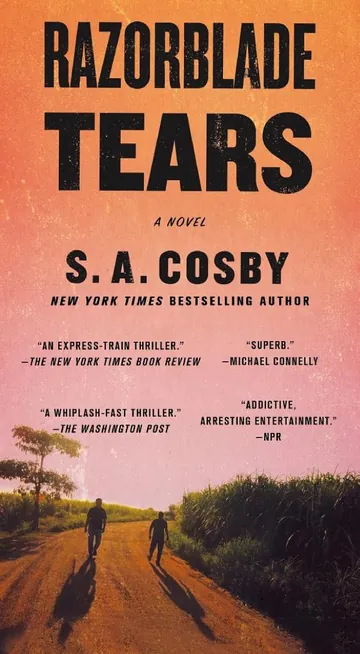
The first page of Razorblade Tears
Ike tried to remember a time when men with badges coming to his door early in the morning brought anything other than heartache and misery, but try as he might, nothing came to mind.
The two men stood side by side on the small concrete landing of his front step with their hands on their belts near their badges and their guns. The morning sun made the badges glimmer like gold nuggets. The two cops were a study in contrast. One was a tall but wiry Asian man. He was all sharp angles and hard edges. The other, a florid-faced white man, was built like a powerlifter with a massive head sitting atop a wide neck. They both wore white dress shirts with clip-on ties. The powerlifter had sweat stains spreading down from his armpits that vaguely resembled maps of England and Ireland respectively.
Ike’s queasy stomach began to do somersaults. He was fifteen years removed from Coldwater State Penitentiary. He had bucked the recidivism statistics ever since he’d walked out of that festering wound. Not so much as a speeding ticket in all those years. Yet here he was with his tongue dry and the back of his throat burning as the two cops stared down at him. It was bad enough being a Black man in the good ol’ US of A and talking to the cops. You always felt like you were on the edge of some imaginary precipice during any interaction with an officer of the law. If you were an ex-con, it felt like the precipice was covered in bacon grease.
Continue reading
“Yes?” Ike said.
“Sir, I’m Detective LaPlata. This is my partner, Detective Robbins. May we come in?”
“What for?” Ike asked. LaPlata sighed. It came out low and long like the bottom note in a blues song. Ike tensed. LaPlata glanced at Robbins. Robbins shrugged. LaPlata’s head dipped down, then he raised it again. Ike had learned to pick up on body language when he was inside. There was no aggression in their stances. At least not any more than what most cops exuded on a normal twelve-hour shift. The way LaPlata’s head had dropped was almost . . . sad.
“Do you have a son named Isiah Randolph?” he said finally.
That was when he knew. He knew it like he knew when a fight was about to break out in the yard. Like he knew when a crackhead was going to try to stab him for a bag back in the day.
“Fast on its feet, by turns lethal and tender…”
Kirkus Reviews
Content note: murder, homophobia
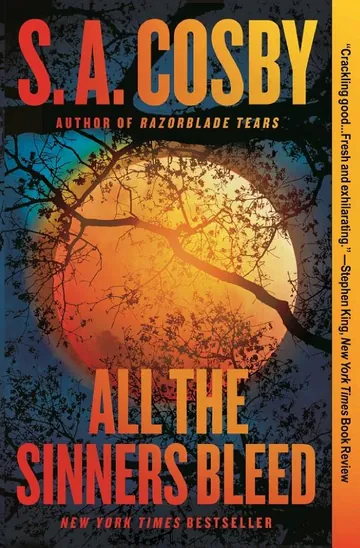
The first page of All the Sinners Bleed
Charon County was founded in bloodshed and darkness.
Literally and figuratively.
Even the name is enveloped in shadows and morbidity. Legend has it the name of the county was supposed to be Charlotte or Charles County, but the town elders waited too late and those names were already taken by the time they decided to incorporate their fledgling encampment. As the story goes, they just moved their finger down the list of names until they settled on Charon. Those men, weathered as whitleather with hands like splitting mauls, bestowed the name on their new town with no regard to its macabre nature. Or perhaps they just liked the name because a river flowed through the county and emptied into the Chesapeake like the River Styx.
Who knows? Who could know the thoughts of those long-dead men?
What is known is that in 1805 in the dead of night a group of white landowners, chafing at the limits of their own manifest destiny, set fire to the last remaining indigenous village on the teardrop-shaped peninsula that would become Charon County.
Continue reading
Those who escaped the flames were brought down by muskets with no regard to age, gender, or infirmity. That was the first of many tragedies in the history of Charon. The cannibalism of the winter of 1853. The malaria outbreak of 1901. The United Daughters of the Confederacy picnic poisoning of 1935. The Danforth family murder-suicide of 1957. The tent revival baptismal drownings of 1968, and on and on. The soil of Charon County, like most towns and counties in the South, was sown with generations of tears. They were places where violence and mayhem were celebrated as the pillars of a pioneering spirit every Founders’ Day in the county square.
Blood and tears. Violence and mayhem. Love and hate. These were the rocks upon which the South was built. They were the foundation upon which Charon County stood.
If you had an occasion to ask some of the citizens of Charon, most of them would tell you those things were in the past. That they had been washed away by the river of time that flows ever forward. They might even say those things should be forgotten and left to the ages.
But if you had asked Sheriff Titus Crown, he would have said that anyone who believed that was a fool or a liar. Or both. And if you had an occasion to speak with him after that long October, he would have told you that maybe the foundation of Charon was rotten and fetid and full of corruption, not only corruption of the flesh but of the soul. That maybe the rocks the South was built upon were shifting and splitting like the stone Moses struck with his staff. But instead of water, only blood and ichor would come pouring forth.
He might touch the scars on his face or his chest absentmindedly and lock eyes with you and say in that harsh whisper that was now his speaking voice:
“The South doesn’t change. You can try to hide the past, but it comes back in ways worse than the way it was before. Terrible ways.”
He might sigh and look away and say:
“The South changes ... just the names and the dates and the faces. And sometimes even those don’t change, not really. Sometimes it’s the same day and the same faces waiting for you when you close your eyes.
“Waiting for you in the dark...”
“Another provocative and page-turning entry in the Southern noir genre.”
Kirkus Reviews
Content note: violence against children

The first page of The Good Daughter
Samantha Quinn felt the stinging of a thousand hornets inside her legs as she ran down the long, forlorn driveway toward the farmhouse. The sound of her sneakers slapping bare earth bongoed along with the rapid thumps of her heart. Sweat had turned her ponytail into a thick rope that whipped at her shoulders. The twigs of delicate bones inside her ankles felt ready to snap.
She ran harder, choking down the dry air, sprinting into the pain.
Up ahead, Charlotte stood in their mother’s shadow. They all stood in their mother’s shadow. Gamma Quinn was a towering figure: quick blue eyes, short dark hair, skin as pale as an envelope, and with a sharp tongue just as prone to inflicting tiny, painful cuts in inconvenient places. Even from a distance, Samantha could see the thin line of Gamma’s disapproving lips as she studied the stopwatch in her hand.
The ticking seconds echoed inside Samantha’s head. She pushed herself to run faster. The tendons cording through her legs sent out a high-pitched wail. The hornets moved into her lungs. The plastic baton felt slippery in her hand.
Continue reading
Twenty yards. Fifteen. Ten.
Charlotte locked into position, turning her body away from Samantha, looking straight ahead, then started to run. She blindly stretched her right arm back behind her, waiting for the snap of the baton into the palm of her hand so that she could run the next relay.
This was the blind pass. The handoff took trust and coordination, and just like every single time for the last hour, neither one of them was up to the challenge. Charlotte hesitated, glancing back. Samantha lurched forward. The plastic baton skidded up Charlotte’s wrist, following the red track of broken skin the same as it had twenty times before.
Charlotte screamed. Samantha stumbled. The baton dropped. Gamma let out a loud curse.
“That’s it for me.” Gamma tucked the stopwatch into the bib pocket of her overalls. She stomped toward the house, the soles of her bare feet red from the barren yard.
Charlotte rubbed her wrist. “Asshole.”
“Idiot.” Samantha tried to force air into her shaking lungs.
“You’re not supposed to look back.”
“You’re not supposed to rip open my arm.”
“It’s called a blind pass, not a freak-out pass.”
The kitchen door slammed shut. They both looked up at the hundred-year-old farmhouse, which was a sprawling, higgledy-piggledy monument to the days before licensed architects and building permits. The setting sun did nothing to soften the awkward angles. Not much more than an obligatory slap of white paint had been applied over the years. Tired lace curtains hung in the streaked windows. The front door was bleached a driftwoody gray from over a century of North Georgia sunrises. There was a sag in the roofline, a physical manifestation of the weight that the house had to carry now that the Quinns had moved in.
Two years and a lifetime of discord separated Samantha from her thirteen-year-old little sister, but she knew in this moment at least that they were thinking the same thing: I want to go home.
Home was a red-brick ranch closer to town. Home was their childhood bedrooms that they had decorated with posters and stickers and, in Charlotte’s case, green Magic Marker. Home had a tidy square of grass for a front yard, not a barren, chicken-scratched patch of dirt with a driveway that was seventy-five yards long so that you could see who was coming.
None of them had seen who was coming at the red-brick house.
Only eight days had passed since their lives had been destroyed, but it felt like forever ago. That night, Gamma, Samantha, and Charlotte had walked up to the school for a track meet. Their father was at work because Rusty was always at work.
Later, a neighbor recalled an unfamiliar black car driving slowly up the street, but no one had seen the Molotov cocktail fly through the bay window of the red-brick house. No one had seen the smoke billowing out of the eaves or the flames licking at the roof. By the time an alarm was raised, the red-brick house was a smoldering black pit.
“Whether she’s extending her franchise or creating stand-alones like this, she really does make your hair stand on end.”
Kirkus Reviews
Content note: violence against a family
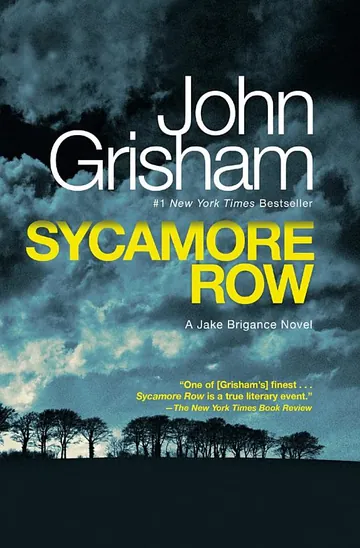
The first page of Sycamore Row
They found Seth Hubbard in the general area where he had promised to be, though not exactly in the condition expected. He was at the end of a rope, six feet off the ground and twisting slightly in the wind. A front was moving through and Seth was soaked when they found him, not that it mattered. Someone would point out that there was no mud on his shoes and no tracks below him, so therefore he was probably hanging and dead when the rain began. Why was that important? Ultimately, it was not.
The logistics of hanging oneself from a tree are not that simple. Evidently, Seth thought of everything. The rope was three-quarter-inch braided natural Manila, of some age and easily strong enough to handle Seth, who weighed 160 pounds a month earlier at the doctor’s office. Later, an employee in one of Seth’s factories would report that he had seen his boss cut the fifty-foot length from a spool a week before using it in such dramatic fashion. One end was tied firmly to a lower branch of the same tree and secured with a slapdash mix of knots and lashings. But, they held. The other end was looped over a higher branch, two feet in girth and exactly twenty-one feet from the ground. From there it fell about nine feet, culminating in a perfect hangman’s knot, one that Seth had undoubtedly worked on for some time. The noose was straight from the textbook with thirteen coils designed to collapse the loop under pressure. A true hangman’s knot snaps the neck, making death quicker and less painful, and apparently Seth had done his homework. Other than what was obvious, there was no sign of a struggle or suffering.
Continue reading
A six-foot stepladder had been kicked aside and was lying benignly nearby. Seth had picked his tree, flung his rope, tied it off, climbed the ladder, adjusted the noose, and, when everything was just right, kicked the ladder and fell. His hands were free and dangling near his pockets.
Had there been an instant of doubt, of second-guessing? When his feet left the safety of the ladder, but with his hands still free, had Seth instinctively grabbed the rope above his head and fought desperately until he surrendered? No one would ever know, but it looked doubtful. Later evidence would reveal that Seth had been a man on a mission.
For the occasion, he had selected his finest suit, a thick wool blend, dark gray and usually reserved for funerals in cooler weather. He owned only three. A proper hanging has the effect of stretching the body, so Seth’s trouser cuffs stopped at his ankles and his jacket stopped at his waist. His black wing tips were polished and spotless. His blue necktie was perfectly knotted. His white shirt, though, was stained with blood that had oozed from under the rope. Within hours, it would be known that Seth Hubbard had attended the 11:00 a.m. worship service at a nearby church. He had spoken to acquaintances, joked with a deacon, placed an offering in the plate, and seemed in reasonably good spirits. Most folks knew Seth was battling lung cancer, though virtually no one knew the doctors had given him a short time to live. Seth was on several prayer lists at the church. However, he carried the stigma of two divorces and would always be tainted as a true Christian.
His suicide would not help matters.
The tree was an ancient sycamore Seth and his family had owned for many years. The land around it was thick with hardwoods, valuable timber Seth had mortgaged repeatedly and parlayed into wealth. His father had acquired the land by dubious means back in the 1930s. Both of Seth’s ex-wives had tried valiantly to take the land in the divorce wars, but he held on. They got virtually everything else.
“Trademark Grisham, with carefully situated echoes of To Kill a Mockingbird.”
Kirkus Reviews
Content note: suicide

The first page of The Little Friend
For the rest of her life, Charlotte Cleve would blame herself for her son’s death because she had decided to have the Mother’s Day dinner at six in the evening instead of noon, after church, which is when the Cleves usually had it. Dissatisfaction had been expressed by the elder Cleves at the new arrangement; and while this mainly had to do with suspicion of innovation, on principle, Charlotte felt that she should have paid attention to the undercurrent of grumbling, that it had been a slight but ominous warning of what was to come; a warning which, though obscure even in hindsight, was perhaps as good as any we can ever hope to receive in this life.
Though the Cleves loved to recount among themselves even the minor events of their family history—repeating word for word, with stylized narrative and rhetorical interruptions, entire deathbed scenes, or marriage proposals that had occurred a hundred years before-the events of this terrible Mother’s Day were never discussed.
Continue reading
They were not discussed even in covert groups of two, brought together by a long car trip or by insomnia in a late-night kitchen; and this was unusual, because these family discussions were how the Cleves made sense of the world. Even the cruelest and most random disasters the death, by fire, of one of Charlotte’s infant cousins; the hunting accident in which Charlotte’s uncle had died while she was still in grammar school-were constantly rehearsed among them, her grandmother’s gentle voice and her mother’s stern one merging harmoniously with her grandfather’s baritone and the babble of her aunts, and certain ornamental bits, improvised by daring soloists, eagerly seized upon and elaborated by the chorus, until finally, by group effort, they arrived together at a single song; a song which was then memorized, and sung by the entire company again and again, which slowly eroded memory and came to take the place of truth: the angry fireman, failing in his efforts to resuscitate the tiny body, transmuted sweetly into a weeping one; the moping bird dog, puzzled for several weeks by her master’s death, recast as the grief-stricken Queenie of family legend, who searched relentlessly for her beloved throughout the house and howled, inconsolable, in her pen all night; who barked in joyous welcome whenever the dear ghost approached in the yard, a ghost that only she could perceive. “Dogs can see things that we can’t,” Charlotte’s aunt Tat always intoned, on cue, at the proper moment in the story. She was something of a mystic and the ghost was her innovation.
But Robin: their dear little Robs. More than ten years later, his death remained an agony; there was no glossing any detail; its horror was not subject to repair or permutation by any of the narrative devices that the Cleves knew. And-since this willful amnesia had kept Robin’s death from being translated into that sweet old family vernacular which smoothed even the bitterest mysteries into comfortable, comprehensible form-the memory of that day’s events had a chaotic, fragmented quality, bright mirror-shards of nightmare which flared at the smell of wisteria, the creaking of a clothes-line, a certain stormy cast of spring light.
Sometimes these vivid flashes of memory seemed like pieces of a bad dream, as if none of it had ever happened. Yet in many ways it seemed the only real thing that had happened in Charlotte’s life. The only narrative she could impose upon this jumble of images was the narrative of ritual, changeless since she was a child: the framework of the family gathering.
“Tartt’s second novel confirms her talent as a superb storyteller…”
Publishers Weekly
Content note: death of a child
Questions
Quick answers
Which ones are by S. A. Cosby?
Blacktop Wasteland, Razorblade Tears and All the Sinners Bleed, all set in Virginia.
Which one is a legal thriller?
Sycamore Row. Kirkus calls it a long-after sequel, of a sort, to A Time to Kill, with the lawyer Jake Brigance back in court.