Books like Tana French, from a drought-stricken Australian town to Edinburgh
Six crime novels: a federal agent home for his best friend’s funeral in a drought-stricken farm town, a police chief on the California coast waiting for an old friend to get out of prison, two Boston private detectives looking for a missing four-year-old, a mother and her children walking home down a Devon lane, a podcaster back at her New Hampshire boarding school and John Rebus in Edinburgh. Read the first page of each.
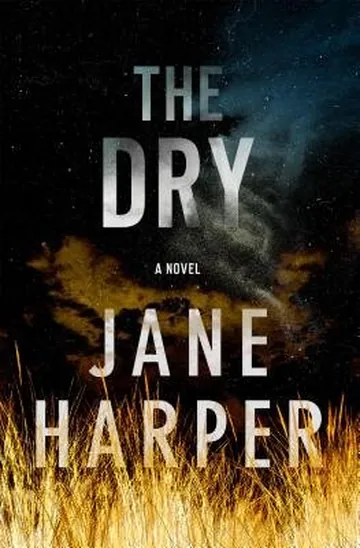
The first page of The Dry
It wasn’t as though the farm hadn’t seen death before, and the blowflies didn’t discriminate. To them there was little difference between a carcass and a corpse.
The drought had left the flies spoiled for choice that summer. They sought out unblinking eyes and sticky wounds as the farmers of Kiewarra leveled their rifles at skinny livestock. No rain meant no feed. And no feed made for difficult decisions as the tiny town shimmered under day after day of burning blue sky.
“It’ll break,” the farmers said as the months ticked over into a second year. They repeated the words out loud to each other like a mantra, and under their breaths to themselves like a prayer.
But the weathermen in Melbourne disagreed. Besuited and sympathetic in air-conditioned studios, they made a passing reference most nights at six. Officially the worst conditions in a century. The weather pattern had a name, the pronunciation of which was never quite settled. El Niño.
Continue reading
At least the blowflies were happy. The finds that day were unusual, though. Smaller and with a smoothness to the flesh. Not that it mattered. They were the same where it counted. The glassy eyes. The wet wounds.
The body in the clearing was the freshest. It took the flies slightly longer to discover the two in the farmhouse, despite the front door swinging open like an invitation. Those that ventured beyond the initial offering in the hallway were rewarded with another, this time in the bedroom. This one was smaller, but less engulfed by competition.
First on the scene, the flies swarmed contentedly in the heat as the blood pooled black over tiles and carpet. Outside, washing hung still on the rotary line, bone dry and stiff from the sun. A child’s scooter lay abandoned on the stepping-stone path. Just one human heart beat within a kilometer radius of the farm.
So nothing reacted when, deep inside the house, the baby started crying.
Even those who didn’t darken the door of the church from one Christmas to the next could tell there would be more mourners than seats. A bottleneck of black and gray was already forming at the entrance as Aaron Falk drove up, trailing a cloud of dust and cracked leaves.
Neighbors, determined but trying not to appear so, jostled each other for the advantage as the scrum trickled through the doors. Across the road the media circled.
Falk parked his sedan next to a pickup truck that had also seen better days and killed the engine. The air conditioner rattled into silence, and the interior began to warm immediately. He allowed himself a moment to scan the crowd, although he didn’t really have time. He’d dragged his heels the whole way from Melbourne, blowing out the five-hour drive to more than six. Satisfied no one looked familiar, he stepped out of the car.
The late-afternoon heat draped itself around him like a blanket. He snatched opened the backseat door to get his jacket, searing his hand in the process. After the briefest hesitation, he grabbed his hat from the seat. Wide-brimmed in stiff brown canvas, it didn’t go with his funeral suit. But with skin the blue hue of skim milk for half the year and a cancerous-looking cluster of freckles the rest, Falk was prepared to risk the fashion faux pas.
Pale from birth with close-cropped, white-blond hair and invisible eyelashes, he’d often felt during his thirty-six years that the Australian sun was trying to tell him something. It was a message easier to ignore in the tall shadows of Melbourne than in Kiewarra, where shade was a fleeting commodity.
Falk glanced once at the road leading back out of town, then at his watch. The funeral, the wake, one night and he was gone. Eighteen hours, he calculated. No more. Keeping that firmly in mind, he loped toward the crowd, one hand on his hat as a sudden hot gust sent hems flying.
“…a suspenseful tale of sound and fury as riveting as it is horrific…”
Publishers Weekly

The first page of We Begin at the End
You see something and you raise your hand.
Doesn’t matter if it’s a cigarette paper or a soda can.
You see something and you raise your hand.
Don’t touch it, neither.
Just raise your hand.
The townspeople readied, their feet in the ford. Movement in line, twenty paces between, a hundred eyes down, but still, they held together, the choreography of the damned.
Behind, the town emptied, the echo of a long, pristine summer had been smothered by the news.
She was Sissy Radley. Seven years old. Blond hair. Known to most, Chief Dubois did not need to hand out photographs.
Walk held the farthest side. Fifteen and fearless, his knees shook with each step.
They marched the woodland like an army, cops led, flashlights swept, through the trees was the ocean, a long way down but the girl could not swim.
Beside Walk was Martha May. They had dated three months, confined to first base, her father was minister at Little Brook Episcopal.
Continue reading
She glanced over. “Still want to be a cop?”
Walk stared at Dubois, head down, last hope on his shoulders.
“I saw Star,” Martha said. “At the front with her father. She was crying.”
Star Radley, the missing girl’s sister. Martha’s best friend. They were a tight group. Only one was absent.
“Where’s Vincent?” she asked.
“He might be on the other side.”
Walk and Vincent were close like brothers. At nine they’d cut palms, pressed them together, and sworn oaths of classless loyalty.
They said nothing more, just watched the ground, past Sunset Road, past the wishing tree, Chuck Taylors parting leaves. Walk focused so hard but still, he almost missed it.
Ten steps from Cabrillo, State Route 1, six hundred miles of California coast. He stopped dead, then looked up and saw the line move on without him.
He crouched.
The shoe was small. Red and white leather. Gold-tone buckle.
A car on the highway slowed as it came, headlights traced the curve till they found him.
And then he saw her.
He took a breath and raised his hand.
Walk stood at the edge of a feverish crowd, some he’d known since his birth, some since theirs.
Vacationers with cameras, sunburn and easy smiles, not knowing the water was stripping more than timber.
Local news set up, a reporter from KCNR. “Can we get a word, Chief Walker?”
He smiled, shoved his hands deep in his pockets, and looked to thread his way through when the people gasped.
Fragmented noise as the roof caved and crashed to the water below.
Piece by piece, the foundation lay crude and skeletal, like the home was no more than a house. It had been the Fairlawn place since Walk could remember, a half acre from the ocean when he was a kid. Taped off a year back, the cliff was eroding, now and then the people from California Wild came and measured and estimated.
The stir of cameras and indecent excitement as slates rained and the front porch clung. Milton, the butcher, dropped to one knee and fired off a money shot as the flagpole leaned and the banner hung in the breeze.
The younger Tallow boy got too close. His mother pulled his collar so hard he tumbled back onto his ass.
Behind, the sun fell with the building, dissecting the water with cuts of orange and purple and shades without name. The reporter got her piece, seeing off a patch of history so slight it barely counted.
Walk glanced around and saw Dickie Darke, who looked on, impassive. He stood like a giant, close to seven feet tall.
“A fierce 13-year-old girl propels this dark, moving thriller.”
Kirkus Reviews
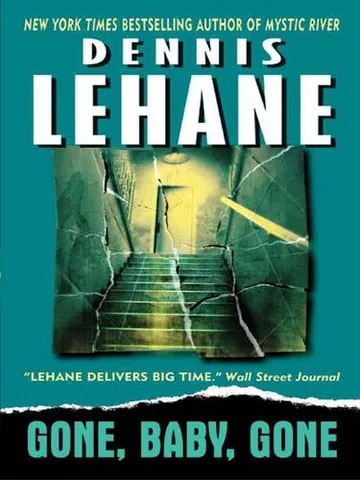
The first page of Gone, Baby, Gone
Long before the sun finds the Gulf, the fishing boats set out into the dark. Shrimpers mostly, an occasional pursuer of marlin or tarpon, the boats are filled almost exclusively with men. The few women who do work the shrimpers keep mostly to themselves. This is the Texas coast, and because so many men have died hard over two centuries of fishing, their offspring and surviving friends feel they’ve earned their prejudices, their hatred of the Vietnamese competitors, their mistrust of any woman who’d do this ugly work, fumble in the dark with thick cable and hooks that slice through knuckles.
Women, one fisherman says in the black predawn, as the captain cuts the trawler engine to a low rumble and the slate sea roils, should be like Rachel. That’s a woman.
That’s a woman, all right, another fisherman says. Goddamn, yes, sir.
Rachel is relatively new to Port Mesa. Showed up back in July with her little boy and a battered Dodge pickup, rented a small house on the north side of town, took the HELP WANTED sign out of the window of Crockett’s Last Stand, a wharf bar perched atop ancient pilings that sag toward the sea.
Continue reading
Took months before anyone even learned her last name: Smith.
Port Mesa attracts a lot of Smiths. A few Does, too. Half the shrimpers are manned by men running from something. Sleeping when most of the world is awake, working while most of it sleeps, drinking the rest of the time in bars few strangers feel comfortable entering, they follow the catch and the seasons, work as far west as Baja, as far south as Key West, and they get paid in cash.
Dalton Voy, owner of Crockett’s Last Stand, pays Rachel Smith in cash. Would pay her in gold ingots if she wanted. Ever since she took her place behind the bar, business has jumped twenty percent. Strange as it is, there are fewer fights, too.
Usually the men step off the boats with the sun baked straight through their flesh and into their blood, and it makes them irritable, quick to end a discussion with the swing of a bottle, the snap of a pool stick. And when beautiful women are around, in Dalton’s experience—well, it just makes the men worse. Quicker to laugh, but quicker to take offense.
Something about Rachel, though, calms the men.
Warns them, too.
It’s in her eyes—a quick something that flashes mean and cold when someone steps over the line, touches her wrist too long, makes a sex joke that isn’t funny. And it’s in her face, the lines etched there, the weathered beauty of it, the sense of a life lived before Port Mesa that knew more dark dawns and hard facts than most of the shrimpers.
“Darkly and extravagantly imagined, full of harrowing action sequences…”
Kirkus Reviews
Content note: harm to a child
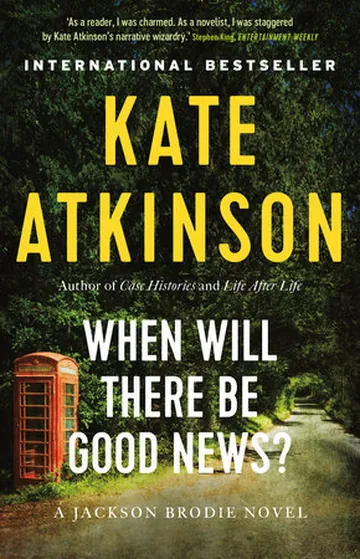
The first page of When Will There Be Good News?
The heat rising up from the tarmac seemed to get trapped between the thick hedges that towered above their heads like battlements.
‘Oppressive,’ their mother said. They felt trapped too. ‘Like the maze at Hampton Court,’ their mother said. ‘Remember?’
‘Yes,’ Jessica said.
‘No,’ Joanna said.
‘You were just a baby,’ their mother said to Joanna. ‘Like Joseph is now.’ Jessica was eight, Joanna was six.
The little road (they always called it ‘the lane’) snaked one way and then another, so that you couldn’t see anything ahead of you. They had to keep the dog on the lead and stay close to the hedges in case a car ‘came out of nowhere’. Jessica was the eldest so she was the one who always got to hold the dog’s lead. She spent a lot of her time training the dog. ‘Heel!’ And ‘Sit!’ And ‘Come!’ Their mother said she wished Jessica was as obedient as the dog. Jessica was always the one who was in charge. Their mother said to Joanna, It’s all right to have a mind of your own, you know. You should stick up for yourself, think for yourself, but Joanna didn’t want to think for herself.
“Like the most riveting BBC mystery…”
Kirkus Reviews
Content note: violence against a family

The first page of I Have Some Questions for You
I first watched the video in 2016. I was in bed on my laptop, with headphones, worried Jerome would wake up and I’d have to explain. Down the hall, my children slept. I could have gone and checked on them, felt their warm cheeks and hot breath. I could have smelled my daughter’s hair—and maybe the scent of damp lavender and a toddler’s scalp would have been enough to send me to sleep.
But a friend I hadn’t seen in twenty years had just sent me the link, and so I clicked.
Lerner and Loewe’s Camelot. I was both stage manager and tech director. One fixed camera, too close to the orchestra, too far from the unmiked adolescent singers, 1995 VHS quality, some member of the AV club behind the lens. And my God, we knew we weren’t great, but we weren’t even as good as we thought we were. Whoever uploaded it two decades later, whoever added the notes below with the exact time markers for when Thalia Keith shows up, had also posted the list of cast and crew. Beth Docherty as a petite Guinevere, Sakina John glowing as Morgan le Fay with a crown of gold spikes atop her cornrows, Mike Stiles beautiful and embarrassed as King Arthur. My name is misspelled, but it’s there, too. The curtain call is the last shot where you clearly see Thalia, her dark curls distinguishing her from the washed-out mass. Then most everyone stays onstage to sing “Happy Birthday” to Mrs. Ross, our director, to pull her up from the front row where she sat every night jotting notes. She’s so young, something I hadn’t registered then. A few kids exit, return in confusion. Orchestra members hop onstage to sing, Mrs.
Continue reading
Ross’s husband springs from the audience with flowers, the crew comes on in black shirts and black jeans. I don’t appear; I assume I stayed up in the box. It would have been like me to sit it out. Including the regrouping and singing, the birthday business lasts fifty-two seconds, during which you never see Thalia clearly. In the comments, someone had zoomed in on a bit of green dress at one side of the frame, posted side-by-side photos of that smear of color and the dress Thalia wore—first covered in gauze as Nimue, the enchantress, the Lady of the Lake, and then ungauzed, with a simple headdress, as Lady Anne. But there were several green dresses. My friend Carlotta’s was one. There’s a chance that, by then, Thalia was gone. Most of the discussion below the video focused on timing. The show was set to begin at 7:00, but we likely started our mercifully abridged version five minutes late. Maybe more. The tape omitted intermission, and there was speculation on how long the intermission of a high school musical would last. Depending on what you believe about these two variables, the show ended sometime between 8:45 and 9:15. I should have known. Once, there would have been a binder with my meticulous notes. But no one ever asked for it. The window the medical examiner allowed for Thalia’s time of death was 8:00 p.m. to midnight, with the beginning of the slot curtailed by the musical—the reason the show’s exact end time had become the subject of infinite fascination online. I came here from YouTube, one commenter had written in 2015, linking to a separate video. Watch this. It PROVES they bungled the case. The timeline makes no sense. Someone else wrote: Wrong guy in prison bc of racist cops in schools pocket.
And below that: Welcome to Tinfoil Hat Central! Focus your energies on an ACTUAL. UNSOLVED CASE. Watching the video twenty-one years after the fact, the memory that dislodged from my brain’s dark corners was looking up lusty in the library dictionary with my friend Fran, who was in the chorus.
“Well plotted, well written, and well designed to make its points.”
Kirkus Reviews
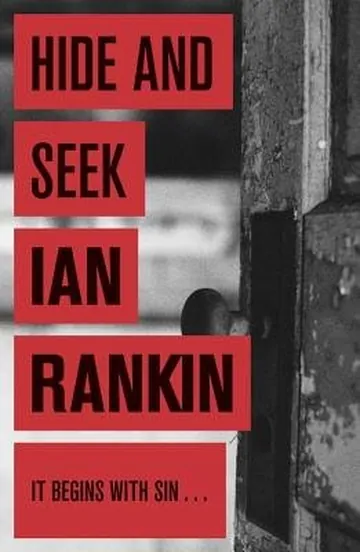
The first page of Hide and Seek
‘Hide!’
He was shrieking now, frantic, his face drained of all colour. She was at the top of the stairs, and he stumbled towards her, grabbing her by the arms, propelling her downstairs with unfocussed force, so that she feared they would both fall. She cried out.
‘Ronnie! Hide from who?’
‘Hide!’ he shrieked again. ‘Hide! They’re coming! They’re coming!’
He had pushed her all the way to the front door now. She’d seen him pretty strung out before, but never this bad. A fix would help him, she knew it would. And she knew, too, that he had the makings upstairs in his bedroom. The sweat trickled from his chilled rat’s-tails of hair. Only two minutes ago, the most important decision in her life had been whether or not to dare a trip to the squat’s seething lavatory. But now….
‘They’re coming,’ he repeated, his voice a whisper now. ‘Hide.’
‘Ronnie,’ she said, ‘you’re scaring me.’
Continue reading
He stared at her, his eyes seeming almost to recognise her. Then he looked away again, into a distance all of his own. The word was a snakelike hiss.
‘Hide.’ And with that he yanked open the door. It was raining outside, and she hesitated. But then fear took her, and she made to cross the threshold. But his hand grabbed at her arm, pulling her back inside. He embraced her, his sweat sea-salty, his body throbbing. His mouth was close to her ear, his breath hot.
‘They’ve murdered me,’ he said. Then with sudden ferocity he pushed her again, and this time she was outside, and the door was slamming shut, leaving him alone in the house. Alone with himself. She stood on the garden path, staring at the door, trying to decide whether to knock or not.
It wouldn’t make any difference. She knew that. So instead she started to cry. Her head slipped forward in a rare show of self-pity and she wept for a full minute, before, breathing hard three times, she turned and walked quickly down the garden path (such as it was). Someone would take her in. Someone would comfort her and take away the fear and dry her clothes.
Someone always did.
John Rebus stared hard at the dish in front of him, oblivious to the conversation around the table, the background music, the flickering candles. He didn’t really care about house prices in Barnton, or the latest delicatessen to be opened in the Grassmarket. He didn’t much want to speak to the other guests – a female lecturer to his right, a male bookseller to his left – about ... well, whatever they’d just been discussing. Yes, it was the perfect dinner party, the conversation as tangy as the starter course, and he was glad Rian had invited him. Of course he was. But the more he stared at the half lobster on his plate, the more an unfocussed despair grew within him. What had he in common with these people? Would they laugh if he told the story of the police alsatian and the severed head? No, they would not. They would smile politely, then bow their heads towards their plates, acknowledging that he was ... well, different from them.
‘Vegetables, John?’
It was Rian’s voice, warning him that he was not ‘taking part’, was not ‘conversing’ or even looking interested. He accepted the large oval dish with a smile, but avoided her eyes.
She was a nice girl. Quite a stunner in an individual sort of way. Bright red hair, cut short and pageboyish. Eyes deep, striking green. Lips thin but promising. Oh yes, he liked her. He wouldn’t have accepted her invitation otherwise.
Questions
Quick answers
Which one is a debut?
The Dry, Jane Harper’s first novel. Kirkus says it will keep readers on edge and awake long past bedtime.
Is any of these by Tana French?
No. These are editor picks in a similar vein, literary crime novels built around a place and a past. Read the first page of each.