Books like The Secret History, where the clever students have something to hide
The Secret History opens with a student dead at the bottom of a ravine and the narrator admitting his part in it. These four keep that mix of study, privilege and guilt: a Shakespeare conservatory, Yale’s secret societies, a Cambridge cult and an Oxford tower of translators.

The first page of The Secret History
The snow in the mountains was melting and Bunny had been dead for several weeks before we came to understand the gravity of our situation. He'd been dead for ten days before they found him, you know. It was one of the biggest manhunts in Vermont history—state troopers, the FBI, even an army helicopter; the college closed, the dye factory in Hampden shut down, people coming from New Hampshire, upstate New York, as far away as Boston.
It is difficult to believe that Henry's modest plan could have worked so well despite these unforeseen events. We hadn't intended to hide the body where it couldn't be found. In fact, we hadn't hidden it at all but had simply left it where it fell in hopes that some luckless passer-by would stumble over it before anyone even noticed he was missing. This was a tale that told itself simply and well: the loose rocks, the body at the bottom of the ravine with a clean break in the neck, and the muddy skidmarks of dug-in heels pointing the way down; a hiking accident, no more, no less, and it might have been left at that, at quiet tears and a small funeral, had it not been for the snow that fell that night; it covered him without a trace, and ten days later, when the thaw finally came, the state troopers and the FBI and the searchers from the town all saw that they had been walking back and forth over his body until the snow above it was packed down like ice.
Continue reading
It is difficult to believe that such an uproar took place over an act for which I was partially responsible, even more difficult to believe I could have walked through it—the cameras, the uniforms, the black crowds sprinkled over Mount Cataract like ants in a sugar bowl—without incurring a blink of suspicion. But walking through it all was one thing; walking away, unfortunately, has proved to be quite another, and though once I thought I had left that ravine forever on an April afternoon long ago, now I am not so sure. Now the searchers have departed, and life has grown quiet around me, I have come to realize that while for years I might have imagined myself to be somewhere else, in reality I have been there all the time: up at the top by the muddy wheel-ruts in the new grass, where the sky is dark over the shivering apple blossoms and the first chill of the snow that will fall that night is already in the air. What are you doing up here? said Bunny, surprised, when he found the four of us waiting for him. Why, looking for new ferns, said Henry. And after we stood whispering in the underbrush—one last look at the body and a last look round, no dropped keys, lost glasses, everybody got everything?—and then started single file through the woods, I took one glance back through the saplings that leapt to close the path behind me. Though I remember the walk back and the first lonely flakes of snow that came drifting through the pines, remember piling gratefully into the car and starting down the road like a family on vacation, with Henry driving clench-jawed through the potholes and the rest of us leaning over the seats and talking like children, though I remember only too well the long terrible night that lay ahead and the long terrible days and nights that followed, I have only to glance over my shoulder for all those years to drop away and I see it behind me again, the ravine, rising all green and black through the saplings, a picture that will never leave me.
“…readers may enjoy the pull of a mysterious, richly detailed story told by a talented writer.”
Publishers Weekly
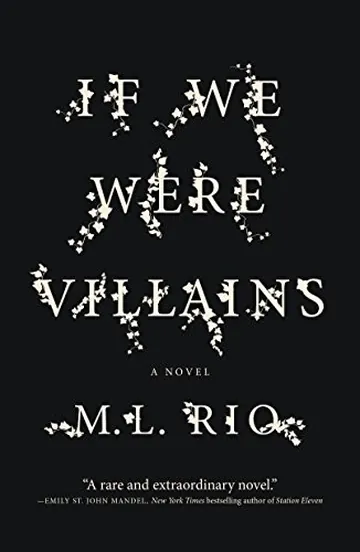
The first page of If We Were Villains
I sit with my wrists cuffed to the table and I think, But that I am forbid / To tell the secrets of my prison-house, / I could a tale unfold whose lightest word / Would harrow up thy soul. The guard stands by the door, watching me, like he’s waiting for something to happen.
Enter Joseph Colborne. He is a graying man now, almost fifty. It’s a surprise, every few weeks, to see how much he’s aged—and he’s aged a little more, every few weeks, for ten years. He sits across from me, folds his hands, and says, “Oliver.”
“Joe.”
“Heard the parole hearing went your way. Congratulations.”
“I’d thank you if I thought you meant it.”
“You know I don’t think you belong in here.”
“That doesn’t mean you think I’m innocent.”
“No.” He sighs, checks his watch—the same one he’s worn since we met—as if I’m boring him.
Continue reading
“So why are you here?” I ask. “Same fortnightly reason?”
His eyebrows make a flat black line. “You would say fucking ‘fortnight.’”
“You can take the boy out of the theatre, or something like that.”
He shakes his head, simultaneously amused and annoyed.
“Well?” I say.
“Well what?”
“The gallows does well. But how does it well? It does well to those that do ill,” I reply, determined to deserve his annoyance. “Why are you here? You should know by now I’m not going to tell you anything.”
“Actually,” he says, “this time I think I might be able to change your mind.”
I sit up straighter in my chair. “How?”
“I’m leaving the force. Sold out, took a job in private security. Got my kids’ education to think about.”
For a moment I simply stare at him. Colborne, I always imagined, would have to be put down like a savage old dog before he’d leave the chief’s office.
“How’s that supposed to persuade me?” I ask.
“Anything you say will be strictly off the record.”
“Then why bother?”
He sighs again and all the lines on his face deepen. “Oliver, I don’t care about doling out punishment, not anymore. Someone served the time, and we rarely get that much satisfaction in our line of work. But I don’t want to hang up my hat and waste the next ten years wondering what really happened ten years ago.”
I say nothing at first. I like the idea but don’t trust it. I glance around at the grim cinder blocks, the tiny black video cameras that peer down from every corner, the guard with his jutting underbite. I close my eyes, inhale deeply, and imagine the freshness of Illinois springtime, what it will be like to step outside after gasping on stale prison air for a third of my life.
When I exhale I open my eyes and Colborne is watching me closely.
“I don’t know,” I say. “I’m getting out of here, one way or the other. I don’t want to risk coming back. Seems safer to let sleeping dogs lie.”
His fingers drum restlessly on the table. “Tell me something,” he says. “Do you ever lie in your cell, staring up at the ceiling, wondering how you wound up in here, and you can’t sleep because you can’t stop thinking about that day?”
“Every night,” I say, without sarcasm. “But here’s the difference, Joe. For you it was just one day, then business as usual. For us it was one day, and every single day that came after.”
“This novel about obsession at the conservatory will thoroughly obsess you.”
Kirkus Reviews
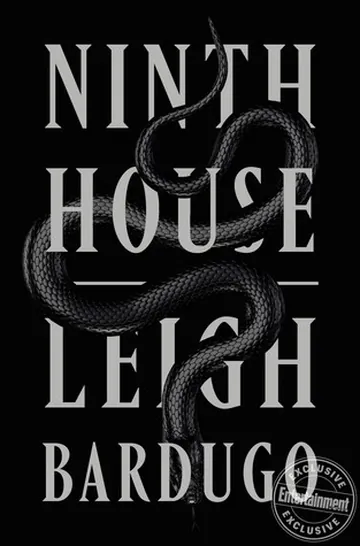
The first page of Ninth House
By the time Alex managed to get the blood out of her good wool coat, it was too warm to wear it. Spring had come on grudgingly; pale blue mornings failed to deepen, turning instead to moist, sullen afternoons, and stubborn frost lined the road in high, dirty meringues. But sometime around mid-March, the slices of lawn between the stone paths of Old Campus began to sweat themselves free of snow, emerging wet, black, and tufty with matted grass, and Alex found herself notched into the window seat in the rooms hidden on the top floor of 268 York, reading Suggested Requirements for Lethe Candidates.
She heard the clock on the mantel tick, the chiming of the bell as customers came and went in the clothing store below. The secret rooms above the shop were affectionately known as the Hutch by Lethe members, and the commercial space beneath them had been, at varying times, a shoe store, a wilderness outfitter, and a twenty-four-hour Wawa mini-mart with its own Taco Bell counter. The Lethe diaries from those years were filled with complaints about the stink of refried beans and grilled onions seeping up through the floor—until 1995, when someone had enchanted the Hutch and the back staircase that led to the alley so that they smelled always of fabric softener and clove.
Continue reading
Alex had discovered the pamphlet of Lethe House guidelines sometime in the blurred weeks after the incident at the mansion on Orange. She had checked her email only once since then on the Hutch's old desktop, seen the long string of messages from Dean Sandow, and logged off. She'd let the battery run down on her phone, ignored her classes, watched the branches sprout leaves at the knuckles like a woman trying on rings. She ate all the food in the pantries and freezer—the fancy cheeses and packs of smoked salmon first, then the cans of beans and syrup-soaked peaches in boxes marked EMERGENCY RATIONS. When they were gone, she ordered takeout aggressively, charging it all to Darlington's still-active account. The trip down and up the stairs was tiring enough that she had to rest before she tore into her lunch or dinner, and sometimes she didn’t bother to eat at all, just fell asleep in the window seat or on the floor beside the plastic bags and foil-wrapped containers. No one came to check on her. There was no one left.
The pamphlet was cheaply printed, bound with staples, a black-and-white picture of Harkness Tower on the cover, We Are the Shepherds printed beneath it. She doubted the Lethe House founders had Johnny Cash in mind when they’d chosen their motto, but every time she saw those words she thought of Christmastime, of lying on the old mattress in Len’s squat in Van Nuys, room spinning, a half-eaten can of cranberry sauce on the floor beside her, and Johnny Cash singing, “We are the shepherds, we walked ’cross the mountains. We left our flocks when the new star appeared.” She thought of Len rolling over, sliding his hand under her shirt, murmuring into her ear, “Those are some shitty shepherds.”
The guidelines for Lethe House candidates were located near the back of the pamphlet and had last been updated in 1962.
High academic achievement with an emphasis on history and chemistry.
Facility with languages and a working knowledge of Latin and Greek.
Good physical health and hygiene. Evidence of a regular fitness regimen encouraged.
Exhibits signs of a steady character with a mind toward discretion.
An interest in the arcane is discouraged, as this is a frequent indicator of an “outsider” disposition.
Should demonstrate no squeamishness toward the realities of the human body.
MORS VINCIT OMNIA.
Alex—whose knowledge of Latin was less than working—looked it up: Death conquers all. But in the margin, someone had scrawled irrumat over vincit, nearly obliterating the original with blue ballpoint pen.
“With an aura of both enchantment and authenticity, Bardugo’s compulsively readable novel leaves a portal ajar for equally dazzling sequels.”
Kirkus Reviews
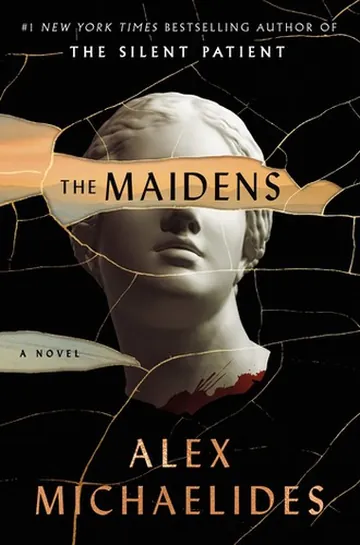
The first page of The Maidens
Edward Fosca was a murderer.
This was a fact. This wasn't something Mariana knew just on an intellectual level, as an idea. Her body knew it. She felt it in her bones, along her blood, and deep within every cell.
Edward Fosca was guilty.
And yet—she couldn't prove it, and might never prove it. This man, this monster, who had killed at least two people, might, in all likelihood, walk free.
He was so smug, so sure of himself. He thinks he's got away with it, she thought. He thought he had won.
But he hadn't. Not yet.
Mariana was determined to outsmart him. She had to.
She would sit up all night and remember everything that had happened. She would sit here, in this small, dark room in Cambridge, and think, and work it out.
She stared at the red bar of the electric heater on the wall, burning, glowing in the dark, willing herself into a kind of trance.
Continue reading
In her mind, she would go back to the very beginning and remember it all. Every single detail.
And she would catch him.
“With its ambience of ritualistic murders, ancient myths, and the venerable college, the story is a gothic thriller despite its contemporary setting.”
Kirkus Reviews
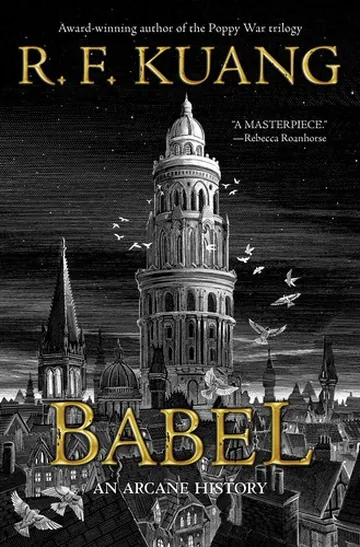
The first page of Babel
By the time Professor Richard Lovell found his way through Canton’s narrow alleys to the faded address in his diary, the boy was the only one in the house left alive.
The air was rank, the floors slippery. A jug of water sat full, untouched by the bed. At first the boy had been too scared of retching to drink; now he was too weak to lift the jug. He was still conscious, though he’d sunk into a drowsy, half-dreaming haze. Soon, he knew, he’d fall into a deep sleep and fail to wake up. That was what had happened to his grandparents a week ago, then his aunts a day after, and then Miss Betty, the Englishwoman, a day after that.
His mother had perished that morning. He lay beside her body, watching as the blues and purples deepened across her skin. The last thing she’d said to him was his name, two syllables mouthed without breath. Her face had then gone slack and uneven. Her tongue lolled out of her mouth. The boy tried to close her filmy eyes, but her lids kept sliding back open.
Continue reading
No one answered when Professor Lovell knocked. No one exclaimed in surprise when he kicked through the front door—locked, because plague thieves were stripping the houses in the neighbourhood bare, and though there was little of value in their home, the boy and his mother had wanted a few hours of peace before the sickness took them too. The boy heard all the commotion from upstairs, but he couldn’t bring himself to care.
By then he only wanted to die.
Professor Lovell made his way up the stairs, crossed the room, and stood over the boy for a long moment. He did not notice, or chose not to notice, the dead woman on the bed. The boy lay still in his shadow, wondering if this tall, pale figure in black had come to reap his soul.
‘How do you feel?’ Professor Lovell asked.
The boy’s breathing was too laboured to answer.
Professor Lovell knelt beside the bed. He drew a slim silver bar out of his front pocket and placed it over the boy’s bare chest. The boy flinched; the metal stung like ice.
‘Triacle,’ Professor Lovell said first in French. Then, in English, ‘Treacle.’
The bar glowed a pale white. There came an eerie sound from nowhere; a ringing, a singing. The boy whined and curled onto his side, his tongue prodding confusedly around his mouth.
‘Bear with it,’ murmured Professor Lovell. ‘Swallow what you taste.’
Seconds trickled by. The boy’s breathing steadied. He opened his eyes. He saw Professor Lovell more clearly now, could make out the slate-grey eyes and curved nose—yīnggōubí, they called it, a hawk’s-beak nose—that could only belong on a foreigner’s face.
‘How do you feel now?’ asked Professor Lovell.
The boy took another deep breath. Then he said, in surprisingly good English, ‘It’s sweet. It tastes so sweet…’
‘Good. That means it worked.’ Professor Lovell slipped the bar back into his pocket. ‘Is there anyone else alive here?’
‘No,’ whispered the boy. ‘Just me.’
‘Is there anything you can’t leave behind?’
The boy was silent for a moment. A fly landed on his mother’s cheek and crawled across her nose. He wanted to brush it off, but he didn’t have the strength to lift his hand.
‘I can’t take a body,’ said Professor Lovell. ‘Not where we’re going.’
The boy stared at his mother for a long moment.
‘My books,’ he said at last. ‘Under the bed.’
Professor Lovell bent beneath the bed and pulled out four thick volumes. Books written in English, spines battered from use, some pages worn so thin that the print was barely still legible. The professor flipped through them, smiling despite himself, and placed them in his bag. Then he slid his arms under the boy’s thin frame and lifted him out of the house.
“Dark academia as it should be.”
Kirkus Reviews
Questions
Quick answers
What is dark academia?
A loose label for novels set in schools and universities where study, privilege and obsession turn into something dark, often a death.