Gothic novels, from the Yorkshire moors to a mansion on the Maine coast
A drawing master at the end of a London summer, a new tenant calling on his landlord at Wuthering Heights, a lonely girl in a Styrian castle, a farm girl summoned to a rich relative’s manor, a caregiver hired for a woman said to have killed her parents in 1929 and a runaway looking for her brother. Read the first page of each.

The first page of The Woman in White
This is the story of what a Woman’s patience can endure, and of what a Man’s resolution can achieve.
If the machinery of the Law could be depended on to fathom every case of suspicion, and to conduct every process of inquiry, with moderate assistance only from the lubricating influences of oil of gold, the events which fill these pages might have claimed their share of the public attention in a Court of Justice.
But the Law is still, in certain inevitable cases, the pre-engaged servant of the long purse; and the story is left to be told, for the first time, in this place. As the Judge might once have heard it, so the Reader shall hear it now. No circumstance of importance, from the beginning to the end of the disclosure, shall be related on hearsay evidence. When the writer of these introductory lines (Walter Hartright, by name) happens to be more closely connected than others with the incidents to be recorded, he will describe them in his own person. When his experience fails, he will retire from the position of narrator; and his task will be continued, from the point at which he has left it off, by other persons who can speak to the circumstances under notice from their own knowledge, just as clearly and positively as he has spoken before them.
Continue reading
Thus, the story here presented will be told by more than one pen, as the story of an offence against the laws is told in Court by more than one witness—with the same object, in both cases, to present the truth always in its most direct and most intelligible aspect; and to trace the course of one complete series of events, by making the persons who have been most closely connected with them, at each successive stage, relate their own experience, word for word.
Let Walter Hartright, teacher of drawing, aged twenty-eight years, be heard first.
THE NARRATIVE OF WALTER HARTRIGHT,
OF CLEMENT’S INN, LONDON
It was the last day of July. The long hot summer was drawing to a close; and we, the weary pilgrims of the London pavement, were beginning to think of the cloud-shadows on the corn-fields, and the autumn breezes on the sea-shore.
For my own poor part, the fading summer left me out of health, out of spirits, and, if the truth must be told, out of money as well. During the past year, I had not managed my professional resources as carefully as usual; and my extravagance now limited me to the prospect of spending the autumn economically between my mother’s cottage at Hampstead, and my own chambers in town.
The evening, I remember, was still and cloudy; the London air was at its heaviest; the distant hum of the street-traffic was at its faintest; the small pulse of the life within me and the great heart of the city around me seemed to be sinking in unison, languidly and more languidly, with the sinking sun.
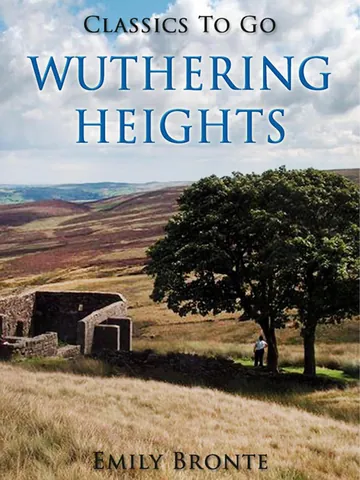
The first page of Wuthering Heights
1801.—I have just returned from a visit to my landlord—the solitary neighbour that I shall be troubled with. This is certainly a beautiful country! In all England, I do not believe that I could have fixed on a situation so completely removed from the stir of society. A perfect misanthropist’s heaven: and Mr. Heathcliff and I are such a suitable pair to divide the desolation between us. A capital fellow! He little imagined how my heart warmed towards him when I beheld his black eyes withdraw so suspiciously under their brows, as I rode up, and when his fingers sheltered themselves, with a jealous resolution, still further in his waistcoat, as I announced my name.
‘Mr. Heathcliff?’ I said.
A nod was the answer.
‘Mr. Lockwood, your new tenant, sir. I do myself the honour of calling as soon as possible after my arrival, to express the hope that I have not inconvenienced you by my perseverance in soliciting the occupation of Thrushcross Grange: I heard yesterday you had had some thoughts—’
Continue reading
‘Thrushcross Grange is my own, sir,’ he interrupted, wincing. ‘I should not allow any one to inconvenience me, if I could hinder it—walk in!’
The ‘walk in’ was uttered with closed teeth, and expressed the sentiment, ‘Go to the Deuce:’ even the gate over which he leant manifested no sympathising movement to the words; and I think that circumstance determined me to accept the invitation: I felt interested in a man who seemed more exaggeratedly reserved than myself.
When he saw my horse’s breast fairly pushing the barrier, he did put out his hand to unchain it, and then sullenly preceded me up the causeway, calling, as we entered the court,—‘Joseph, take Mr. Lockwood’s horse; and bring up some wine.’
‘Here we have the whole establishment of domestics, I suppose,’ was the reflection suggested by this compound order. ‘No wonder the grass grows up between the flags, and cattle are the only hedgecutters.’
Joseph was an elderly, nay, an old man: very old, perhaps, though hale and sinewy. ‘The Lord help us!’ he soliloquised in an undertone of peevish displeasure, while relieving me of my horse: looking, meantime, in my face so sourly that I charitably conjectured he must have need of divine aid to digest his dinner, and his pious ejaculation had no reference to my unexpected advent.
Wuthering Heights is the name of Mr. Heathcliff’s dwelling. ‘Wuthering’ being a significant provincial adjective, descriptive of the atmospheric tumult to which its station is exposed in stormy weather. Pure, bracing ventilation they must have up there at all times, indeed: one may guess the power of the north wind blowing over the edge, by the excessive slant of a few stunted firs at the end of the house; and by a range of gaunt thorns all stretching their limbs one way, as if craving alms of the sun. Happily, the architect had foresight to build it strong: the narrow windows are deeply set in the wall, and the corners defended with large jutting stones.
Before passing the threshold, I paused to admire a quantity of grotesque carving lavished over the front, and especially about the principal door; above which, among a wilderness of crumbling griffins and shameless little boys, I detected the date ‘1500,’ and the name ‘Hareton Earnshaw.’ I would have made a few comments, and requested a short history of the place from the surly owner; but his attitude at the door appeared to demand my speedy entrance, or complete departure, and I had no desire to aggravate his impatience previous to inspecting the penetralium.
One stop brought us into the family sitting-room, without any introductory lobby or passage: they call it here ‘the house’ pre-eminently.
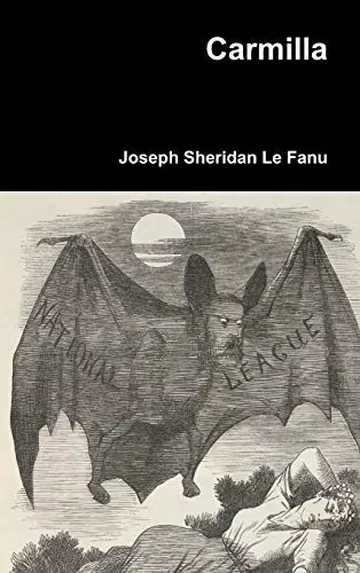
The first page of Carmilla
In Styria, we, though by no means magnificent people, inhabit a castle, or schloss. A small income, in that part of the world, goes a great way. Eight or nine hundred a year does wonders. Scantily enough, ours would have answered among wealthy people at home. My father is English, and I bear an English name, although I never saw England. But here, in this lonely and primitive place, where everything is so marvelously cheap, I really don’t see how ever so much more money would at all materially add to our comforts, or even luxuries.
My father was in the Austrian service, and retired upon a pension and his patrimony, and purchased this feudal residence, and the small estate on which it stands, a bargain. Nothing can be more picturesque or solitary. It stands on a slight eminence in a forest. The road, very old and narrow, passes in front of its drawbridge, never raised in my time, and its moat, stocked with perch and sailed over by many swans, and floating on its surface white fleets of water lilies.
Continue reading
Over all this the schloss shows its many-windowed front; its towers, and its Gothic chapel. The forest opens in an irregular and very picturesque glade before its gate, and at the right a steep Gothic bridge carries the road over a stream that winds in deep shadow through the wood. I have said that this is a very lonely place. Judge whether I say truth. Looking from the hall door towards the road, the forest in which our castle stands extends fifteen miles to the right, and twelve to the left. The nearest inhabited village is about seven of your English miles to the left. The nearest inhabited schloss of any historic associations, is that of old General Spielsdorf, nearly twenty miles away to the right.
I have said “the nearest inhabited village,” because there is, only three miles westward, that is to say in the direction of General Spielsdorf’s schloss, a ruined village, with its quaint little church, now roofless, in the aisle of which are the moldering tombs of the proud family of Karnstein, now extinct, who once owned the equally desolate chateau which, in the thick of the forest, overlooks the silent ruins of the town. Respecting the cause of the desertion of this striking and melancholy spot, there is a legend which I shall relate to you another time.
“…a delicious vampire tale…”
Kirkus Reviews

The first page of Dragonwyck
It was on an afternoon in May of 1844 that the letter came from Dragonwyck.
One of the Mead boys had seen it lying in the Horseneck post office, and had thoughtfully carried it with him three miles up the Stanwich road to deliver it at the Wells farmhouse.
When the letter came, Miranda was, most regrettably, doing not one of the tasks which should have occupied the hour from two to three.
She was not in the springhouse churning butter, she was not weeding the vegetable patch, nor even keeping more than half an absent-minded eye on Charity, the baby, who had kicked off her blanket and was chewing on a blade of sweet meadow grass, delighted with her freedom.
Miranda had hidden behind the stone wall in the quiet little family burying-ground on the north side of the apple orchard as far from the house as possible. It was her favorite retreat. The seven tombstones which marked graves of her father’s family were no more than seven peaceful friends. Even the tiny stone in the corner beneath the giant elm had no tragic significance though it was marked, “Daniel Wells, son of Ephraim and Abigail Wells, who departed this life April 7th, 1836, aged one year,” and covered the body of her baby brother. Miranda had been ten during little Danny’s short life, and he was now nothing but a gently poignant memory.
Continue reading
Miranda was curled up against the wall, her pink calico skirts bunched carelessly above her knees in uncharacteristic abandon. A green measuring worm inched himself unchecked across the smooth bodice of her dress. The May breeze, fragrant with apple-blossoms and clover from the adjacent pasture, blew her loosened hair into her eyes. She pushed the strand back impatiently with one hand while the other clutched her book, as Miranda devoured the fascinating pages of The Beautiful Adulteress.
So compelling were the beautiful adulteress’s adventures, that even when Miranda’s sunbonnet slipped off and hot sunshine fell through the elm trees onto her skin, she did not pause to replace the bonnet. And yet the transparent whiteness of that skin was the envy of her friends and part product of many a tedious treatment with buttermilk and cucumber poultices.
The Beautiful Adulteress had been lent by Phoebe Mead, and it must be finished by nightfall so that Phoebe could return it to Deborah Wilson, who had purloined it from her brother’s saddlebag.
Despite Miranda’s eighteen years and elegant education at Philander Button’s Greenwich Academy, despite avid perusal of this and similar books, she had not the vaguest notion of the horrifying behavior that resulted in one’s becoming an adulteress. But that point was immaterial.
It was the glorious palpitating romance that mattered. The melancholy heroes, the languishing heroines, the clanking ghosts, dismal castles and supernatural lights; all entrancingly punctuated at intervals by a tender, a rapturous — but in any case a guilty — kiss.
Her mother’s first call went unheard. It was not until the cry “Ranny —” changed to a louder and sharper “Miranda-a-a! Where in tunket are you?” that the girl jumped. She shoved the book between two stones in the wall, and called hastily, “Coming, Ma!”
She brushed bits of grass and drifted appleblossom off her dress and apron, straightened the black mesh net which confined her masses of soft curling hair during the work day, hair that in the sunlight shone nearly as golden as the buttercups in the pasture behind her.
Then she picked up Charity.
“Oh, shame, lambkin, you’re wet again,” she said reproachfully.
The baby at once set up an anguished yell; even at a year she resented criticism.
Miranda laughed and kissed the soft neck. “Never mind, pet. Sister isn’t really cross.” But she sighed, rapidly checking the chores which must be done before dusk.
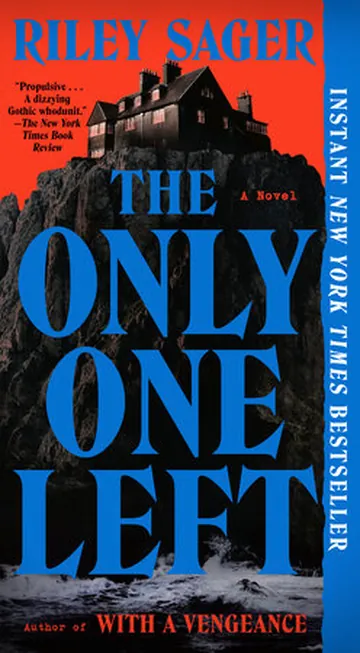
The first page of The Only One Left
We’re at the typewriter again, Lenora in her wheelchair and me standing beside her as I place her left hand atop the keys. A fresh page sits in the carriage, replacing the one from last night. Now faceup on the desk, it serves as a partial transcript of our conversation.
i want to tell you everything
things ive never told anyone else
yes about that night
because i trust you
But I don’t trust Lenora.
Not entirely.
She’s capable of so little yet accused of so much, and I remain torn between wanting to protect her and the urge to suspect her.
But if she wants to tell me what happened, I’m willing to listen.
Even though I suspect most of it will be lies.
Or, worse, the complete, terrifying truth.
The fingers of Lenora’s left hand drum against the keys. She’s eager to begin. I take a deep breath, nod, and help her type the first sentence.
Continue reading
The thing I remember most
The thing I remember most--the thing I still have nightmares about--is when it was all but over.
I remember the roar of the wind as I stepped onto the terrace. It blew off the ocean in howling gusts that scraped over the cliff before slamming directly into me. Rocked onto my heels, I felt like I was being shoved by an invisible, immovable crowd back toward the mansion.
The last place I wanted to be.
With a grunt, I regained my footing and started to make my way across the terrace, which was slick from rainfall. It was pouring, the raindrops so cold that each one felt like a needle prick. Very quickly I found myself snapped out of the daze I’d been in. Suddenly alert, I began to notice things.
My nightgown, stained red.
My hands, warm and sticky with blood.
The knife, still in my grip.
It, too, had been bloody but was now quickly being cleaned by the cold rain.
I kept pushing through the wind that pushed back, gasping at each sharp drop of rain. In front of me was the ocean, whipped into a frenzy by the storm, its waves smashing against the cliff base fifty feet below. Only the squat marble railing running the length of the terrace separated me from the dark chasm of the sea.
When I reached the railing, I made a crazed, strange, strangled sound. Half laugh, half sob.
The life I’d had mere hours ago was now gone forever.
As were my parents.
Yet at that moment, leaning against the terrace railing with the knife in my hand, the rough wind on my face, and the frigid rain pummeling my blood-soaked body, I only felt relief. I knew I would soon be free of everything.
I turned back toward the mansion. Every window in every room was lit. As ablaze as the candles that had graced my tiered birthday cake eight months earlier. It looked pretty lit up like that. Elegant. All that money glistening behind immaculate panes of glass.
But I knew that looks could be deceiving.
And that even prisons could appear lovely if lit the right way.
Inside, my sister screamed. Horrified cries that rose and fell like a siren. The kind of screams you hear when something absolutely terrible has happened.
Which it had.
I looked down at the knife, still clenched in my hand and now clean as a whistle. I knew I could use it again. One last slice. One final stab.
I couldn’t bring myself to do it. Instead, I tossed the knife over the railing and watched it disappear into the crashing waves far below.
“…this gothic riff on the sinister caretaker trope…”
Publishers Weekly

The first page of Her Wicked Roots
Cordelia’s head banged against the side of the carriage and she startled awake, fingers clawing reflexively at the small bag in her lap, pulling it closer. For one terrifying moment, she thought the jolt was the carriage being forced to a halt. That at any second the door would open and rough hands would reach in, drag her from her seat, and force her back to the Barrow and the horrors that would await her there.
But it had only been a lurch as the carriage wheel bounced through a pothole. Cordi heard the driver cursing the roads with language that might have made a fainter heart blush but only made her exhale a shaky laugh.
“Are you all right, dear?”
The only other passenger was an elderly woman with a lapful of yarn and knitting needles poised like tiny spears in her hands that had been clicking and clacking since the driver had helped her settle into her seat. Those needles were finally still as she watched Cordi with concern.
Continue reading
Cordi gave a wan smile, trying to keep her features hidden behind the uneven waves of her hair. “Yes, ma’am,” she said meekly, hating the attention she had drawn. “Just startled.”
The old woman clucked and went back to her knitting. “Bad dreams?”
Are there any other kind?
But the woman didn’t seem to need an answer. The door to conversation had been opened and she was apparently happy to fill the quiet while her thin fingers, the skin wrinkled and sagging with age, returned to her nimble knitting and purling. “I sleep like the dead myself. Suppose I’m getting practice in,” she said with a little chuckle. “Not too long till the grave for me. But I simply cannot sleep without a proper bed. Was never able to. And certainly not on a dusty road, jostling about like a package.”
“Yes, ma’am,” Cordi said again, not wanting to be rude.
When she had first boarded in the city, she had imagined the eyes of the other passengers on her, scrutinizing her face even as she tried to keep it turned casually away. Surely they were memorizing her so they might later tell the constables what they knew. She had been certain at each stop that she would be arrested, and so had waited with bated breath and a pounding heart as each passenger disembarked and their luggage was handed down, pressed into a corner of the carriage in an effort to make herself as small as possible. She did not breathe until the wheels had begun moving again.
In these moments of uncertain limbo as she waited for the lurch of the carriage, Cordi’s hand would sink into her pocket and clutch her beloved talisman. The treasured fox, a gift from her brother carved from linden wood, offered her some small measure of comfort. Her thumb would stroke its smooth belly as a penitent’s fingers might slide over prayer beads.
When she had been forced to clamber down herself at the stops in order to make water or burst, she had shuffled through the people milling around the station. Men stood about in dark hats and coats, reading papers, checking watches, and guffawing at bawdy jokes. Ladies attended small children or tried to revive wilting feathers in their hats, noses turned up at the scent of horses and tobacco. Cordi had done her business and kept her head down, her collar turned up, forcing her gait to be steady as she wove through the crowd, her face a mask of casual annoyance. Just another passenger eager to be on her way. Just another poor, wretched girl among thousands.
“Pell’s eerie full-length debut…”
Publishers Weekly
Questions
Quick answers
Is any of these a retelling?
Her Wicked Roots. Publishers Weekly notes that it adapts Nathaniel Hawthorne’s short story “Rappaccini’s Daughter” into a gothic tale.