The first pages of classic novels, from Austen to Morrison
Most of us know how these six classics begin. Here is the rest of the first page of each, from a rumour about Netherfield Park to a house in Ohio full of a baby’s spite.
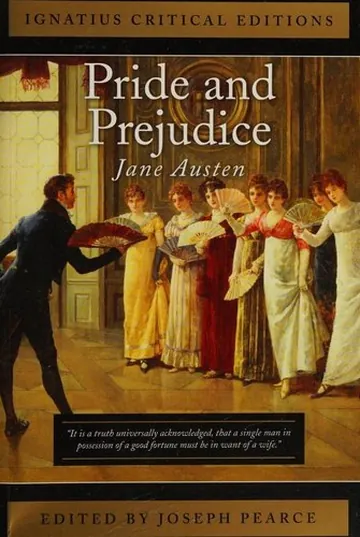
The first page of Pride and Prejudice
It is a truth universally acknowledged, that a single man in possession of a good fortune, must be in want of a wife.
However little known the feelings or views of such a man may be on his first entering a neighbourhood, this truth is so well fixed in the minds of the surrounding families, that he is considered as the rightful property of some one or other of their daughters.
“My dear Mr. Bennet,” said his lady to him one day, “have you heard that Netherfield Park is let at last?”
Mr. Bennet replied that he had not.
“But it is,” returned she; “for Mrs. Long has just been here, and she told me all about it.”
Mr. Bennet made no answer.
“Do not you want to know who has taken it?” cried his wife impatiently.
“You want to tell me, and I have no objection to hearing it.”
Continue reading
This was invitation enough.
“Why, my dear, you must know, Mrs. Long says that Netherfield is taken by a young man of large fortune from the north of England; that he came down on Monday in a chaise and four to see the place, and was so much delighted with it that he agreed with Mr. Morris immediately; that he is to take possession before Michaelmas, and some of his servants are to be in the house by the end of next week.”
“What is his name?”
“Bingley.”
“Is he married or single?”
“Oh! single, my dear, to be sure! A single man of large fortune; four or five thousand a year. What a fine thing for our girls!”
“How so? how can it affect them?”
“My dear Mr. Bennet,” replied his wife, “how can you be so tiresome! You must know that I am thinking of his marrying one of them.”
“Is that his design in settling here?”
“Design! nonsense, how can you talk so! But it is very likely that he may fall in love with one of them, and therefore you must visit him as soon as he comes.”
“I see no occasion for that. You and the girls may go, or you may send them by themselves, which perhaps will be still better, for as you are as handsome as any of them, Mr. Bingley might like you the best of the party.”
“My dear, you flatter me. I certainly have had my share of beauty, but I do not pretend to be any thing extraordinary now. When a woman has five grown up daughters, she ought to give over thinking of her own beauty.”
“In such cases, a woman has not often much beauty to think of.”
“But, my dear, you must indeed go and see Mr. Bingley when he comes into the neighbourhood.”

The first page of Frankenstein
You will rejoice to hear that no disaster has accompanied the commencement of an enterprise which you have regarded with such evil forebodings. I arrived here yesterday; and my first task is to assure my dear sister of my welfare, and increasing confidence in the success of my undertaking.
I am already far north of London; and as I walk in the streets of Petersburgh, I feel a cold northern breeze play upon my cheeks, which braces my nerves, and fills me with delight. Do you understand this feeling? This breeze, which has travelled from the regions towards which I am advancing, gives me a foretaste of those icy climes. Inspirited by this wind of promise, my day dreams become more fervent and vivid. I try in vain to be persuaded that the pole is the seat of frost and desolation; it ever presents itself to my imagination as the region of beauty and delight.
Continue reading
There, Margaret, the sun is for ever visible; its broad disk just skirting the horizon, and diffusing a perpetual splendour. There—for with your leave, my sister, I will put some trust in preceding navigators—there snow and frost are banished; and, sailing over a calm sea, we may be wafted to a land surpassing in wonders and in beauty every region hitherto discovered on the habitable globe. Its productions and features may be without example, as the phænomena of the heavenly bodies undoubtedly are in those undiscovered solitudes. What may not be expected in a country of eternal light? I may there discover the wondrous power which attracts the needle; and may regulate a thousand celestial observations, that require only this voyage to render their seeming eccentricities consistent for ever. I shall satiate my ardent curiosity with the sight of a part of the world never before visited, and may tread a land never before imprinted by the foot of man. These are my enticements, and they are sufficient to conquer all fear of danger or death, and to induce me to commence this laborious voyage with the joy a child feels when he embarks in a little boat, with his holiday mates, on an expedition of discovery up his native river. But, supposing all these conjectures to be false, you cannot contest the inestimable benefit which I shall confer on all mankind to the last generation, by discovering a passage near the pole to those countries, to reach which at present so many months are requisite; or by ascertaining the secret of the magnet, which, if at all possible, can only be effected by an undertaking such as mine.
These reflections have dispelled the agitation with which I began my letter, and I feel my heart glow with an enthusiasm which elevates me to heaven; for nothing contributes so much to tranquillize the mind as a steady purpose,—a point on which the soul may fix its intellectual eye. This expedition has been the favourite dream of my early years. I have read with ardour the accounts of the various voyages which have been made in the prospect of arriving at the North Pacific Ocean through the seas which surround the pole. You may remember, that a history of all the voyages made for purposes of discovery composed the whole of our good uncle Thomas's library. My education was neglected, yet I was passionately fond of reading. These volumes were my study day and night, and my familiarity with them increased that regret which I had felt, as a child, on learning that my father's dying injunction had forbidden my uncle to allow me to embark in a sea-faring life.
These visions faded when I perused, for the first time, those poets whose effusions entranced my soul, and lifted it to heaven. I also became a poet, and for one year lived in a Paradise of my own creation; I imagined that I also might obtain a niche in the temple where the names of Homer and Shakespeare are consecrated. You are well acquainted with my failure, and how heavily I bore the disappointment. But just at that time I inherited the fortune of my cousin, and my thoughts were turned into the channel of their earlier bent.
Six years have passed since I resolved on my present undertaking. I can, even now, remember the hour from which I dedicated myself to this great enterprise. I commenced by inuring my body to hardship.
The first page of Madame Bovary
We were in class when the headmaster came in, followed by a ‘new boy’, not wearing the school uniform, and a school servant carrying a large desk. Those who had been asleep woke up, and everyone rose as if just surprised at his work.
The headmaster made a sign to us to sit down. Then, turning to the class-master, he said to him in a low voice—‘Monsieur Roger, here is a pupil whom I recommend to your care; he'll be in the second. If his work and conduct are satisfactory, he will go into one of the upper classes, as becomes his age.’
The ‘new boy’, standing in the corner behind the door so that he could hardly be seen, was a country lad of about fifteen and taller than any of us. His hair was cut square on his forehead like a village chorister’s; he looked reliable, but very ill at ease. Although he was not broad-shouldered, his short school jacket of green cloth with black buttons must have been tight about the armholes, and showed at the opening of the cuffs red wrists accustomed to being bare. His legs, in blue stockings, looked out from beneath yellow trousers, drawn tight by braces. He wore stout, ill-cleaned, hobnailed boots.
Continue reading
We began repeating the lesson. He listened with all his ears, as attentive as if at a sermon, not daring even to cross his legs or lean on his elbow; and when at two o’clock the bell rang, the master was obliged to tell him to fall into line with the rest of us.
When we came back to work, we were in the habit of throwing our caps on the ground so as to have our hands more free; we used from the door to toss them under the form, so that they hit against the wall and made a lot of dust: it was ‘the thing’.
But, whether he had not noticed the trick, or did not dare to attempt it, the ‘new boy’ was still holding his cap on his knees even after prayers were over. It was one of those head-gears of composite order, in which we can find traces of the bearskin, shako, billycock hat, sealskin cap, and cotton nightcap; one of those poor things, in fine, whose dumb ugliness has depths of expression, like an imbecile’s face. Oval, stiffened with whalebone, it began with three round knobs; then came in succession lozenges of velvet and rabbit-skin separated by a red band; after that a sort of bag that ended in a cardboard polygon covered with complicated braiding, from which hung, at the end of a long, thin cord, small twisted gold threads in the manner of a tassel. The cap was new; its peak shone.
‘Stand up,’ said the master.
He stood up; his cap fell. The whole class began to laugh. He stooped to pick it up. A neighbour knocked it down again with his elbow; he picked it up once more.
‘Get rid of your helmet,’ said the master, who was a bit of a wag.
There was a burst of laughter from the boys, which so thoroughly put the poor lad out of countenance that he did not know whether to keep his cap in his hand, leave it on the ground, or put it on his head. He sat down again and placed it on his knee.
The first page of The Picture of Dorian Gray
The studio was filled with the rich odour of roses, and when the light summer wind stirred amidst the trees of the garden there came through the open door the heavy scent of the lilac, or the more delicate perfume of the pink-flowering thorn. From the corner of the divan of Persian saddlebags on which he was lying, smoking, as was his custom, innumerable cigarettes, Lord Henry Wotton could just catch the gleam of the honey-sweet and honey-coloured blossoms of a laburnum, whose tremulous branches seemed hardly able to bear the burden of a beauty so flame-like as theirs; and now and then the fantastic shadows of birds in flight flitted across the long tussore-silk curtains that were stretched in front of the huge window, producing a kind of momentary Japanese effect, and making him think of those pallid jade-faced painters of Tokio who, through the medium of an art that is necessarily immobile, seek to convey the sense of swiftness and motion.

The first page of The Call of the Wild
Buck did not read the newspapers, or he would have known that trouble was brewing, not alone for himself, but for every tide-water dog, strong of muscle and with warm, long hair, from Puget Sound to San Diego. Because men, groping in the Arctic darkness, had found a yellow metal, and because steamship and transportation companies were booming the find, thousands of men were rushing into the Northland. These men wanted dogs, and the dogs they wanted were heavy dogs, with strong muscles by which to toil, and furry coats to protect them from the frost.
Buck lived at a big house in the sun-kissed Santa Clara Valley. Judge Miller's place, it was called. It stood back from the road, half hidden among the trees, through which glimpses could be caught of the wide cool veranda that ran around its four sides. The house was approached by gravelled driveways which wound about through wide-spreading lawns and under the interlacing boughs of tall poplars. At the rear things were on even a more spacious scale than at the front. There were great stables, where a dozen grooms and boys held forth, rows of vine-clad servants' cottages, an endless and orderly array of outhouses, long grape arbors, green pastures, orchards, and berry patches. Then there was the pumping plant for the artesian well, and the big cement tank where Judge Miller's boys took their morning plunge and kept cool in the hot afternoon.
Continue reading
And over this great demesne Buck ruled. Here he was born, and here he had lived the four years of his life. It was true, there were other dogs. There could not but be other dogs on so vast a place, but they did not count. They came and went, resided in the populous kennels, or lived obscurely in the recesses of the house after the fashion of Toots, the Japanese pug, or Ysabel, the Mexican hairless,—strange creatures that rarely put nose out of doors or set foot to ground.

The first page of Beloved
124 was spiteful. Full of a baby's venom. The women in the house knew it and so did the children. For years each put up with the spite in his own way, but by 1873 Sethe and her daughter Denver were its only victims. The grandmother, Baby Suggs, was dead, and the sons, Howard and Buglar, had run away by the time they were thirteen years old—as soon as merely looking in a mirror shattered it (that was the signal for Buglar); as soon as two tiny hand prints appeared in the cake (that was it for Howard). Neither boy waited to see more; another kettleful of chickpeas smoking in a heap on the floor; soda crackers crumbled and strewn in a line next to the doorsill. Nor did they wait for one of the relief periods: the weeks, months even, when nothing was disturbed. No. Each one fled at once—the moment the house committed what was for him the one insult not to be borne or witnessed a second time.
Continue reading
Within two months, in the dead of winter, leaving their grandmother, Baby Suggs; Sethe, their mother; and their little sister, Denver, all by themselves in the gray and white house on Bluestone Road. It didn't have a number then, because Cincinnati didn't stretch that far. In fact, Ohio had been calling itself a state only seventy years when first one brother and then the next stuffed quilt packing into his hat, snatched up his shoes, and crept away from the lively spite the house felt for them.
Baby Suggs didn't even raise her head. From her sickbed she heard them go but that wasn't the reason she lay still. It was a wonder to her that her grandsons had taken so long to realize that every house wasn't like the one on Bluestone Road. Suspended between the nastiness of life and the meanness of the dead, she couldn't get interested in leaving life or living it, let alone the fright of two creeping-off boys. Her past had been like her present—intolerable—and since she knew death was anything but forgetfulness, she used the little energy left her for pondering color.
"Bring a little lavender in, if you got any. Pink, if you don't." And Sethe would oblige her with anything from fabric to her own tongue. Winter in Ohio was especially rough if you had an appetite for color. Sky provided the only drama, and counting on a Cincinnati horizon for life's principal joy was reckless indeed. So Sethe and the girl Denver did what they could, and what the house permitted, for her. Together they waged a perfunctory battle against the outrageous behavior of that place; against turned-over slop jars, smacks on the behind, and gusts of sour air. For they understood the source of the outrage as well as they knew the source of light.
Baby Suggs died shortly after the brothers left, with no interest whatsoever in their leave-taking or hers, and right afterward Sethe and Denver decided to end the persecution by calling forth the ghost that tried them so. Perhaps a conversation, they thought, an exchange of views or something would help. So they held hands and said, "Come on. Come on. You may as well just come on."
The sideboard took a step forward but nothing else did. "Grandma Baby must be stopping it," said Denver. She was ten and still mad at Baby Suggs for dying.
Sethe opened her eyes. "I doubt that," she said. "Then why don't it come?" "You forgetting how little it is," said her mother.
“It is Morrison writing at the height of her considerable powers, and it should not be missed.”
Publishers Weekly
Content note: slavery, violence against a child
Questions
Quick answers
Which of these has the most famous first line?
Probably Pride and Prejudice. The American Book Review put “It is a truth universally acknowledged” second on its list of the 100 best first lines from novels,.