Folk horror books, from the Lancashire moors to a village called Lapvona
A farming family who still keep the Devil’s Day, a cult on a Scottish island in 1921, a lamb herder in a village with a lord on the hill, a grad student raised on her great-grandmother’s stories of witches and a couple building their dream house on land where a woman was hanged for witchcraft. Read the first page of each.
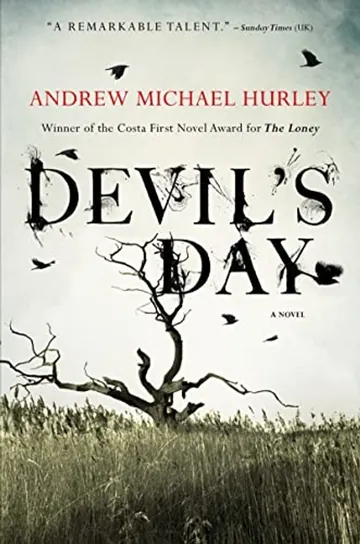
The first page of Devil’s Day
One late October day, just over a century ago, the farmers of the Endlands went to gather their sheep from the moors as they did every autumn. Only this year, while the shepherds were pulling a pair of wayward lambs from a peat bog, the Devil killed one of the ewes and tore off her fleece to hide himself among the flock.
Down in the farmlands, he flitted from one house to the next, too crafty to be caught, only manifest in what he infected. He was the maggot in the eye of the good dog, the cancer that rotted the ram’s gonads, the blood in the baby’s milk.
The stories began to reach the ears of the villagers in Underclough further up the valley, and while they were not surprised or sorry to hear that the heathen folk of the Endlands were being persecuted by the Owd Feller, they petitioned their minister to do something for their own sake. But he was frail and elderly and, unwilling to tackle the Devil on his own, he asked the bishop for an assistant, by which he meant a substitute.
Continue reading
The priest who arrived with his crucifix and aspergillum was a young man sceptical of his summons; he would think of himself as a missionary, he decided, a bringer of light to this dark valley. These people were no better than the gullible savages of the colonies who found spirits in everything from the clouds to the dirt. They deserved his pity.
But when he saw the animals decaying before his eyes and the blood dribbling from the wet-nurse’s teat, his nerve faltered and the Devil brought a blizzard to the valley that lasted for days.
The cottages in the village choked under drifts that grew to the windows and stores of wood and peat that should have lasted all winter were quickly gone. Across the bridge, the church was lightless and cowed and in the graveyard the dead were buried a second time as a bigger swell of snow blew down the valley and across the farmlands. Man and beast were forced to share the same warmth. Piglets and gun dogs slept on the hearth rugs. The tup steamed in the kitchen.
Days were late to lighten and quick to end and people began to die. The older folk first, coughing up their lungs in shreds like tomato skins, and then the children, burning with fever.
But the worst of it, the very worst of it, they said, was that it was impossible to know who the Devil would visit next. He left no footprints in the snow, there was no knock at the door. It was as if, they said, he was the air itself. The stuff they breathed.
The villagers of Underclough blamed the farmers of the Endlands and the farmers began to wonder if they’d brought it upon themselves; if there had been some sign that they’d missed and left to fester like an open wound. Hadn’t a jackdaw flown into the Curwens’ house one evening in the summer and clubbed itself to death on the walls? Hadn’t the Dyers’ children seen a hare digging up bones in the graveyard? Then there was that warm Saturday in September when Joe Pentecost, drunk on port and pride, dropped his glass as he made the toast at his daughter’s wedding breakfast. They’d all laughed at him, forgiven him his moment of clumsiness and thought nothing of it. Yet now, they argued over the ritual that would have sponged away the bad luck with the spilled wine.
“…an intensely suspenseful tale memorable for what it says about unshakable traditions that are bred in the bone…”
Publishers Weekly
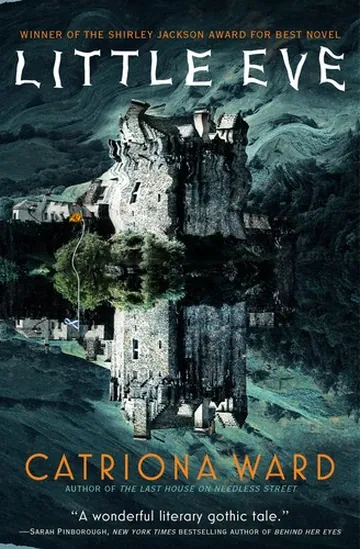
The first page of Little Eve
My heart is a dark passage, lined with ranks of gleaming jars. In each one something floats. The past, preserved as if in spirit. Here is the scent of grass and the sea, here the creak of wheels on a rough path, here a bright yellow gull’s beak. The sensation of blood drying on my cheek in the wind. Abel crying for his mother, Uncle’s hand on me. Silver on a white collarbone. The knowledge of loss, which comes like a blow to the heart or the stomach. It does not reach your mind until later.
She is there, too, of course. Evelyn. Somewhere along the rows, behind glass, she floats in the dim air. I do not seek her out. My survival depends on that.
After everything, and against all odds, I have been given a chance. A life. Never mind what kind. I have people who depend on me and I on them. Never mind who they are.
Continue reading
I am filled with memory. I must make room in the dark passage. So I cast it forth, this day. I give it to you. This is the day I became what I am.
*
On the morning of 2 January 1921, James MacRaith was roused by silence. The storm that had raged across the coast for three days had passed. Thrushes and waxwings sang in the silver birch trees that lined Loyal’s narrow cobbled street. It was half past six, and there would be no dawn in these northern reaches for some hours.
Jamie was twenty-eight years of age, in good health, and had never married. He dressed by the light of a candle in front of the small square of glass that hung on the wall above the chest of drawers. A vest, thick woollen socks with gaiters, the collar of his cotton shirt tied together with a bright red kerchief, a sheepskin waistcoat smelling strongly of lanolin. He painstakingly worked up lather from a sliver of shaving soap and stropped his razor. He put in his dental plate, filling the dark gap on the left side of his upper jaw with a white incisor and canine. The teeth had been lost in a blast in France. Last of all he put on with care the cufflinks his father had left to him. These were battered silver, inlaid with yellowing ivory, and Jamie MacRaith had always loved them. When he held them in his hand he felt the sway of a long trunk, the gentle tread of a great foot on dusty earth; he caught the scent of flowering hibiscus. The cufflinks also made him recall his father’s death.
The upstairs of the cottage comprised two bedrooms, one occupied by Jamie. The other had been his father’s and now lay empty. Sometimes he still heard his father moving about in there.
Jamie ate some preserved apricots from a jar. He smoked Woodbine cigarettes while drinking strong tea. He buttered two slabs of white bread and sprinkled them with sugar before wrapping them carefully in wax paper and slipping them into his jacket pocket for later. He read a few pages of Tarzan and the Ant-Men by Edgar Rice Burroughs. In this story, Tarzan was taken prisoner and enslaved by a race of tiny people who put him to work in the mines. Jamie MacRaith was fond of reading, particularly stories of adventure and murder. The other books he had out on loan from the travelling library on that January day were The Mysterious Affair at Styles, and an instruction manual for building a carburettor engine.
Jamie locked the cottage and stowed the keys in a pile of slates by the back door.
“Ward’s skillful weaving of horror and mystery forms a dense, rich tapestry.”
Publishers Weekly
Content note: graphic violence, incest
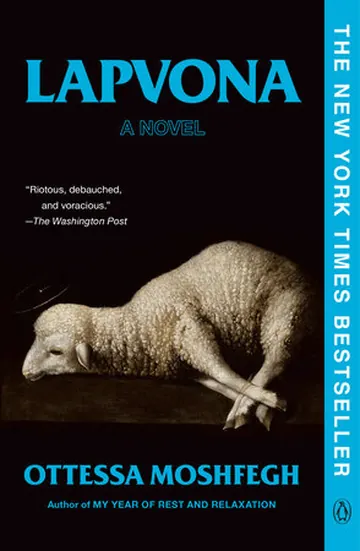
The first page of Lapvona
The bandits came again on Easter. This time they slaughtered two men, three women, and two small children. Some smelting tools were stolen from the blacksmith, but no gold or silver, as there was none. One of the bandits was injured by an ax wielded by the slain children’s mother—she smashed his left foot. Then he was restrained by neighbors and dragged to the village square, where he was beaten and put in the pillory. Villagers pelted him with mud and animal excrement until nightfall. Grigor, the dead children’s grandfather, was too bereft to sleep, so he got up in the night, went to the square, cut off the bandit’s ear with a garden knife, and flung it in a lemon tree laden with blossoms. ‘For the birds to eat!' he yelled at the bleeding man and sobbed as he slunk away. Nobody could say what specific acts of horror this one pilloried bandit had committed. The rest of the bandits got away and took with them six geese, four goats, six wheels of cheese, and a cask of honey, in addition to the iron tools.
Continue reading
No lambs were stolen, as the lamb herder, Jude, lived in a pasture several miles from the center of the village, and he had his lambs penned and sleeping soundly that night as usual. The pasture was at the foot of a hill, on top of which sat the large stone manor where Villiam, Lapvona’s lord and governor, resided. His guards were in position to defend him should any menacing individual ever climb the hill. Between the echoing screams from the village, Jude thought he could hear the gut strings of the guards’ bows tighten from where he lay awake by the fire that night. It was not by chance that Jude and his son, Marek, lived in the pasture below the manor. Villiam and Jude shared a blood relation, their great-grandfather. Jude thought of Villiam as his cousin, though the two men had never met.
On Monday, Marek, age thirteen, walked to the village to assist the men in digging a trench to bury the dead. He wanted to be helpful, but cowered when the bodies were laid out on the thick grass of the cemetery and the men took up their shovels. The heads of the dead were covered only in thin cloths. Marek imagined that their faces were still alive. He could see their eyelashes grazing the fabric as a soft wind blew. He saw the outlines of their lips and thought they were moving, speaking to him, warning him to get away. The children’s bodies looked like wooden dolls, stiff and adorable. Marek crossed himself and retreated back to the road. The men of the village dug the trench easily without him anyway. Nobody cared that Marek had come and gone. He was like a stray dog that wandered in and out of the village from time to time, and everyone knew he was a bastard.
Marek was a small boy and had grown crookedly, his spine twisted in the middle so that the right side of his rib cage protruded from his torso, which caused his arm to find its only comfort resting, half bent, across his belly. His left arm hung loose from its socket. His legs were bowed. His head was also misshapen, although he hid his skull under a tattered knit hat and bright red hair that had never once been brushed or cut. His father—whose long, uncut hair was brown—admonished vanity as a cardinal sin. There were no mirrors in their humble home in the pasture, not that they had any earnings to afford one. Jude was the oldest bachelor in Lapvona.
“It’s a triumph.”
Publishers Weekly
Content note: torture, sexual violence, cannibalism
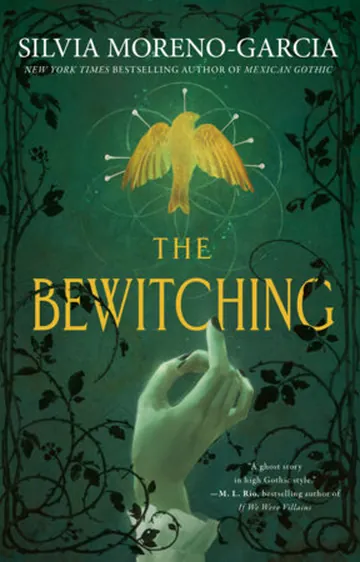
The first page of The Bewitching
Back then, when I was a young woman, there were still witches. That was what Nana Alba used to say when she told Minerva bedtime stories; it was the preamble that led into a realm of shadows and mysteries.
Shortly after Minerva first arrived at Stoneridge, she’d looked toward the thick mass of trees that constituted Briar’s Commons and heard a shrill cry that sounded like an infant’s wail. For a moment she’d shivered in fear, thinking of her great-grandmother’s tales of witches who drank the blood of the innocent on moonless nights. But it had been only a peacock.
She was used to the birds now, the gray peahens and the beautiful males with their dazzling displays of iridescent feathers. They’d sun themselves on the lawn in front of Ledge House and sometimes they’d even sit on the porch of the old mansion. The story went that when the college acquired the building and turned it into a dorm, the peacocks had been part of the deal. A superstitious old dean reckoned they were lucky. Thus it had become tradition to keep a few of them by the dean’s house, though the birds liked to drift toward other buildings and roamed the campus with impunity.
Continue reading
Now as she stood near the window, she heard the same cry. She couldn’t see where the peacock was stationed. It was likely somewhere by the entrance, watching the last of the students make their exodus from Ledge House.
Her friends had told her she’d never get used to the cold and the snow of New England, hailing as she did from the temperate climate of Mexico City, but she’d handled the winter without misfortune. It was the summer that made her anxious.
The campus was closing for the season. Within twenty-four hours all the dorms and facilities would stand silent and still, with a few resident directors like herself left to oversee the buildings. The library would be open, albeit with reduced hours, serving the students—mostly grad students—who would not fly or drive home for the summer.
The campus by the sea, with its greenery and its beautiful Victorian houses, with the sun shining and the ducks swimming placidly in the lovely ponds, ought to have inspired joy and relaxation. But everything irritated her. The quiet of the summer was the perfect chance to work on her thesis, if she’d had anything to write about.
Her progress had stalled. She’d done little in the winter and even less in the spring. Her adviser would expect a certain number of pages come fall. Minerva doubted she’d be able to produce much; her outline was a jumble of nonsense.
She couldn’t afford to be anything except excellent. Her tuition at Stoneridge College was covered courtesy of a scholarship for academic high achievers. Her room and board were paid through her work in the language lab, helping Mr. Marshall with the flock of bored undergrads who needed a second-language course to graduate, and supplemented with her job as a resident director.
She’d always been able to juggle dozens of responsibilities without a hitch. Back in Mexico City, when she was in secondary school, she helped take care of Nana Alba. She’d come home, peel off her school uniform and change into comfy clothes, make dinner, give the old lady her medications, then complete her homework while keeping an eye on her. Great-Grandmother Alba died at the ripe old age of a hundred and one, and everyone said a nurse couldn’t have done a better job taking care of her.
“Suspenseful and terrifying; Moreno-Garcia hits it out of the park yet again.”
Kirkus Reviews
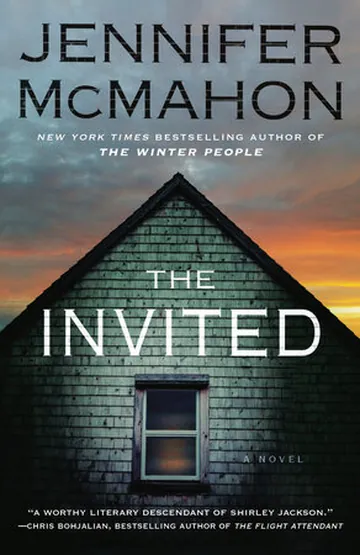
The first page of The Invited
It had started when Hattie was a little girl.
She’d had a cloth-bodied doll with a porcelain head called Miss Fentwig. Miss Fentwig told her things—things that Hattie had no way of knowing, things that Hattie didn’t really want to hear. She felt it deep down inside her in the way that she’d felt things all her life.
Her gift.
Her curse.
One day, Miss Fentwig told her that Hattie’s father would be killed, struck by lightning, and that there was nothing Hattie could do. Hattie tried to warn her daddy and her mother. She told them just what Miss Fentwig had said. “Nonsense, child,” they said, and sent her to bed without supper for saying such terrible things.
Two weeks later, her daddy was dead. Struck by lightning while he was putting his horse in the barn.
Everyone started looking at Hattie funny after that. They took Miss Fentwig away from her, but Hattie, she kept hearing voices. The trees talked to her. Rocks and rivers and little shiny green beetles spoke to her. They told her what was to come.
Continue reading
You have a gift, the voices told her.
But Hattie, she didn’t see it that way. Not at first. Not until she learned to control it.
Now, today, the voices cried out a warning.
First, it was the whisper of the reeds and cattails that grew down at the west end of the bog—a sound others would hear only as dry stalks rubbing together in the wind, but to her they formed a chorus of voices, pleading and desperate: They’re coming for you, run!
It wasn’t just the plants who spoke. The crows cawed out an urgent, hoarse warning. The frogs at the edge of the bog bellowed at her: Hurry, hurry, hurry.
Off in the distance, dogs barked, howled: a pack of dogs, moving closer, coming for her.
And then there were footsteps, a single runner coming down the path. Hattie was in front of their house, an ax in her hands, splitting wood for the fire. Hattie loved splitting wood: to feel the force of the blows, hear the crack as the ax head hit the wood, splitting it right at the heart. Now she raised the ax defensively, waiting.
“Jane?” she called out when she saw her daughter come bursting out of the woods, hair and eyes wild. Her blue flowered dress was torn. Hattie had sewn the dress herself, as she’d made all their clothes, on her mother’s old treadle sewing machine with fabric ordered from the Sears, Roebuck catalog. Sometimes Hattie splurged and bought them dresses from the catalog, but they were never as comfortable or durable as the ones she sewed.
Hattie lowered the ax.
“Where have you been, girl?” she asked her daughter.
It was a school day, but Hattie had forbidden her daughter from going to school. And last she knew, Jane was gathering kindling in the woods.
Jane opened her mouth to speak, to say, but could not seem to make the words come.
Instead, she burst into tears.
Hattie set down her ax, went to her, wrapped her arms around Jane’s trembling body.
Then she smelled the smoke on Jane’s dress, in her tangled hair.
Even the smoke spoke to her, spun an evil tale.
“Jane? What’s happened?”
Questions
Quick answers
Which one is set furthest back?
Lapvona. Publishers Weekly calls it Moshfegh’s deliriously quirky medieval tale.