Books set in Scotland, from Glasgow tenements to the Isle of Harris
Seven novels set in Scotland, from a Glasgow tenement and Edinburgh in summit week to a Highland hunting lodge and a croft on Harris. Read the first page of each.
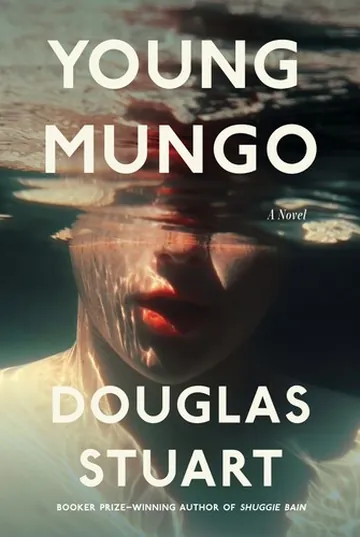
The first page of Young Mungo
As they neared the corner, Mungo halted and shrugged the man’s hand from his shoulder. It was such an assertive gesture that it took everyone by surprise. Turning back, Mungo squinted up at the tenement flat, and his eyes began to twitch with one of their nervous spasms. As his mother watched him through the ear-of-wheat pattern of the net curtains, she tried to convince herself that his twitch was a happy wink, a lovely Morse code that telegraphed everything would be okay. F. I. N. E. Her youngest son was like that. He smiled when he didn’t want to. He would do anything just to make other people feel better.
Mo-Maw swept the curtain aside and leant on the window frame like a woman looking for company. She raised her tea mug in one hand and tapped the glass with her pearlescent pink nails. It was a colour she had chosen to make her fingers appear fresher, because if her hands looked younger, then so might her face, so might her entire self. As she looked down upon him, Mungo shifted again, his feet turning towards home. She fluttered her painted fingers and shooed him away. Go!
Continue reading
Her boy was stooped slightly, the rucksack a little hump on his back. Unsure of what he should take, he had packed it with half-hearted nonsense: an oversized Fair Isle jumper, teabags, his dog-eared sketchbook, a game of Ludo, and some half-used tubes of medicated ointment. Yet he wavered on the corner as though the bag might tip him backwards into the gutter. Mo-Maw knew the bag was not heavy. She knew it was the bones of him that had become a dead weight.
This was all for his own good and yet he dared stare up at her with a doleful look. It was too hot for his nonsense. He was fraying her nerves. Go! she mouthed again and took a swally of the cold tea.
The two men idled at the bend. They shared a sigh and a glance and a chuckle, before putting down their bags and lighting cigarettes. Mo-Maw could tell they were itchy to be gone – these narrow streets didn’t like unknown faces – and she could see it took patience not to goad her boy on. The men were canny enough not to pressure Mungo, not so close to home, not when he could still bolt. Their slitted eyes kept flicking towards him, watching, waiting to see what the boy would do next, while their hands ferreted inside their trouser pockets as they peeled their ball sacks from their thighs. The day would be muggy and close. The younger man fiddled with himself. Mo-Maw licked the back of her bottom teeth.
Mungo raised his hand to wave up at the window but Mo-Maw glowered down at him. He must have seen her face harden, or perhaps he thought waving was childish, because he aborted the gesture and grasped a fistful of air, which made him seem like a drowning man.
In his baggy shorts and his oversized cagoule, he looked like a waif dressed in hand-me-downs. But as he pushed the cloud of curls away from his face, Mo-Maw saw his jaw tighten, and she was reminded of the determined young man that he was becoming. She tapped the glass again. Don’t you scowl at me.
The younger of the two men stepped forward and laid his arm across Mungo’s shoulders. Mungo winced at the weight. Mo-Maw saw him rub at his sides, and she was reminded of the tender purple bruises that were blooming across his ribs. She tapped the glass, Oh fur God’s sake, jist go! At this, her son lowered his gaze and let himself be led away. The men were laughing as they clapped her boy on the back. Guid lad. Brave lad.
“Romantic, terrifying, brutal, tender, and, in the end, sneakily hopeful. What a writer.”
Kirkus Reviews
Content note: homophobic violence, sexual assault

The first page of The Wasp Factory
I had been making the rounds of the Sacrifice Poles the day we heard my brother had escaped. I already knew something was going to happen; the Factory told me.
At the north end of the island, near the tumbled remains of the slip where the handle of the rusty winch still creaks in an easterly wind, I had two Poles on the far face of the last dune. One of the Poles held a rat head with two dragonflies, the other a seagull and two mice. I was just sticking one of the mouse heads back on when the birds went up into the evening air, kaw-calling and screaming, wheeling over the path through the dunes where it went near their nests. I made sure the head was secure, then clambered to the top of the dune to watch with my binoculars.
Diggs, the policeman from the town, was coming down the path on his bike, pedalling hard, his head down as the wheels sank part way into the sandy surface. He got off the bike at the bridge and left it propped against the suspension cables, then walked to the middle of the swaying bridge, where the gate is. I could see him press the button on the phone. He stood for a while, looking round about at the quiet dunes and the settling birds. He didn’t see me, because I was too well hidden. Then my father must have answered the buzzer in the house, because Diggs stooped slightly and talked into the grille beside the button, and then pushed the gate open and walked over the bridge, on to the island and down the path towards the house. When he disappeared behind the dunes I sat for a while, scratching my crotch as the wind played with my hair and the birds returned to their nests.
Continue reading
I took my catapult from my belt, selected a half-inch steelie, sighted carefully, then sent the big ball-bearing arcing out over the river, the telephone poles and the little suspension bridge to the mainland. The shot hit the ‘Keep Out – Private Property’ sign with a thud I could just hear, and I smiled. It was a good omen. The Factory hadn’t been specific (it rarely is), but I had the feeling that whatever it was warning me about was important, and I also suspected it would be bad, but I had been wise enough to take the hint and check my Poles, and now I knew my aim was still good; things were still with me.
I decided not to go straight back to the house. Father didn’t like me to be there when Diggs came and, anyway, I still had a couple of Poles to check before the sun went down. I jumped and slid down the slope of the dune into its shadow, then turned at the bottom to look back up at those small heads and bodies as they watched over the northern approaches to the island. They looked fine, those husks on their gnarled branches. Black ribbons tied to the wooden limbs blew softly in the breeze, waving at me. I decided nothing would be too bad, and that tomorrow I would ask the Factory for more information. If I was lucky, my father might tell me something and, if I was luckier still, it might even be the truth.
I left the sack of heads and bodies in the Bunker just as the light was going completely and the stars were starting to come out.
Content note: violence, animal cruelty
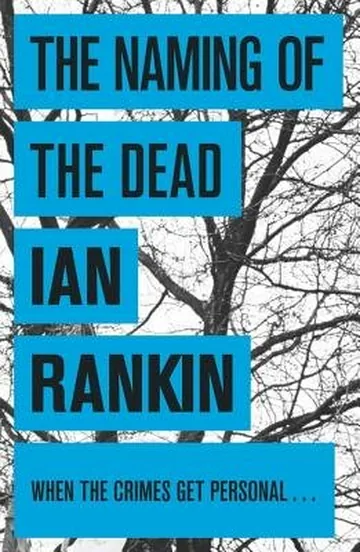
The first page of The Naming of the Dead
In place of a closing hymn, there was music. The Who, ‘Love Reign O’er Me’. Rebus recognised it the moment it started, thunderclaps and teeming rain filling the chapel. He was in the front pew; Chrissie had insisted. He’d rather have been further back: his usual place at funerals. Chrissie’s son and daughter sat next to her. Lesley was comforting her mother, an arm around her as the tears fell. Kenny stared straight ahead, storing up emotion for later. Earlier that morning, back at the house, Rebus had asked him his age. He would be thirty next month. Lesley was two years younger. Brother and sister looked like their mother, reminding Rebus that people had said the same about Michael and him: The pair of you, the spit of your mum. Michael … Mickey if you preferred. Rebus’s younger brother, dead in a shiny-handled box at the age of fifty-four, Scotland’s mortality rate that of a Third World nation. Lifestyle, diet, genes – plenty of theories. The full post-mortem hadn’t come through yet. Massive stroke was what Chrissie had told Rebus on the phone, assuring him that it was ‘sudden’ – as if that made a difference.
Continue reading
Sudden meant Rebus hadn’t been able to say goodbye. It meant his last words to Michael had been a joke about his beloved Raith Rovers in a phone call three months back. A Raith scarf, navy and white, had been draped over the coffin alongside the wreaths. Kenny was wearing a tie that had been his dad’s, Raith’s shield on it – some kind of animal holding a belt-buckle. Rebus had asked the significance, but Kenny had just shrugged. Looking along the pew, Rebus saw the usher make a gesture. Everyone rose to their feet. Chrissie started walking up the aisle, flanked by her children. The usher looked to Rebus, but he stayed where he was. Sat down again so the others would know they didn’t have to wait for him. The song was only a little over halfway through. It was the closing track on Quadrophenia. Michael had been the big Who fan, Rebus himself preferring the Stones. Had to admit, though, albums like Tommy and Quadrophenia did things the Stones never could. Daltrey was whooping that he could use a drink. Rebus had to agree, but there was the drive back to Edinburgh to consider.
The function room of a local hotel had been booked. All were welcome, as the minister had reminded them from the pulpit. Whisky and tea would be poured, sandwiches served. There would be anecdotes and reminiscences, smiles, dabs at the eyes, hushed tones. The staff would move quietly, out of respect. Rebus was trying to form sentences in his head, words which would act as his apology.
I need to get back, Chrissie. Pressure of work.
He could lie and blame the G8. That morning in the house, Lesley had said he must be busy with the build-up. He could have told her, I’m the only cop they don’t seem to need. Officers were being drafted in from all over. Fifteen hundred were coming from London alone. Yet Detective Inspector John Rebus seemed surplus to requirements. Someone had to man the ship – the very words DCI James Macrae had used, with his acolyte smirking by his shoulder. DI Derek Starr reckoned himself the heir apparent to Macrae’s throne. One day he’d be running Gayfield Square police station. John Rebus posed no threat whatsoever, not much more than a year away from retirement. Starr himself had said as much: Nobody’d blame you for coasting, John. It’s what anyone your age would do. Maybe so, but the Stones were older than Rebus; Daltrey and Townshend were older than him too. Still playing, still touring.
“He’s at his best when he focuses on Rebus and the city of Edinburgh itself.”
Publishers Weekly
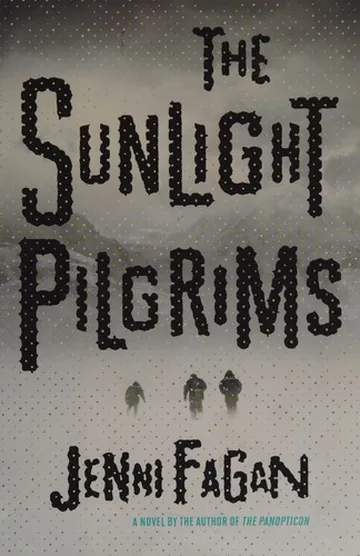
The first page of The Sunlight Pilgrims
There are three suns in the sky and it is the last day of autumn—perhaps forever. Sun dogs. Phantom suns. Parhelia. They mark the arrival of the most extreme winter for 200 years. Roads jam with people trying to stock up on fuel, food, water. Some say it is the end of times. Polar caps are melting. Salinity in the ocean is at an all-time low. The North Atlantic Drift is slowing.
Government scientists say the key word is planet. They take care to remind the media that planets, by nature, are unpredictable. What did we expect? Icicles will grow to the size of narwhal tusks, or the long bony finger of winter herself. There will be frost flowers. Penitentes. Blin drift. Owerblaw. Skirlie. Eighre. Haar-frost. A four-month plummet will conclude with temperatures as low as minus forty or even minus fifty. Even in appropriate layers. Even then. It is inadvisable. Corpses will be found staring into a snowy maelstrom. A van will arrive, lift the frozen ones up, drive them to the city morgue—it takes two weeks to defrost a fully grown man. Environmentalists gather outside embassies while religious leaders claim that their particular God is about to wreak a righteous vengeance for our sins—a prophecy foretold.
Continue reading
The North Atlantic Drift is cooling and Dylan MacRae has just arrived in Clachan Fells caravan park and there are three suns in the sky. That's how it all begins. On Ash Lane, along a row of silver bullet caravans, a blackbird lands on a fence post. His eyes reflect a vast mountain range. Standing at the back of no. 9 looking toward the parhelia are Constance Fairbairn, her child Stella and the Incomer. Neighbors step out onto porches and everyone is unusually quiet, nodding to each other instead of saying hello. Stella imagines the brightest sun is for her, the second is for her mother and the last is for clarity, most recently lost. Her mother wants this back in their lives, but the child does not know why she should want it so much when clarity is no ally. It isn't any kind of a companion at all. Stella stands, arms folded, frowning—right in between her mother and the Incomer, while three suns climb higher in the sky. Constance does not see her child in the parhelia. She sees two lost lovers and herself in the middle—reflecting light. Caleb will be in Lisbon from now on and, after this last fight, she will never speak to him again. Alistair is back with his wife. Three suns to herald the beginning of a great storm. How very fleeting—any moment of stability. Constance is weary from matters of the heart but more so from worry for her child. Dylan MacRae shades his gaze. He wears a fisherman's jumper and a deerstalker hat, Chelsea boots, tailored trousers, he is overly tattooed, immodestly bearded—he is clearly taller than a man was ever meant to be. He rolls a cigarette and lights it. His eyes are red-rimmed in this brightness and he is dazed from seeing a woman polish the moon. In all his days. Three suns, seven mountains and so, so close to the sea. Dylan looks up at the parhelia and he sees Constance, her child and him. There is a curious coruscation to the Incomer's eyes. The mother stacks wood. The child has two spirits.
“More fine work from this gifted Scottish writer.”
Kirkus Reviews
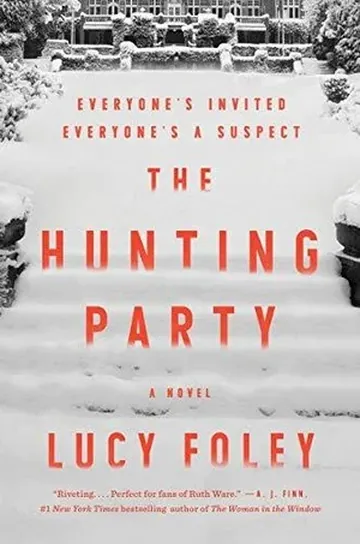
The first page of The Hunting Party
Near the Lodge, dwarfed by it, you can make out a small cluster of dwellings that look as though they are huddling together to keep warm. These are the cabins; there’s one for each couple, but we’ll come together to have meals in the shooting lodge, the bigger building in the middle. Apart from the Highland Dinner on the first night—“a showcase of local, seasonal produce”—we’ll be cooking for ourselves. They’ve ordered food in for me. I sent a long list in advance—fresh truffles, foie gras, oysters. I’m planning a real feast for New Year’s Eve, which I’m very excited about. I love to cook. Food brings people together, doesn’t it?
This part of the journey is particularly dramatic. We have the sea on one side of us, and every so often the land sheers away so that it feels as if one wrong move might send us careering over the edge. The water is slate gray, violent-looking. In one cliff-top field the sheep huddle together in a group as though trying to keep warm. You can hear the wind; every so often it throws itself against the windows, and the train shudders.
Continue reading
All of the others seem to have fallen asleep, even baby Priya. Giles is actually snoring.
Look, I want to say, look how beautiful it is!
I’ve planned this trip, so I feel a certain ownership of it—the anxiety that people won’t enjoy themselves, that things might go wrong. And also a sense of pride, already, in its small successes … like this, the wild beauty outside the window.
It’s hardly a surprise that they’re all asleep. We got up so early this morning to catch the train—Miranda looked particularly cross at the hour. And then everyone got on the booze, of course.
Mark, Giles, and Julien hit the drinks trolley early, somewhere around Doncaster, even though it was only eleven. They got happily tipsy, affectionate, and loud (the next few seats along did not look impressed). They seem to be able to fall back into the easy camaraderie of years gone by no matter how much time has passed since they last saw each other, especially with the help of a couple of beers.
Nick and Bo, Nick’s American boyfriend, aren’t so much a feature of this boys’ club, because Nick wasn’t part of their group at Oxford … although Katie has claimed in the past that there’s more to it than that, some tacit homophobia on the part of the other boys. Nick is Katie’s friend, first and foremost. Sometimes I have the distinct impression that he doesn’t particularly like the rest of us, that he tolerates us only because of Katie. I’ve always suspected a bit of coolness between Nick and Miranda, probably because they’re both such strong characters. And yet this morning the two of them seemed thick as thieves, hurrying off across the station concourse, arm in arm, to buy “sustenance” for the trip. This turned out to be a perfectly chilled bottle of Sancerre, which Nick pulled from the cool-bag to slightly envious looks from the beer drinkers. “He was trying to get those G-and-Ts in cans,” Miranda told us, “but I wouldn’t let him. We have to start as we mean to go on.”
Miranda, Nick, Bo, and I each had some wine. Even Samira decided to have a small one, too, at the last minute: “There’s all this new evidence that says you can drink when you’re breastfeeding.”
Katie shook her head at first; she had a bottle of fizzy water. “Oh, come on, Kay-tee,” Miranda pleaded, with a winning smile, proffering a glass. “We’re on holiday!” It’s difficult to refuse Miranda anything when she’s trying to persuade you to do something, so Katie took it, of course, and had a tentative sip.
The booze helped lighten the atmosphere a bit; we’d had a bit of a mix-up with the seating when we first got on. Everyone was tired and cross, halfheartedly trying to work it out. It turned out that one of the nine seats on the booking had somehow ended up in the next carriage, completely on its own. The train was packed, for the holidays, so there was no possibility of shuffling things around.
“Obviously that’s my one,” Katie said. Katie, you see, is the odd one out, not being in a couple. In a way, I suppose you could say that she is more of an interloper than I am these days.
“Oh, Katie,” I said. “I’m so sorry—I feel like an idiot. I don’t know how that happened. I was sure I’d reserved them all in the middle, to try to make sure we’d all be together. The system must have changed it. Look, you come and sit here … I’ll go there.”
“…a cracklingly suspenseful story for a long winter’s night…”
Publishers Weekly
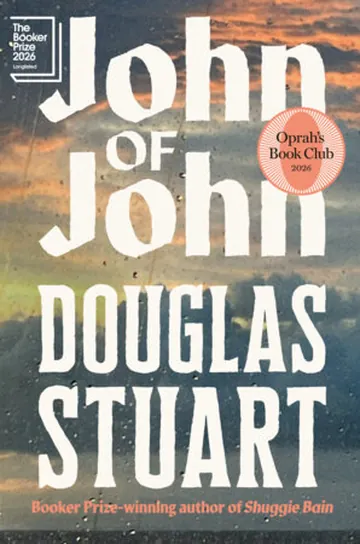
The first page of John of John
Her feet were as purple as calf liver. That’s what his father had said before he hung up. Cal had been standing in the red phone box at the bottom of the Meadows, watching the rugby players stretch on the lush green grass. Their white shorts clung to their haunches, and in the soft smirr the cloth became sheer and he could see the elasticated lines of their briefs. He was only half-listening as his father read from the New Testament.
His father had never been fond of small talk. This gave their telephone calls the feeling of a service line, like when you dialled the Speaking Clock and then reset your watch to it. When Cal mentioned this to his father, the truth of it made his father laugh, for John Macleod believed the spirit was indeed in need of constant calibration, and Cal made his calibrations every Wednesday at 6 p.m. prompt and twice again on the Sabbath.
Continue reading
It had taken some time to find the perfect place to worship, a solitary phone box that wasn’t back-to-back with another. When his father precented the psalm, the expectation was Cal would sing it back to him in Gaelic with the full power of his belief. But when a particularly handsome man would stroll past he would cringe and lower his voice and, without fail, John would ask him why he was wavering. It was mortifying to deal with the glances of passing strangers. For this reason, he spent a good portion of their time together with his eyes closed or with his back turned to the path. He found he did his best singing while his fingers searched the calling cards left by the prostitutes and masseuses.
For all that, he liked the Meadows. The rolling fields helped slow his mind. It was one of the few spaces where the city took a breath, and he found it helped match the rhythm of his thoughts to his father’s unhurried talk. He knew his father was staring out at the sea.
“Ciamar a tha thu an-diugh?” his father asked in Gaelic. And how are you today?
“Fine. And you?”
“Not bad. Upright. All praise to God.”
Their conversation was always censored, missing the things they couldn’t talk about. Cal never mentioned he had nowhere to live. He never said that since graduating he had been abusing the charity of his classmates, surfing from one settee to the next, waiting for them to leave for work so he could forage like a wood mouse, taking just enough food to sate his hunger but never so much as to get caught. He never mentioned how he dripped dry after a shower, or how he studied the tideline of a milk bottle so he could replace what he took with tap water, or how he wandered the Edinburgh suburbs of an evening so his friends wouldn’t feel the burden of feeding him.
He didn’t mention that he had found work with a band of Albanian women cleaning the sick-splattered toilets of Negociants and the Rose Street pub.
“With his gift for creating vibrantly specific characters and settings, Stuart again taps profound human truth.”
Kirkus Reviews
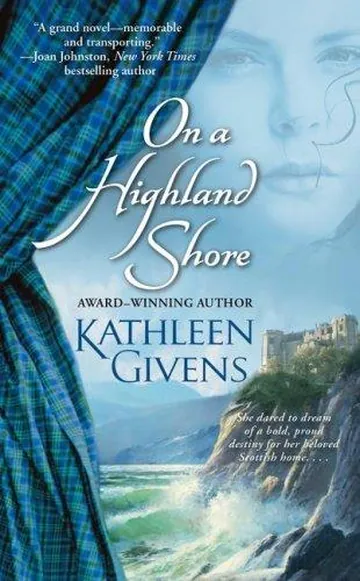
The first page of On a Highland Shore
The sky was still blue this August evening, the gray sides of the towering mountain peaks of western Scotland were still lit by the sun, but the long day was at last ending. To the east the light was fading in the deep glens and forests, the wind sighing through the branches, lifting drops of water from the tumbling streams onto nearby ferns, where they would linger through the short summer night. The sun moved ever downward in the west, changing the sea from blue to molten silver, and the cobalt of the offshore islands to a muted gray. Waves hurried to claim the shingle, lacy white foam flying from their crests to join with the descending evening.
The young girl who hurried up the headland saw none of it; she saw only the old woman ahead of her moving steadily away, and she increased her speed anxiously. Seals lifted their heads from the water and shorebirds dipped down to get a closer look at the two figures below. But the young girl did not look.
Continue reading
She wanted to see the future.
She was a beautiful child, with long bones and glossy dark hair that waved around her oval face and framed her blue eyes and even features. But it was her determination that one saw, the glint of steel showing in those lovely eyes, usually hidden under a layer of courtesy and training, but now, unwatched except by the creatures of sea and air, her jaw was set and her gaze unfaltering.
She thought of herself as Scottish, but in truth her blood was mixed. She’d been formed by fiery Picts, ancient Caledonians, and ferocious Norsemen on her father’s side, triumphant Normans and passionate Celts on her mother’s. She knew of their intermingled histories, had heard the stories of the old days and the battles for dominance, of foes who had come from the south and from the sea, of courageous people who had held the Romans at bay and fought off the Vikings. But all that was in the past, and she gave it little thought. It was what was to come that interested her now, and only the old woman could help her to see it.
She’d seen much already this evening, had watched as the rituals of Lammas Night, the first of the harvest festivals, were carried out, the storing of the seed corn and the ceremonial lighting of the bonfire that illuminated the sky. She’d watched the clanspeople her father led devour the Lammas feast and had tasted the Mass Loaf, made from the first flour ground after the harvest. And after the meal, when many of the others were worse for drink, or lost in the wonderful music, she’d watched her father clasp the hand of his latest mistress and slide from the hall. And watched her mother’s eyes darken as she saw them go.
Questions
Quick answers
Which of these are crime novels?
The Naming of the Dead is a Rebus novel set in Edinburgh, and The Hunting Party is a snowed-in mystery on a Highland estate. The rest are literary novels and one historical romance.