Books set in Maine, from mill towns and a frozen river to summer cottages
Mill towns, salt air, a frozen river and a summer town on the coast. These novels set in Maine range from Pulitzer winners to horror, a historical mystery and a romance.
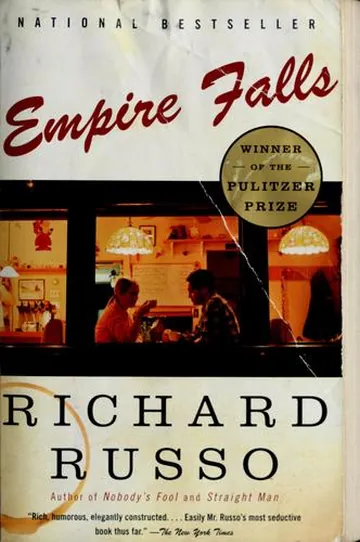
The first page of Empire Falls
Compared to the Whiting mansion in town, the house Charles Beaumont Whiting built a decade after his return to Maine was modest. By every other standard of Empire Falls, where most single-family homes cost well under seventy-five thousand dollars, his was palatial, with five bedrooms, five full baths, and a detached artist's studio. C. B. Whiting had spent several formative years in old Mexico, and the house he built, appearances be damned, was a mission-style hacienda. He even had the bricks specially textured and painted tan to resemble adobe. A damn-fool house to build in central Maine, people said, though they didn't say it to him.
Like all Whiting males, C.B. was a short man who disliked drawing attention to the fact, so the low-slung Spanish architecture suited him to a T.
The furniture was of the sort used in model homes and trailers to give the impression of spaciousness; this optical illusion worked well enough except on those occasions when large people came to visit, and then the effect was that of a lavish dollhouse. The hacienda—as C. B. Whiting always referred to it—was built on a tract of land the family had owned for several generations. The first Whitings of Dexter County had been in the logging business, and they'd gradually acquired most of the land on both sides of the Knox River so they could keep an eye on what floated by on its way to the ocean, some fifty miles to the southeast. By the time C. B. Whiting was born, Maine had been wired for electricity, and the river, dammed below Empire Falls at Fairhaven, had lost much of its primal significance. The forestry industry had moved farther north and west, and the Whiting family had branched out into textiles and paper and clothing manufacture.
Continue reading
Though the river was no longer required for power, part of C. B. Whiting's birthright was a vestigial belief that it was his duty to keep his eye on it, so when the time came to build his house, he selected a site just above the falls and across the Iron Bridge from Empire Falls, then a thriving community of men and women employed in the various mills and factories of the Whiting empire. Once the land was cleared and his house built, C.B. would be able to see his shirt factory and his textile mill through the trees in winter, which, in mid-Maine, was most of the year. His paper mill was located a couple miles upstream, but its large smokestack billowed plumes of smoke, sometimes white and sometimes black, that he could see from his back patio.
By moving across the river, C. B. Whiting became the first of his clan to acknowledge the virtue of establishing a distance from the people who generated their wealth. The family mansion in Empire Falls, a huge Georgian affair, built early in the previous century, offered fieldstone fireplaces in every bedroom and a formal dining room whose oak table could accommodate upwards of thirty guests beneath half a dozen glittering chandeliers that had been transported by rail from Boston. It was a house built to inspire both awe and loyalty among the Irish, Polish and Italian immigrants who came north from Boston, and among the French Canadians, who came south, all of them in search of work. The old Whiting mansion was located right in the center of town, one block from the shirt factory and two from the textile mill, built there on purpose, if you could believe it, by Whiting men who worked fourteen-hour days, walked home for their noon meal and then returned to the factory, often staying far into the night. As a boy, C.B. had enjoyed living in the Whiting mansion. His mother complained constantly that it was old, drafty and inconvenient to the country club, to the lake house, to the highway that led south to Boston, where she preferred to shop. But with its extensive, shady grounds and its numerous oddly shaped rooms, it was a fine place to grow up in.
“…very much the crowning achievement of Russo’s remarkable career.”
Kirkus Reviews

The first page of Olive Kitteridge
For many years Henry Kitteridge was a pharmacist in the next town over, driving every morning on snowy roads, or rainy roads, or summer-time roads, when the wild raspberries shot their new growth in brambles along the last section of town before he turned off to where the wider road led to the pharmacy. Retired now, he still wakes early and remembers how mornings used to be his favorite, as though the world were his secret, tires rumbling softly beneath him and the light emerging through the early fog, the brief sight of the bay off to his right, then the pines, tall and slender, and almost always he rode with the window partly open because he loved the smell of the pines and the heavy salt air, and in the winter he loved the smell of the cold.
The pharmacy was a small two-story building attached to another building that housed separately a hardware store and a small grocery.
Continue reading
Each morning Henry parked in the back by the large metal bins, and then entered the pharmacy’s back door, and went about switching on the lights, turning up the thermostat, or, if it was summer, getting the fans going. He would open the safe, put money in the register, unlock the front door, wash his hands, put on his white lab coat. The ritual was pleasing, as though the old store—with its shelves of toothpaste, vitamins, cosmetics, hair adornments, even sewing needles and greeting cards, as well as red rubber hot water bottles, enema pumps—was a person altogether steady and steadfast. And any unpleasantness that may have occurred back in his home, any uneasiness at the way his wife often left their bed to wander through their home in the night’s dark hours—all this receded like a shoreline as he walked through the safety of his pharmacy. Standing in the back, with the drawers and rows of pills, Henry was cheerful when the phone began to ring, cheerful when Mrs. Merriman came for her blood pressure medicine, or old Cliff Mott arrived for his digitalis, cheerful when he prepared the Valium for Rachel Jones, whose husband ran off the night their baby was born. It was Henry’s nature to listen, and many times during the week he would say, “Gosh, I’m awful sorry to hear that,” or “Say, isn’t that something?” Inwardly, he suffered the quiet trepidations of a man who had witnessed twice in childhood the nervous breakdowns of a mother who had otherwise cared for him with stridency. And so if, as rarely happened, a customer was distressed over a price, or irritated by the quality of an Ace bandage or ice pack, Henry did what he could to rectify things quickly. For many years Mrs. Granger worked for him; her husband was a lobster fisherman, and she seemed to carry with her the cold breeze of the open water, not so eager to please a wary customer. He had to listen with half an ear as he filled prescriptions, to make sure she was not at the cash register dismissing a complaint. More than once he was reminded of that same sensation in watching to see that his wife, Olive, did not bear down too hard on Christopher over a homework assignment or a chore left undone; that sense of his attention hovering—the need to keep everyone content. When he heard a briskness in Mrs. Granger’s voice, he would step down from his back post, moving toward the center of the store to talk with the customer himself. Otherwise, Mrs. Granger did her job well.
“A perfectly balanced portrait of the human condition…”
Kirkus Reviews

The first page of The Frozen River
The body floats downstream. But it is late November, and the Kennebec River is starting to freeze, large chunks of ice swirling and tumbling through the water, collecting in mounds while clear, cold fingers of ice stretch out from either bank, reaching into the current, grabbing hold of all that passes by. Already weighted down by soaked clothing and heavy leather boots, the dead man bobs in the ebbing current, unseeing eyes staring at the waning crescent moon.
It is a miserable night with bitter wind and numbing frost, and the slower the river moves, the quicker it freezes, trapping him in its sluggish grip, as folds of his homespun linen shirt are thrown out like petals of a wilted brown tulip. Just an hour ago his hair was combed and pulled back, tied with a strip of lace. He’d taken the lace, of course, and it is possible—fate is such a fragile thing, after all—that he might still be alive if not for that choice. But it was insult on top of injury. Wars have been fought over less.
Continue reading
The dead man was in a hurry to leave this place, was in too much trouble already, and had he taken more care, been patient, he would have heard his assailants in the forest. Heard. Hidden. Held his breath. And waited for them to pass. But the dead man was reckless and impatient. Panting. He’d left tracks in the snow and was not hard to find. His hair came loose in the struggle, the bit of lace reclaimed and shoved in a pocket, and now that hair, brown as a muddy riverbank, is a tangled mess, part of it plastered to his forehead, part in his mouth, pulled there during a last startled gasp before he was thrown into the river.
His tangled, broken body is dragged along by the current for another quarter of a mile before the ice congeals and grinds to a halt with a tired moan, trapping him fifteen feet from the shore, face an inch below the surface, lips parted, eyes still widened in surprise.
The great freeze has come a month early to the town of Hallowell, Maine, and—the dead man could not know this, nor could anyone who lives here—the thaw will not arrive for many, many long months. They will call this the Year of the Long Winter. It will become legend, and he, no small part of it. For now, however, they sleep safe and warm in their beds, doors shut tight against an early, savage winter. But there—along the riverbank, if you look closely—something dark and agile moves in the moonlight. A fox. Tentative, she sets one paw onto the ice. Then another. She hesitates, for she knows how fickle the river can be, how it longs to swallow everything and pull it into the churning depths. But the ice holds, and the fox inches forward, toward the dead man. She creeps out to where he lies, entombed in the ice. The clever little beast looks at him, her head tilted to the side, but he does not return the gaze. She lifts her nose to the sky. Sniffs for danger. Inhales the pungent scent of frost and pine along the river and, farther away, the faintest whiff of woodsmoke. Satisfied, the fox begins to howl.
“…inspired by the true story and diaries of midwife Martha Ballard of Hallowell, Maine, a character she brings to life brilliantly here.”
Kirkus Reviews

The first page of Carrie
It was reliably reported by several persons that a rain of stones fell from a clear blue sky on Carlin Street in the town of Chamberlain on August 17th. The stones fell principally on the home of Mrs. Margaret White, damaging the roof extensively and ruining two gutters and a downspout valued at approximately $25. Mrs. White, a widow, lives with her three-year-old daughter, Carietta. Mrs. White could not be reached for comment.
Nobody was really surprised when it happened, not really, not at the subconscious level where savage things grow. On the surface, all the girls in the shower room were shocked, thrilled, ashamed, or simply glad that the White bitch had taken it in the mouth again. Some of them might also have claimed surprise, but of course their claim was untrue. Carrie had been going to school with some of them since the first grade, and this had been building since that time, building slowly and immutably, in accordance with all the laws that govern human nature, building with all the steadiness of a chain reaction approaching critical mass.
Continue reading
What none of them knew, of course, was that Carrie White was telekinetic.
Graffiti scratched on a desk of the Barker Street Grammar School in Chamberlain:
Carrie White eats shit.
The locker room was filled with shouts, echoes, and the subterranean sound of showers splashing on tile. The girls had been playing volleyball in Period One, and their morning sweat was light and eager.
Girls stretched and writhed under the hot water, squalling, flicking water, squirting white bars of soap from hand to hand. Carrie stood among them stolidly, a frog among swans. She was a chunky girl with pimples on her neck and back and buttocks, her wet hair completely without color. It rested against her face with dispirited sogginess and she simply stood, head slightly bent, letting the water splat against her flesh and roll off. She looked the part of the sacrificial goat, the constant butt, believer in left-handed monkey wrenches, perpetual foul-up, and she was. She wished forlornly and constantly that Ewen High had individual-and thus private-showers, like the high schools at Westover or Lewiston. They stared. They always stared.
Showers turning off one by one, girls stepping out, removing pastel bathing caps, toweling, spraying deodorant, checking the clock over the door. Bras were hooked, underpants stepped into. Steam hung in the air; the place might have been an Egyptian bathhouse except for the constant rumble of the Jacuzzi whirlpool in the corner. Calls and catcalls rebounded with all the snap and flicker of billiard balls after a hard break.
"—so Tommy said he hated it on me and I_" "—I'm going with my sister and her husband. He picks his nose but so does she, so they're very-"
"shower after school and-" BLOOD SPORT
"—too cheap to spend a goddam penny so Cindi and I-" Miss Desjardin, their slim, nonbreasted gym teacher, stepped in, craned her neck around briefly, and slapped her hands together once, smartly. "What are you waiting for, Carrie? Doom? Bell in five minutes." Her shorts were blinding white, her legs not too curved but striking in their unobtrusive muscularity. A silver whistle, won in college archery competition, hung around her neck. The girls giggled and Carrie looked up, her eyes slow and dazed from the heat and the steady, pounding roar of the water. "Ohuh?" It was a strangely froggy sound, grotesquely apt, and the girls giggled again. Sue Snell had whipped a towel from her hair with the speed of a magician embarking on a wondrous feat and began to comb rapidly.
“King handles his first novel with considerable accomplishment and very little hokum…”
Kirkus Reviews
Content note: severe bullying, abuse, graphic violence
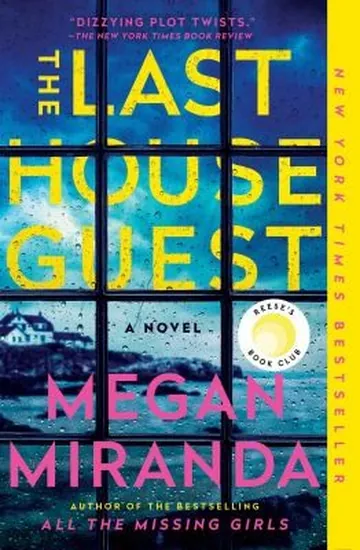
The first page of The Last House Guest
I almost went back for her. When she didn't show. When she didn't answer her phone. When she didn't reply to my text.
But there were the drinks, and the cars blocking me in, and the responsibility—I was supposed to be keeping an eye on things. I was expected to keep the night running smoothly.
Anyway, she would laugh at me for coming back. Roll her eyes. Say, I already have one mother, Avery.
These are excuses, I know.
I had arrived at the overlook first.
The party was at the rental on the cul-de-sac this year, a three-bedroom house at the end of a long tree-lined road, barely enough room for two cars to maneuver at the same time. The Lomans had named it Blue Robin, for the pale blue clapboard siding and the way the squared roof looked like the top of a bird feeder.
Though I thought it was more fitting for the way it was set back in the trees, a flash of color as you stepped to the side, something you couldn’t really see until you were already upon it.
Continue reading
It wasn’t the nicest location or the one with the best view—too far to see the ocean, just close enough to hear—but it was the farthest from the bed-and-breakfast down the road, and the patio was surrounded by tightly packed evergreens, so hopefully, no one would notice or complain.
The Lomans’ summer rentals all looked the same on the inside, anyway, so that sometimes I’d leave a walk-through completely disoriented: a porch swing in place of the stone steps; the ocean instead of the mountains. Each home had the same tiled floor, the same shade of granite, the same style of rustic-meets-upscale. And the walls throughout, decorated with scenes of Littleport: the lighthouse, the white masts dancing in the harbor, the foam-crested waves colliding with the sea cliffs on either side. A drowned coast, it was called—fingers of land rising from the ocean, the rocky coastline trying to stand its ground against the surf, islands appearing and vanishing in the distance with the tide.
I got it, I did. Why the long weekend drives from the cities or the temporary relocation for the summer season; why the exclusivity of a place that seemed so small and unassuming. It was a town carved out of the untouched wild, mountains on one side, ocean on the other, accessible only by a single coastal road and patience. It existed through pure stubbornness, pushing back against nature from both sides.
Growing up here made you feel as if you were forged from this same character.
I emptied the box of leftover liquor from the main house onto the granite island, hid away the fragile decorations, turned on the pool lights. Then I poured myself a drink and sat on the back patio, listening to the sounds of the ocean. A chill of autumn wind moved through the trees, and I shivered, pulling my jacket tighter.
This annual party always teetered on the edge of something—one last fight against the turning of the season. Winter settled in the bones here, dark and endless. It was coming, just as soon as the visitors were leaving.
But first there would be this.
Another wave crashed in the distance. I closed my eyes, counting the seconds. Waiting.
We were here tonight to ring out the summer season, but it had already swept out to sea without our permission.
Luciana arrived just as the party was hitting its momentum.
I didn’t see her come in, but she stood alone in the kitchen, unsure of herself. She stood out, tall and unmoving in the hub of activity, taking it all in. Her first Plus-One party. So different, I knew, from the parties she’d been attending all summer, her welcome to the world of Summers in Littleport, Maine.
I touched her elbow, still cold somehow. She flinched as she turned my way, then exhaled like she was glad to see me. “This is not exactly what I expected,” she said.
She was too done up for the occasion. Hair curled just so, tailored pants, heels. Like she was attending a brunch.
I smiled. “Is Sadie with you?” I looked around the room for the familiar dark blond hair parted down the middle, the thin braids woven from her temples and clipped together at the back, a child from another era. I stood on my toes, trying to tune in to the sound of her laughter.
“Most compelling are the class tensions between Littleport’s year-round residents and the seasonal, moneyed tourists…”
Kirkus Reviews

The first page of Happy Place
A cottage on the rocky shoreline, with knotty pine floorboards and windows that are nearly always open. The smell of evergreens and brine wafting in on the breeze, and white linen drapes lifting in a lazy dance. The burble of a coffee maker, and that first deep pull of cold ocean air as we step out onto the flagstone patio, steaming mugs in hand.
My friends: willowy, honey-haired Sabrina and wisp of a waif Cleo, with her tiny silver septum piercing and dip-dyed box braids. My two favorite people on the planet since our freshman year at Mattingly College.
It still boggles my mind that we didn’t know one another before that, that a stodgy housing committee in Vermont matched the three of us up. The most important friendships in my life all came down to a decision made by strangers, chance. We used to joke that our living arrangement must be some government-funded experiment. On paper, we made no sense.
Continue reading
Sabrina was a born-and-raised Manhattan heiress whose wardrobe was pure Audrey Hepburn and whose bookshelves were stuffed with Stephen King. Cleo was the painter daughter of a semi-famous music producer and an outright famous essayist. She’d grown up in New Orleans and showed up at Mattingly in paint-splattered overalls and vintage Doc Martens.
And me, a girl from southern Indiana, the daughter of a teacher and a dentist’s receptionist, at Mattingly because the tiny, prestigious liberal arts school gave me the best financial aid, and that was important for a premed student who planned to spend the next decade in school. By the end of our first night living together, Sabrina had us lined up on her bed watching Clueless on her laptop and eating a well-balanced mix of popcorn and gummy worms. By the end of the next week, she’d had custom shirts made for us, inspired by our very first inside joke.
Sabrina’s read Virgin Who Can’t Drive.
Mine read Virgin Who CAN Drive.
And Cleo’s read Not a Virgin but Great Driver. We wore them all the time, just never outside the dorm. I loved our musty room in the rambling white-clapboard building. I loved wandering the fields and forest around campus with the two of them, loved that first day of fall when we could do our homework with our windows open, drinking spicy chai or decaf laced with maple syrup and smelling the leaves curling up and dropping from branches. I loved the nude painting of Sabrina and me that Cleo made for her final figure drawing class project, which she’d hung over our door so it was the last thing we saw on our way out to class, and the Polaroids we taped on either side of it, the three of us at parties and picnics and coffee shops in town.
“Burned out surgical resident Harriet Kilpatrick is eager for a relaxing weeklong getaway with her tight-knit friend group at the remote Maine beach cottage…”
Publishers Weekly
Questions
Quick answers
What is a good book set in Maine?
For a Pulitzer winner, Olive Kitteridge or Empire Falls. For a historical mystery, The Frozen River. For a summer-town thriller, The Last House Guest.
Which of these are Pulitzer winners?
Olive Kitteridge (2009) and Empire Falls (2002).
Are these set in real Maine towns?
Mostly not. Empire Falls, Crosby, Chamberlain, Littleport and Knott’s Harbor are invented. Hallowell, where The Frozen River takes place, is a real town on the Kennebec River.