Books like Paul Tremblay, from a Mojave ranch to a house at the bottom of a lake
A mother taking her daughter back to the Mojave, a social worker called home to Vermont after her sister drowns, two teenagers who find a house under a lake, a boy who has never failed an Inspection, a veterinarian sent to the bottom of the Pacific and a nine-year-old who says there’s something in the house. Read the first page of each.

The first page of Sundial
It’s the chicken pox that makes me sure—my husband is having another affair.
I find the first blister on Annie the morning of the Goodwins’ party. She is in the bath and the window is a blue square of winter sky. The shadows of bare sycamore branches lie sharp across the white tile. Annie sits cross-legged in the tepid water. Her lips move, some secret song only for the plastic animals that bob around her. Annie won’t bathe at a temperature warmer than blood. She doesn’t like things too salty or sweet or sour, and her favorite stories are ones in which nothing happens. She is wary of extremes. I worry about her physically, my fragile second child, in a way I don’t about Callie. Annie is small for nine and people often assume she is younger. Callie worries me in other ways.
The party is the Goodwins’ January tradition. They call it their “blues banishing bash.” They’re a perky family who live next door on the left. Their two smart sons Sam and Nathan are near Callie’s age; they have interesting friends as well as great taste in wine and food and art. It’s the one occasion in the year our whole family looks forward to. We always have the best time at the Goodwins’.
Continue reading
Annie bends over and whispers to the rubber duck in her lap. The sight of her vulnerable spine, the dark paint-licks of hair clinging to her neck—these things make my throat close up hot.
I don’t know what it’s like for other people but love and nausea are often indistinguishable to me.
“Arms up,” I say. Annie obeys and as she does I see it: a red mark on her upper arm. I recognize it instantly. I put my hand on her forehead, on her back. Both are warm—too warm.
Annie scratches at the rash and I enclose her hand in mine. “Stop,” I say gently. “That will make it worse, my little beet.”
She makes a small sound of dismay. “I’m not a beet,” she says.
“A cauliflower, then.”
“No!”
“A rutabaga?”
“No, Mom!” But she stops scratching. She is a docile child.
I find that I am scratching my own arm in sympathy. I sometimes confuse my children’s bodies with my own.
I put annie to bed and go to the bathroom cabinet. Here are the crowded shelves of a busy family with two children. I push aside old cough syrup, disposable razors, nail scissors, Irving’s diabetes medicine, my birth control pills, a water pick we never use, painkillers, a broken powder compact. I must clean this out when I have a minute. At the very back I find what I’m looking for: a full bottle of calamine, neck all crusted up but still good. I bought it a few months ago for Callie’s eczema.
Annie’s temperature is 101.5 and her eyes are even more unfocused than usual. I should have caught this earlier, I really should have. The stinging reflux of guilt washes over me. She scratches at her arm.
“No, sweetie,” I say. I get her mittens from the dresser, fetch duct tape from Irving’s toolbox, and fasten the mittens to her pajama-top sleeves. I give her Tylenol and cover her in calamine.
“Rob,” Irving calls up the stairs. His voice is rough with morning. “Oatmeal’s ready.” He clears his throat, coughs. “And coffee,” he adds.
I sit by Annie and let the exhaustion take me for a moment. I always find my younger daughter’s presence soothing and conducive to thought. We have been on this merry-go-round for so long, Irving and I.
I make a decision tree in my head. Then I go downstairs to break the news.
*
CALLIE IS TALKING high and feverish in the kitchen. “And they caught him,” she says, “because of the gas station surveillance footage. That’s where he bought the cement.”
“Where did you hear that, sweetie?” Irving says with an edge in his voice. I almost feel sorry for him. Callie likes to talk about murder at breakfast. “What have you been reading?”
“Just stuff,” says Callie. “Just around. The woman was acquitted. It’s difficult to prove. They had injected him with air, just air! It causes a pulmonary em-bo-lism. Emblamism? No, embolism.”
I join Irving at the coffee maker. “Annie has chicken pox,” I say quietly. “I don’t understand how it’s possible. When was she exposed? And she’s vaccinated.”
“It’s not a hundred percent effective.” Irving’s eyes are sunk deep in dark pouches, gleaming like secrets. Last night was a bad one.
“…a seething, hallucinatory tale of family, death, and hereditary trauma…”
Publishers Weekly
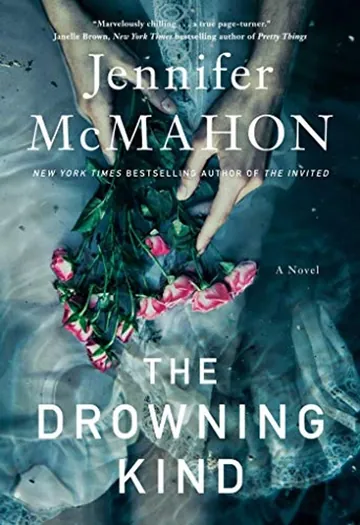
The first page of The Drowning Kind
The dead have nothing to fear, Lenie said.
The two of us treaded water, lips blue, teeth chattering.
My sister wore her new light-blue bikini, the color of the sky, and I had on one of her hand-me-downs, the fabric so worn that it was sheer in places.
“So when we play the Dead Game, we keep our eyes open, no matter what.” Her face was as serious as serious got. “Swear it? Swear you’ll keep them open?”
I nodded.
“Even if you see Rita?” she asked.
“Shut up, Lex.”
“She’s down there, you know. She’s waiting for us.”
“Shut up!” I swam away from her, closer to the edge of the pool.
She laughed, shook her head. “Don’t be such a chicken.” Then she seemed to feel bad, to take pity on me maybe: to remember I was only nine. She put out her hand, pointer finger extended. “Come on,” she called. I swam back to her, reached out, crossed her finger with my own.
Continue reading
“The X girls,” she said.
“Now and forever,” I finished. Then we hooked our fingers together, squeezed, and let go.
“If she comes for one of us, she’ll have to take us both,” Lexie said.
“Lex!”
“On three,” she said. “One. Two. Keep your eyes open, Jax. I’ll know if you cheat.”
I took the deepest breath I could.
“Three!”
We put our faces under and floated, suspended in the dark water like twins in the womb.
Our grandmother’s pool was twenty by forty-five feet and surrounded by carved granite. Moss grew in the cracks between the damp, gray stones; the sides were stained green with algae. Because it was spring fed, there was no pump, only an outlet at the far end that drained into a stone-lined canal that made its way across the yard and down to the brook below, which led, eventually, to the river. Weeds grew along the edges, clinging to the stone, floating with Lexie and me. When they got too thick, Gram would scoop them out; for a time, she kept a trout, saying the fish helped keep the water clean and free of insects. My sister loved the pool. I hated it; the water was black—so dark that you couldn’t see your feet when you treaded water. It stank of rot and sulphur, tasted like burnt matches and rust, and was colder than the ice bath my mother plunged me in once when my fever got too high. It sucked the breath out of you; numbed your limbs, left your skin red and your lips blue.
Each time we came out of the water, we really did look like the dead girls we were pretending to be.
Lexie and I spent every summer at Sparrow Crest with Gram, in the tiny village of Brandenburg, Vermont. It was a three-hour drive (yet felt worlds away) from our dull ranch house in the suburbs of Massachusetts, part of a huge grid of equally dull houses with postage-stamp yards and a garage if you were lucky: Sparrow Crest was a dark, damp, sprawling place, made of stone and huge hand-hewn beams, covered in decades of ivy. There was a half-round window in the front like an eye.
“McMahon has a gift for creating creepy atmosphere and letting spooky suggestions linger in the mind.”
Kirkus Reviews

The first page of A House at the Bottom of a Lake
It’s the best first date I’ve ever heard of.
Amelia smiled big and nodded.
“Yes?” James said, not sure he’d read her right.
How can I say no?
“How can I say no? Canoeing with a stranger? Yes. I’d love to.”
Both seventeen. Both afraid. But both saying yes.
James ran sweaty hands through his brown hair then wiped them again on his apron. This wasn’t the first time he’d seen her in his father’s store. It was the fourth.
“My name is Amelia,” she said, wondering if he already knew that, if he’d found her online.
“James,” he said and smiled, too. “And wow was I nervous to ask you out.”
“Really?” She asked it earnestly but knew he was. The fidgeting revealed that. She was anxious, too. “Why?”
James snorted a single awkward chuckle.
“You know... boy girl... people meet...I don’t know! It’s scary!”
Amelia laughed. It felt good to have a boy ask her out. God, it felt great. How long had it been since she’d gone on a date? And here, at the very onset of summer, it felt... natural.
Continue reading
A new day.
A new season.
And a yes to a stranger who’d asked her to go canoeing for a first date.
“Cool,” Amelia said. “It’s green.”
It was cool. A green canoe with brown trim. It looked like the kind of canoe you’d find in a history book, two Native Americans seated inside.
“It’s sturdy, too,” James’s uncle Bob said. His jean shorts and open flannel were straight out of 1995. “But that doesn’t mean it won’t tip.”
Amelia and James exchanged glances. They were already ankle-deep in the cold water.
They hardly knew each other at all.
“We won’t stand up in her,” James said. “I know better.”
“I do, too,” Amelia said.
“You’ve canoed before?” Uncle Bob asked her.
Amelia blushed. “I wouldn’t say I’ve canoed, you know, but I’ve been in one. Yeah. Is that canoeing?”
Uncle Bob laughed and lifted the paddles from inside the boat.
“These are solid cherrywood. Don’t ask why. Trish wanted them that way. I don’t think she’s used them since we got them. But heck, you two get to use some pretty fancy paddles.”
Bob eyed the cooler James had already placed in the canoe.
“I don’t mind if you two have some beers out there, but be careful, all right?” He turned to Amelia. “How old are you?”
“Seventeen.”
Bob considered this. But not for very long.
“This is the lake,” James said. Then he snapped his fingers, like trying to catch the words as they left him. Of course it was the lake.
“It’s gorgeous,” Amelia said.
James was paddling on the right side of the canoe. Amelia paddled on the left and steered.
Her eyes traveled to the rippling surface of the water.
It was a great blue, the kind of blue you painted.
Amelia felt like she was painting, the oar as her brush. As though all this beauty fanned out from the simple motions she and James made.
“What do you think is down there?” she asked. Then wished she hadn’t. The question made it sound like she was scared. What’s in there? I mean... what kind of fish?
She didn’t have the heart to tell James that his shorts were hanging a little low and she could see the very top of his plumber’s crack.
Plumber’s crack. Hardware store. This made her smile.
“All kinds,” James said, not sure of the answer. “Bass...I think.”
He wanted to tell her there was something magical in this lake. A buried treasure. A mysterious shipwreck. A monster.
He also regretted sitting up front. He couldn’t see her from here.
He turned around to face her.
Amelia didn’t think it was possible—it was, after all, very unlikely—but the second lake was more beautiful than the first.
And more remote.
It was smaller by a third of the size, she guessed, and the shores were so crowded with trees that it appeared there was no land there at all.
Like the water is supported by trees, a lake on stilts.
And the water!
Gorgeous. Not like the tropical beaches she’d seen in pictures, even better than that. The clearest she’d ever seen.
“This is...” she started to say but stopped. She stopped paddling, too. Laid the oar across her legs, rolled up her sleeves, and just saw.
James continued to paddle, but slow, taking it in, too.
Amelia listened to the canoe cut the cool surface, the only sound out here, as if all the fish were sleeping. She caught a reflection in the water, her reflection, her face a rippling disk amid auburn straw.
“A spare, unrushed effort, the book has a tingly appeal.”
Kirkus Reviews

The first page of Inspection
No boy had ever failed an Inspection.
For this, J felt no anxiety as the steel door creaked open before him, as the faces of the Parenthood looked out, as the Inspectors stood against the far wall, each with a hand on the magnifying glasses hooked to their belts. J had done this every morning of his life, every morning he could remember, and, despite Q’s theories on likelihoods and probabilities (his idea that eventually someone must fail in order to justify a lifetime of Inspections), J felt no doubt, no dread, no fear.
“Enter, J,” Collins called. Collins, the stuffiest, oldest, burliest Inspector of all. The man smelled of old textbooks. His belly hung so far over his belt D joked he kept an Alphabet Boy hidden in there. That’s where we come from, D had said. But all the Alphabet Boys knew they came from the Orchard, having grown on the Living Trees.
Continue reading
“Come on, then,” Collins said. It was a wonder any words at all made it through the man’s bushy brown mustache.
J knew the Inspector did not speak for himself.
D.A.D. must’ve given the signal it was time to begin.
To the snickers of L, D, and Q behind him, J entered and removed his pajamas, folding them and placing them in a neat pile upon the steel end table by the Check-Up room door. As the door was closing behind J, D called, “Shoulda showered, J!” And J pointed at him, the Alphabet Boys’ gesture that meant, You’re a jerk, brother.
The door locked into place, his clothes nicely piled, J stepped to the pair of rubber footprints on the cold steel floor. Winter was close, arriving perhaps as soon as tomorrow. And while J enjoyed the Effigy Meet as much as his brothers, he liked to keep the cold outside. The Check-Up room was as frigid as any he knew in the Turret.
“Turn,” Inspector Collins said. He and Jeffrey observed from a distance, always the first step of the morning’s Inspection. The dogs breathed heavy behind the glass door beyond the men. J turned to his left. He heard the leather of D.A.D.’s red jacket stretching. The man, as of yet out of sight, must have crossed his arms or sat back in his chair.
Winter outside the Turret could be brutal. Some years were worse than others. J, nearing his thirteenth birthday along with his twenty-three brothers, had experienced twelve winters. And with each one, Professor Gulch warned the boys about depression. The sense of loneliness that came from being stuck inside a ten-story tower, when the Orchard and the Yard froze over, when even the pines looked too cold to survive.
Hysteria, J thought. He shook his head, trying to roll the idea out his ear. It was a word he didn’t like anywhere inside his head. As if the four syllables had the same properties as Rotts and Moldus, Vees and Placasores. The very diseases the Inspectors searched him for now.
“Turn.”
Collins again. His gruff voice part and parcel of the Check-Up room. Like the sound of clacking dishes in the cafeteria. Or the choral voices of his brothers in the Body Hall.
“Cold,” J said, turning his back to the Inspectors, facing now the locked door.
It was often chilly in the Check-Up room; unseen breezes, as if the solid-steel walls were only an illusion, and the distorted reflections unstable drawings on the wind. J imagined a slit somewhere, a crack in those walls, allowing pre-winter inside. It was similar, J thought, to the veterinarian’s office in Lawrence Luxley’s book Dogs and Dog Days.
“…this unlikely cross between 1984 and Lord of the Flies tantalizes…”
Kirkus Reviews

The first page of The Deep
The old man’s head was covered in mantises.
At first Luke thought it was a wig or some weird toupee—but he was at the southern tip of Guam, a few miles from the Pacific, and the man was wearing tattered clothes and what looked like strips of old radial tires lashed to his feet. Why bother with a toupee?
The driver saw the old man, too. He hissed between his teeth—an uneasy tsssshk! He said something under his breath: a curse, maybe a prayer? Luke didn’t speak the local dialect.
“I’ll do it,” Luke told the driver. “You wait here.”
He elbowed the Jeep’s door open. Sweet Jesus, the heat. It’d hit him like a fist when he stepped onto the runway at the Agana airport. It hit him again now—the tropical air, laden with the nectar of heliotropes, caused beads of sweat to pop along his brow:
The old man stood facing the wall of a one-story workshop. The ground was strewn with hubcaps and crankcases snarled in rusted wiring. Wrist-thick vines snaked out of the greenery to twine around the industrial junk; with nobody around to hack it back, the jungle would reclaim this spot in a matter of months.
Continue reading
The old man was walking into the wall—his sandals made a gentle whush-whush as they brushed the yellowing adobe. The spotting was pronounced on his bare arms and his throat. The scabs were dime-sized, bigger than what Luke was used to seeing. Some of them had cracked open and were leaking grayish pus.
Luke had no clue what had drawn the mantises. Maybe they’d dropped from the creeping ivy snarled across the shop’s roof. Or maybe something on the man’s scalp, or leaching out of it, had attracted them.
They were the largest insects Luke had ever seen. Each mantis was the length of his thumb, and muscular-looking. They had swollen, cantilevered abdomens that curved above their sharp, considering faces. A baker’s dozen or so carpeted the man’s skull.
Luke got the sense of them turning to stare at him, all at once.
Luke retreated to the ditch. His feet sank into the muck. He didn’t like the way it sucked at his boots—greedy, a lipless brown mouth.
He found a stick and went back. The insects squirmed quarrelsomely on the man’s head, which was covered with wispy white hairs as downy as those on a baby’s skull. Their exoskeletons made a brittle chitter. What the hell were they doing?
Luke watched their choreographed manner. The stink of burned diesel mixed with the heliotropes to create a sticky vapor that coated his throat. Distantly, he heard the driver repeat what he’d said before—that breathless curse or prayer—and Luke was worried he’d set the Jeep in gear and take off, leaving him with the old man and the mantises, the heat and the crawling jungle.
What in God’s name were those bugs doing?
One mantis pinned another in a violent vise grip, then widened its jaws and bit down, cleaving the other’s head in half. Their abdomens were wed. What was clearly the female continued to eat the male’s head while his antenna whipped about frantically.
Using the stick, Luke brushed the mantises off the man’s skull. A decapitated male skittered wildly across Luke’s fingers; he shook it into the mud with the rest of them. The urge arose to step on them. Squash them all to paste.
Instead, Luke set his hands on the old man’s shoulders to turn him around. His expression was familiar: The Big Blank. His eyes gone milky, the edges of his eyelids pebbled with nodules of acne that gave his skin the look of an orange rind. His mouth wide open, his tongue coated in white film. He may not have drunk water in days. He’d forgotten to, probably.
That’s how it went with the ‘Gets: you forgot the little things first, then the not-so-little things, then the big ones. Next, the critical ones.
“…each new shock is freshly disturbing…”
Publishers Weekly
Content note: graphic violence
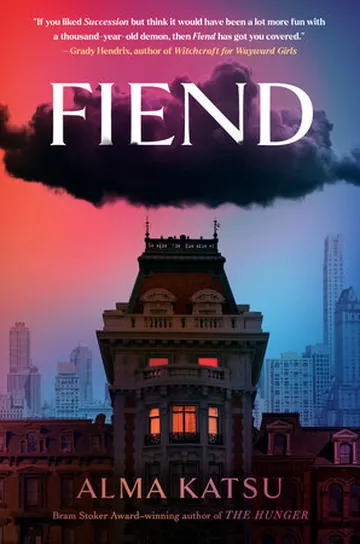
The first page of Fiend
“There’s something in the house,” nine-year-old Maris Berisha says to her twelve-year-old brother, Dardan.
He’s caught her in the servants’ quarters, where they have been expressly forbidden to go, ever. Not that she would want to go there, normally: the rooms are small and plain and dark, nothing like the rooms upstairs. The nicest penthouse in all of Manhattan, Maris overheard a society lady say to her mother, Olga, once, and her mother practically purred with pleasure. It was not an exaggeration, Maris knows. They live in a palace in the sky, fit for a king.
Dardan has dragged her to the laundry room and closed the door and now stands, hands on hips, in imitation of Olga, clearly expecting an explanation from her. But he is as white as the stack of Belgian sheets waiting to be ironed.
“I heard a noise. It sounded like something was tapping in the walls. I followed it down here,” Maris says, almost apologetically.
Continue reading
“It was probably a mouse. Or a rat. This is New York City. It’s an old building. There’re always noises.” He speaks quickly. He wants to sound confident like an adult, but there’s a waver in his voice.
“I’ve heard mice before. This is different.” She frowns.
“You know there’s something here. You know it.”
“You think we’re haunted? Stop being such a baby.”
She narrows her eyes at him because he’s pretending. They talked, once, about the thing he claimed he saw. The un-explainable thing. Now he denies it happened.
“I’ve told you—only babies believe in ghosts and demons and magic. That only happens in fairy tales. When you grow up, you realize that none of that stuff exists.”
“What about the church?” The old Greek Orthodox church that they attend is the most magical place Maris knows. Stepping over the threshold is like being transported to an enchanted world. Every surface is carved, inscribed, or gilded. Long-suffering saints look down from triptychs on the walls. It smells of incense. The priests wear long robes festooned with embroidery and mumble in a secret language.
“The priests say there are angels all around us . . .”
And if angels exist, then so do demons.
Dardan sneers. “The church is the worst. It’s just . . . superstition. You can’t put too much stock in all that. Dad says those old men live in another world, a world of made-up stories and groundless beliefs. It’s not real.” Dardan likes to think he’s all grown up, smarter than her, worldly-wise. But Maris wants to tell him, You’re just parroting Zef, you don’t know anything.
“It’s not just the priests who believe in ghosts.” She hesitates. She doesn’t want to get anyone in trouble, but she has this bit of proof . . . and Dardan is being so smug that she cannot resist throwing it in his face.
“Angelo told me somebody died in this very apartment. The people who owned it before us.” The words are spit out, triumphant. “He said one of the children shot himself. Found his father’s gun and shot himself in the head.”
Dardan laughs meanly. “Angelo?” He’s just a doorman. He doesn’t know . . . He’s just trying to frighten you. Telling you a scary story, like at Halloween. But he shouldn’t be telling stories about kids killing themselves. That’s irresponsible.”
“It’s not a story. It’s true.”
But Dardan has already closed himself up. There’s no getting through to him now. “Nobody died in our apartment, Maris. Ask Mother—she’ll tell you.” He grabs her arm, opens the laundry room door, and marches her out. Up the servants’ staircase to the pretty part of the house, where Olga is talking to the housekeeper about the menu for dinner. Maids wielding feather dusters or carrying stacks of clean clothes give Maris the side-eye; she realizes she shouldn’t have violated their private space.
Dardan can deny it all he wants, but Maris knows there’s something bad in their home. Something malevolent. She feels it watching them, greedily. It’s stronger when their father visits on Sundays, but it is here with them all the time nonetheless. It is a bad feeling, and it is inescapable.
Maris is in the room when the building manager comes to see Olga. She’s playing, hidden from her mother’s view by a pair of enormous chairs. In this family, it’s better for children to be neither seen nor heard.
The building manager enters the room like a servant: he knows he doesn’t belong there. He smiles apologetically at Olga, hands clasped like a supplicant. “Mrs. Berisha, thank you for agreeing to see me, especially over such a trifling matter—”
“It’s a supernaturally charged Succession that will have readers hooked.”
Publishers Weekly
Questions
Quick answers
Which one is the bleakest?
The Deep. Publishers Weekly says fans of unflinching bleakness and all-out horror will love it.
Are any of these by Paul Tremblay?
No. These are our editors’ picks for Tremblay readers. The cover of Sundial carries a blurb from him: “Wild.”