Books like Riley Sager, from a luxury cruise to a house on Needless Street
Five suspense novels with a creepy streak: a travel journalist on a luxury cruise, four women with a secret from boarding school, the opening of a resort in an English village, a paid companion on her way to a house she has never seen and a man who still lives in the house he grew up in. Read the first page of each.
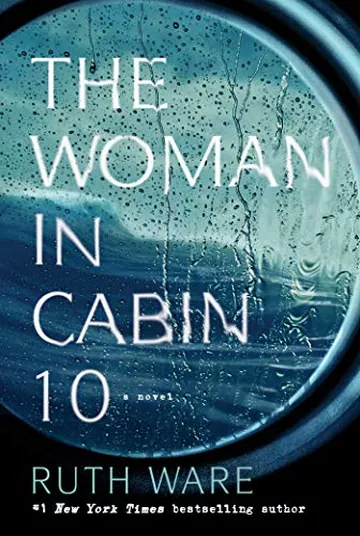
The first page of The Woman in Cabin 10
The first inkling that something was wrong was waking in darkness to find the cat pawing at my face. I must have forgotten to shut the kitchen door last night. Punishment for coming home drunk.
“Go away!” I groaned. Delilah mewed and butted me with her head. I tried to bury my face in the pillow but she continued rubbing herself against my ear, and eventually I rolled over and heartlessly pushed her off the bed.
She thumped to the floor with an indignant little meep and I pulled the duvet over my head, but even through the covers I could hear her scratching at the bottom of the door, rattling it in its frame.
The door was closed.
I sat up, my heart suddenly thumping, and Delilah leaped onto my bed with a glad little chirrup, but I snatched her to my chest, stilling her movements, listening.
I might well have forgotten to shut the kitchen door, or I could even have knocked it to without closing it properly. But my bedroom door opened outward—a quirk of the weird layout of my flat. There was no way Delilah could have shut herself inside. Someone must have closed it.
Continue reading
I sat, frozen, holding Delilah’s warm, panting body against my chest and trying to listen.
Nothing.
And then, with a gush of relief, it occurred to me—she’d probably been hiding under my bed and I’d shut her inside with me when I came home. I didn’t remember closing my bedroom door, but I might have swung it absently shut behind me when I came in. To be honest, everything from the tube station onwards was a bit of a blur. The headache had started to set in on the journey home, and now that my panic was wearing off, I could feel it starting up again in the base of my skull. I really needed to stop drinking midweek. It had been okay in my twenties, but I just couldn’t shake off the hangovers like I used to.
Delilah began squirming uneasily in my arms, digging her claws into my forearm, and I let her go while I reached for my dressing gown and belted it around myself. Then I scooped her up, ready to sling her out into the kitchen.
But when I opened the bedroom door, there was a man standing there.
There’s no point in wondering what he looked like, because, believe me, I went over it about twenty-five times with the police.
“Not even a bit of skin around his wrists?” they kept saying. No, no, and no. He had a hoodie on, and a bandanna around his nose and mouth, and everything else was in shadow. Except for his hands.
On these he was wearing latex gloves. It was that detail that scared the shit out of me. Those gloves said, “I know what I’m doing.” They said, “I’ve come prepared.” They said, “I might be after more than your money.”
“…a classic ‘paranoid woman’ story with a modern twist…”
Kirkus Reviews
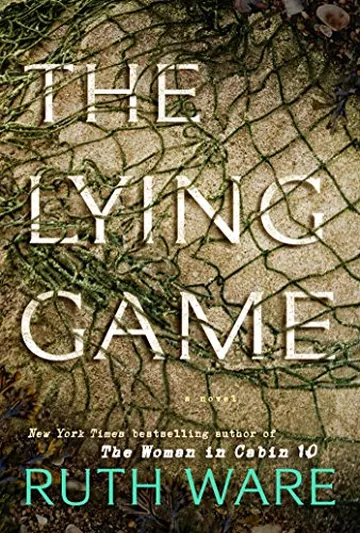
The first page of The Lying Game
The sound is just an ordinary text alert, a quiet beep beep in the night that does not wake Owen, and would not have woken me except that I was already awake, lying there, staring into the darkness, the baby at my breast snuffling, not quite feeding, not quite unlatching.
I lie there for a moment thinking about the text, wondering who it could be. Who’d be texting at this hour? None of my friends would be awake . . . unless it’s Milly gone into labor already . . . God, it can’t be Milly, can it? I’d promised to take Noah if Milly’s parents couldn’t get up from Devon in time to look after him, but I never really thought . . .
I can’t quite reach the phone from where I’m lying, and at last I unlatch Freya with a finger in the corner of her mouth, and rock her gently onto her back, milk-sated, her eyes rolling back in her head like someone stoned. I watch her for a moment, my palm resting lightly on her firm little body, feeling the thrum of her heart in the birdcage of her chest as she settles, and then I turn to check my phone, my own heart quickening slightly like a faint echo of my daughter’s.
Continue reading
As I tap in my PIN, squinting slightly at the brightness of the screen, I tell myself to stop being silly—it’s four weeks until Milly’s due, it’s probably just a spam text, Have you considered claiming a refund for your payment protection insurance?
But, when I get the phone unlocked, it’s not Milly. And the text is only three words.
I need you.
IT IS 3:30 A.M., AND I am very, very awake, pacing the cold kitchen floor, biting at my fingernails to try to quell the longing for a cigarette. I haven’t touched one for nearly ten years, but the need for one ambushes me at odd moments of stress and fear.
I need you.
I don’t need to ask what it means—because I know, just as I know who sent it, even though it’s from a number I don’t recognize.
Kate.
Kate Atagon.
Just the sound of her name brings her back to me, like a vivid rush—the smell of her soap, the freckles across the bridge of her nose, cinnamon against olive. Kate. Fatima. Thea. And me.
I close my eyes and picture them all, the phone still warm in my pocket, waiting for the texts to come through.
Fatima will be lying asleep beside Ali, curled into his spine. Her reply will come around 6:00 a.m., when she gets up to make breakfast for Nadia and Samir and get them ready for school.
Thea—Thea is harder to picture. If she’s working nights she’ll be in the casino, where phones are forbidden to staff and shut up in lockers until their shifts are finished. She’ll roll off shift at eight in the morning, perhaps? Then she’ll have a drink with the other girls, and then she’ll reply, wired up with a successful night dealing with punters, collating chips, watching for cardsharps and professional gamblers.
And Kate. Kate must be awake—she sent the text, after all. She’ll be sitting at her dad’s worktable—hers now, I suppose—in the window overlooking the Reach, with the waters turning pale gray in the predawn light, reflecting the clouds and the dark hulk of the Tide Mill. She will be smoking, as she always did. Her eyes will be on the tides, the endlessly shifting, eddying tides, on the view that never changes and yet is never the same from one moment to the next—just like Kate herself.
“Cancel your plans for the weekend when you sit down with this book, because you won’t want to move until it’s over.”
Kirkus Reviews
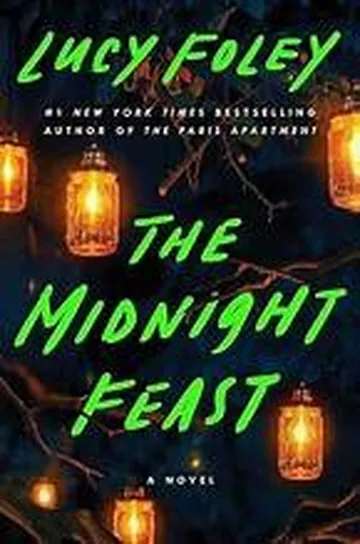
The first page of The Midnight Feast
A fox, browsing in the dead beech leaves for the trail of a rabbit, stops still. Raises its head, ears pricked, paw raised, before turning and fleeing. The owls halt their night-time chorus, lifting as silent pale ghosts from the branches to find another patch of woodland. A small herd of deer scatters more noisily, crashing through the undergrowth in its haste to get away.
Something is moving through the trees now, disturbing the normal night-time harmony. Shadows with form, with substance. Rustling through the leaves, treading upon the woodland floor, snapping twig and bracken.
Deep in the woods they gather. The same clearing they have always used; and their forebears before them, since the legends began. A strange flock. Black-robed, beast-headed. Born of the unknown depths of the wood: an image from a medieval woodcut, a dark folktale to frighten badly behaved children. In the modern world, a world of busyness, of speed and connection, they make no sense. But here among the trees, hidden from moonlight and starlight, it is as if the modern world is the fairy tale: other and strange.
Continue reading
A short distance away, the old man sits in his study in the woods: a converted cabin surrounded by ancient trees.
The door is ajar to the elements. Now that darkness has fallen there’s a chill to the air. It creeps in at the open door, it rifles through the papers on the desk.
In front of him is a single feather, its black down ruffled by the breeze.
The old man doesn’t pay it any attention.
He doesn’t pay it any attention because he is dead.
It’s opening night of the Manor, the “new jewel of the Dorset coastline.” The drama is all out front: soaring ocean views, emerald lawns stretching to the cliff edge, the Owen Dacre–designed infinity pool. But on this side, the landward side, there’s another world. A bristle of dense ancient forest behind the main building, which guests can access via a series of gravel paths that wind between the “Woodland Hutches.” One of these is mine.
I close the door. Follow the sound of music and laughter through the purple twilight to the welcome drinks, which are taking place on the very edge of the trees. I step into a chic take on a woodland grotto. Hundreds of lanterns hang from branches. An actual harpist plays. Antique rugs and huge scatter cushions have been strewn about the forest floor with bohemian abandon. I sit down on one, gulp back a “Woodland Spirit” cocktail—“a dash of locally harvested birch bitters and rosemary infused gin.”
My fellow guests loll around, chatty and giddy with the anticipation of a weekend in the sun beside the sea with nothing to do but eat, drink, swim, and make merry. Many of them seem to know one another: wandering about shrieking as they bump into old friends, some reclining on the rugs and calling to acquaintances to join them. The vibe is relaxed, albeit spiced with a faint note of social competition.
No one needs the ultra-soft woolen blankets provided because—though the sun is setting—it’s still warm enough to wear only a single layer of linen (there’s a lot of linen). The first flare of the impending heatwave.
In the middle of the scene, like a fairy queen—like Titania on her woodland throne—sits the owner of The Manor. Francesca Meadows. Radiant in a pale rose, off-shoulder fantasia of washed silk, hair rippling down her back, face aglow with candlelight.
The culmination of a dream: that’s what she said in the article. I’m so excited to share this place with everyone. Well, everyone who can afford it, anyway. But who’s quibbling?
I look around me. I suppose it’s all pretty idyllic if you’re part of a couple or larger group, if you’ve come here for a weekend of escaping the city. Maybe it’s just me for whom it doesn’t feel quite so mellow and chummy.
“Foley’s scintillating latest…”
Publishers Weekly

The first page of Lost Among the Living
By the time we left Calais, I thought perhaps I hated Dottie Forsyth. To the observer, I had no reason for it, since by employing me as her companion Dottie had saved me from both poverty and a life robbed of color in my rented flat, the life I was trying to live without Alex. However, the observer would not have had to spend the past three months crisscrossing Europe in her company, watching her scavenge for art as cheaply as possible while smoking her cigarettes in their long black holder.
“Manders,” she said to me—though my name was Jo, one of her charms was the habit of calling me by my last name, as if I were the upstairs maid—“Mrs. Carter-Hayes wishes to see my photographs. Fetch my photograph book from my luggage, won’t you? And do ask the porter if they serve sherry.”
This as if we were on a luxurious transatlantic ocean liner, and not on a simple steamer over the Channel for the next three hours. Still, I rose to find the luggage, the photograph book, and the porter, my stomach turning in uneasy loops as I traveled the deck.
Continue reading
The Channel wasn’t entirely calm today, and the misty gray in the distance gave a hint of oncoming rain. The other passengers on the deck gave me only brief glances as I passed them. A girl in a wool skirt and a knitted cardigan is an unremarkable English sight, even if she’s passably pretty.
I found the luggage compartment with the help of the porter, whose look of surprise turned to one of pity when I asked about the sherry, and from there I rummaged through Dottie’s many bags and boxes, looking for the slender little photograph book with its yellowed pages. I didn’t think Mrs. Carter-Hayes, who had been acquainted with Dottie for all of twenty minutes, had any real desire to see the photographs, but perhaps because of the pointlessness of the mission, I found myself lingering over it, taking longer than I needed to in the quiet and privacy of the luggage compartment. I tucked a lock of hair behind my ear and let out a breath, sitting on the floor with my back to one of Dottie’s trunks. We were going back to England.
Without Alex, I had nothing there. I had nothing anywhere. I had given up my flat when I’d left with Dottie, taken the last of my belongings with me. There wasn’t much. A few clothes, a few packets of beloved books I couldn’t live without. I’d sold off all our furniture by then, and I’d even sold most of Alex’s clothes, a wrench that still made me sick to my stomach. I wasn’t afraid of poverty; before Alex had swept me into the grand adventure of our marriage, poverty had been all I knew, and it was as familiar to me now as the old cardigan I wore. There was no room for sentiment when you were poor.
The only fanciful thing I’d kept was Alex’s camera, which I could have gotten a few pounds for but hadn’t been able to part with. The camera had come with me on all of my travels, on every boat and train, though I hadn’t even opened the case. If Dottie had noticed, she had made no comment.
And so my life in England now sat before me as a perfect blank. We were to go to Dottie’s home in Sussex, a place I had never seen. I was to stay on in Dottie’s pay, even though she was no longer traveling and my duties had not been explained.
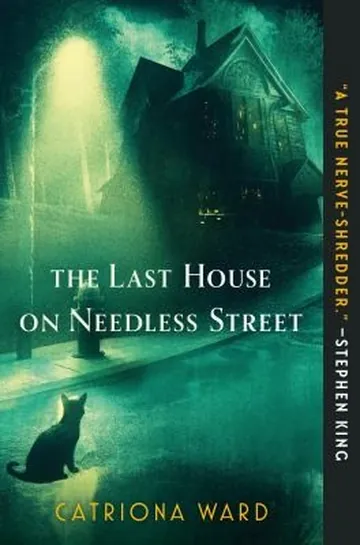
The first page of The Last House on Needless Street
Today is the anniversary of Little Girl With Popsicle. It happened by the lake, eleven years ago—she was there, and then she wasn’t. So it’s already a bad day when I discover that there is a Murderer among us.
*
Olivia lands heavily on my stomach first thing, making high-pitched sounds like clockwork. If there’s anything better than a cat on the bed, I don’t know about it. I fuss over her because when Lauren arrives later she will vanish. My daughter and my cat won’t be in the same room.
“I’m up!” I say. “It’s your turn to make breakfast.” She looks at me with those yellow-green eyes then pads away. She finds a disc of sun, flings herself down and blinks in my direction. Cats don’t get jokes.
*
I fetch the newspaper from the front step. I like the local because it has a rare bird alert—you can write in if you see something special, like a Northern Flicker or a Siberian Accentor. Even this early, the dim air is as warm as soup. The street feels even quieter than usual. Hushed, like it’s remembering.
Continue reading
When I see the front page my stomach goes into curls and knots. There she is. I forgot it was today. I’m not so good with time.
They always use the same picture. Her eyes are big in the shadow of her hat brim, the fingers clenched on the stick as if she thinks someone might take it away from her. Her hair lies wet and sheeny on her skull, short as a boy’s. She has been swimming, but no one is wrapping her in a fluffy towel to dry her. I don’t like that. She might catch cold. They don’t print the other picture, the one of me. They got in big trouble for that. Though not big enough if you ask me.
She was six. Everyone was upset. We have a problem with that around here, especially by the lake, so things happened fast. The police searched the houses of everyone in the county who might hurt children.
*
I wasn’t allowed to wait inside while they did it, so I stood out on the steps. It was summer, bright and hot as the surface of a star. My skin burned slowly as the afternoon wore on. I listened as they pushed back the ugly blue rug in the living room, tore up the floorboards and knocked a hole in the wall in the back of my closet because they thought it sounded hollow. Dogs went all over my yard, my bedroom, everything. I knew what kind of dogs they were. They had the white trees of death in their eyes. A thin man with a camera came and took pictures as I stood there. I didn’t think to stop him.
“No picture, no story,” he said to me as he left. I didn’t know what that meant but he waved goodbye in a cheerful way so I waved back.
“What is it, Mr. Bannerman?” The woman detective looked like a possum. Very tired.
“Nothing.” I was shaking. Got to be quiet, Little Teddy. My teeth made little clicks like I was cold, but I was so hot.
“You were yelling my name. And the word ‘green,’ I believe.”
“I must have been thinking about this story I made up when I was a kid, about the lost boys who turned into green things, at the lake.” She gave me a look. I knew it well. I get that look all the time. I held tight to the trunk of the little oak in the front yard. The tree lent me its strength. Was there something to tell? If so it hovered just over the edge of my thoughts.
“Mr. Bannerman, is this your only residence? No other property around here? No hunting cabin, nothing like that?” She wiped sweat off her top lip. Care pressed down on her, like an anvil on her back.
“No,” I said. “No, no, no.” She wouldn’t understand about the weekend place.
The police went away in the end. They had to, because I was at the 7-Eleven all afternoon and everyone says so. The security tape says so. What I used to do there was: I sat outside on the sidewalk by the sliding doors. When they parted with a whoosh and released people in a blast of cold air, I asked for candy. Sometimes if they had it they gave it to me, and sometimes they even bought it for me. Mommy would have been ashamed if she knew but I loved candy so much. I never went near the lake or Little Girl With Popsicle.
“…keeps readers deliciously off-balance…”
Publishers Weekly
Content note: child abuse
Questions
Quick answers
Which one is the darkest?
The Last House on Needless Street. Publishers Weekly describes it as a tale of isolation, mental illness, and child abuse.
Is any of these by Riley Sager?
No. Home Before Dark is in our haunted house stack, and The Only One Left is in gothic novels.