Books like Gone Girl, where the marriage looks perfect and someone is lying
Gone Girl opens with a husband picturing his wife’s skull. These four keep part of that hold: a perfect-looking couple, a narrator you can’t take at her word, a family secret that surfaces slowly.
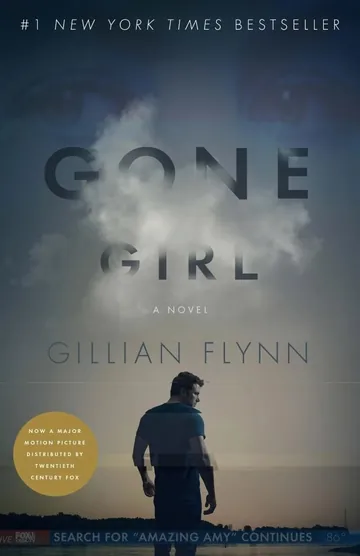
The first page of Gone Girl
When I think of my wife, I always think of her head. The shape of it, to begin with. The very first time I saw her, it was the back of the head I saw, and there was something lovely about it, the angles of it. Like a shiny, hard corn kernel or a riverbed fossil. She had what the Victorians would call a finely shaped head. You could imagine the skull quite easily.
I'd know her head anywhere.
And what's inside it. I think of that too: her mind. Her brain, all those coils, and her thoughts shuttling through those coils like fast, frantic centipedes. Like a child, I picture opening her skull, unspooling her brain and sifting through it, trying to catch and pin down her thoughts. What are you thinking, Amy? The question I’ve asked most often during our marriage, if not out loud, if not to the person who could answer. I suppose these questions stormcloud over every marriage: What are you thinking? How are you feeling? Who are you? What have we done to each other? What will we do?
Continue reading
My eyes flipped open at exactly six A.M. This was no avian fluttering of the lashes, no gentle blink toward consciousness. The awakening was mechanical. A spooky ventriloquist-dummy click of the lids: The world is black and then, showtime! 6-0-0 the clock said —in my face, first thing I saw. 6-0-0. It felt different. I rarely woke at such a rounded time. I was a man of jagged risings: 8:43, 11:51, 9:26. My life was alarmless.
At that exact moment, 6-0-0, the sun climbed over the skyline of oaks, revealing its full summer angry-god self. Its reflection flared across the river toward our house, a long, blaring finger aimed at me through our frail bedroom curtains. Accusing: You have been seen. You will be seen.
I wallowed in bed, which was our New York bed in our new house, which we still called the new house, even though we’d been back here for two years. It’s a rented house right along the Mississippi River, a house that screams Suburban Nouveau Riche, the kind of place I aspired to as a kid from my split-level, shag-carpet side of town. The kind of house that is immediately familiar: a generically grand, unchallenging, new, new, new house that my wife would—and did—detest. “Should I remove my soul before I come inside?” Her first line upon arrival. It had been a compromise: Amy demanded we rent, not buy, in my little Missouri hometown, in her firm hope that we wouldn’t be stuck here long. But the only houses for rent were clustered in this failed development: a miniature ghost town of bank-owned, recession-busted, price-reduced mansions, a neighborhood that closed before it ever opened. It was a compromise, but Amy didn’t see it that way, not in the least. To Amy, it was a punishing whim on my part, a nasty, selfish twist of the knife. I would drag her, caveman-style, to a town she had aggressively avoided, and make her live in the kind of house she used to mock. I suppose it’s not a compromise if only one of you considers it such, but that was what our compromises tended to look like. One of us was always angry. Amy, usually.
Do not blame me for this particular grievance, Amy. The Missouri Grievance. Blame the economy, blame bad luck, blame my parents, blame your parents, blame the Internet, blame people who use the Internet.
“One of those rare thrillers whose revelations actually intensify its suspense instead of dissipating it.”
Kirkus Reviews
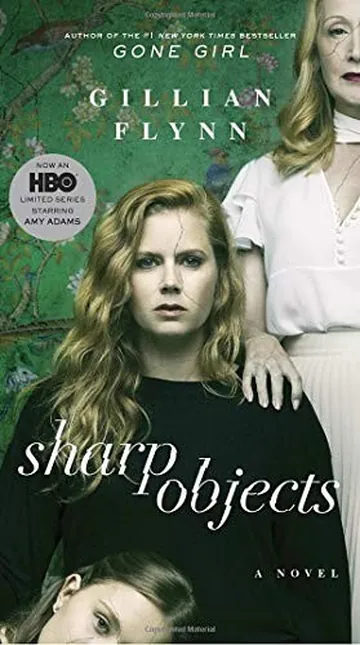
The first page of Sharp Objects
My sweater was new, stinging red and ugly. It was May 12 but the temperature had dipped to the forties, and after four days shivering in my shirtsleeves, I grabbed cover at a tag sale rather than dig through my boxed-up winter clothes. Spring in Chicago.
In my gunny-covered cubicle I sat staring at the computer screen. My story for the day was a limp sort of evil. Four kids, ages two through six, were found locked in a room on the South Side with a couple of tuna sandwiches and a quart of milk. They'd been left three days, flurrying like chickens over the food and feces on the carpet. Their mother had wandered off for a suck on the pipe and just forgotten. Sometimes that's what happens. No cigarette burns, no bone snaps. Just an irretrievable slipping. I'd seen the mother after the arrest: twenty-two-year-old Tammy Davis, blonde and fat, with pink rouge on her cheeks in two perfect circles the size of shot glasses. I could imagine her sitting on a shambled-down sofa, her lips on that metal, a sharp burst of smoke. Then all was fast floating, her kids way behind, as she shot back to junior high, when the boys still cared and she was the prettiest, a glossy-lipped thirteen-year-old who mouthed cinnamon sticks before she kissed.
Continue reading
A belly. A smell. Cigarettes and old coffee. My editor, esteemed, weary Frank Curry, rocking back in his cracked Hush Puppies. His teeth soaked in brown tobacco saliva.
“Where are you on the story, kiddo?” There was a silver tack on my desk, point up. He pushed it lightly under a yellow thumbnail.
“Near done.” I had three inches of copy. I needed ten.
“Good. Fuck her, file it, and come to my office.”
“I can come now.”
“Fuck her, file it, then come to my office.”
“Fine. Ten minutes.” I wanted my thumb-tack back.
He started out of my cubicle. His tie swayed down near his crotch.
“Preaker?”
“Yes, Curry?”
“Fuck her.”
Frank Curry thinks I’m a soft touch. Might be because I’m a woman. Might be because I’m a soft touch.
Curry’s office is on the third floor. I’m sure he gets panicky-pissed every time he looks out the window and sees the trunk of a tree. Good editors don’t see bark; they see leaves—if they can even make out trees from up on the twentieth, thirtieth floor. But for the Daily Post, fourth-largest paper in Chicago, relegated to the suburbs, there’s room to sprawl. Three floors will do, spreading relentlessly outward, like a spill, unnoticed among the carpet retailers and lamp shops. A corporate developer produced our township over three well-organized years—1961–64—then named it after his daughter, who’d suffered a serious equestrian accident a month before the job was finished. Aurora Springs, he ordered, pausing for a photo by a brand-new city sign. Then he took his family and left. The daughter, now in her fifties and fine except for an occasional tingling in her arms, lives in Florida and returns every few years to take a photo by her namesake sign, just like Pop.
I wrote the story on her last visit. Curry hated it, hates most slice-of-life pieces.
“Flynn delivers a great whodunit, replete with hinting details, telling dialogue, dissembling clues.”
Kirkus Reviews
Content note: child murder, self-harm, parental abuse
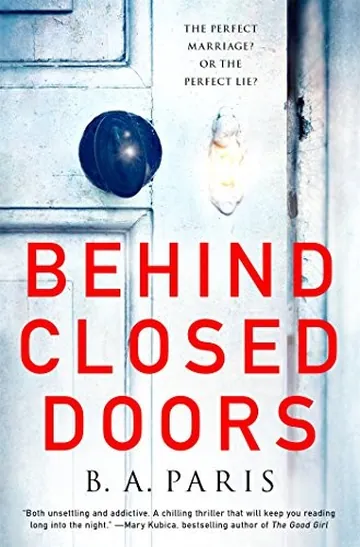
The first page of Behind Closed Doors
The champagne bottle knocks against the marble kitchen counter, making me jump. I glance at Jack, hoping he won’t have noticed how nervous I am. He catches me looking and smiles.
‘Perfect,’ he says softly.
Taking my hand, he leads me to where our guests are waiting. As we go through the hall, I see the flowering lily Diane and Adam brought us for our garden. It’s such a beautiful pink that I hope Jack will plant it where I’ll be able to see it from the bedroom window. Just thinking of the garden makes tears well up from deep inside me and I swallow them down quickly. With so much at stake tonight, I need to concentrate on the here and now.
In the sitting room, a fire burns steadily in the antique grate. We’re well into March but there’s still a nip in the air and Jack likes our guests to be as comfortable as possible.
Continue reading
‘Your house is really something, Jack,’ Rufus says admiringly. ‘Don’t you think so, Esther?’
I don’t know Rufus or Esther. They are new to the area and tonight is the first time we’ve met, which makes me feel more nervous than I already am. But I can’t afford to let Jack down, so I fix a smile on my face, praying that they’ll like me. Esther doesn’t smile back, so I guess she’s reserving judgement. But I can’t blame her. Since joining our circle of friends a month ago, I’m sure she’s been told over and over again that Grace Angel, wife of brilliant lawyer Jack Angel, is a perfect example of a woman who has it all—the perfect house, the perfect husband, the perfect life. If I were Esther, I’d be wary of me too.
My eyes fall on the box of expensive chocolates she has just taken out of her bag and I feel a flicker of excitement. Not wanting her to give them to Jack, I move smoothly towards her and she instinctively holds them out to me.
‘Thank you, they look wonderful,’ I say gratefully, placing them on the coffee table so that I can open them later, when we serve coffee. Esther intrigues me. She’s the complete opposite of Diane—tall, blonde, slim, reserved—and I can’t help respecting her for being the first person to step into our house and not go on about how beautiful it is.
Jack insisted on choosing the house himself, telling me it was to be my wedding present, so I saw it for the first time when we came back from our honeymoon. Even though he’d told me it was perfect for us I didn’t fully realise what he meant until I saw it. Set in large grounds at the far end of the village, it gives Jack the privacy he craves, as well as the privilege of owning the most beautiful house in Spring Eaton. And the most secure. There is a complicated alarm system, with steel shutters to protect the windows on the ground floor. It must seem strange that these are often kept shut during the day, but as Jack tells anyone who asks, with a job like his, good security is one of his priorities.
We have a lot of paintings on the walls of our sitting room but people are usually drawn towards the large red canvas that hangs above the fireplace. Diane and Adam, who have already seen it, can’t help going over to have another look, and Rufus joins them, while Esther sits down on one of the cream leather sofas.
‘It’s amazing,’ Rufus says, looking in fascination at the hundreds of tiny markings that make up most of the painting.
‘It’s called Fireflies,’ Jack offers, untwisting the wire from the bottle of champagne.
‘I’ve never seen anything quite like it.’
‘Grace painted it,’ Diane tells him. ‘Can you believe it?’
‘You should see Grace’s other paintings.’ Jack eases the cork from the bottle with only the slightest of sounds. ‘They really are quite something.’
Rufus looks around the room with interest. ‘Are they here?’
‘No, I’m afraid they’re hanging elsewhere in the house.’
‘For Jack’s eyes only,’ Adam jokes.
‘And Grace’s. Isn’t that right, darling?’ Jack says, smiling over at me. ‘For our eyes only.’
‘Yes, they are,’ I agree, turning my head away.
We join Esther on the sofa and Diane exclaims in pleasure as Jack pours the champagne into tall glasses. She looks across at me.
‘Are you feeling better now?’ she asks. ‘Grace couldn’t make lunch with me yesterday because she was ill,’ she explains, turning to Esther.
“Newlyweds Grace and Jack Angel seem to lead a perfect life in British author Paris’s gripping debut, but appearances can be deceiving.”
Publishers Weekly
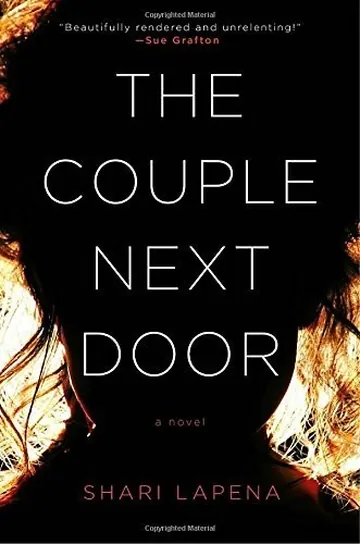
The first page of The Couple Next Door
Anne can feel the acid churning in her stomach and creeping up her throat; her head is swimming. She’s had too much to drink. Cynthia has been topping her up all night. Anne had meant to keep herself to a limit, but she’d let things slide—she didn’t know how else she was supposed to get through the evening. Now she has no idea how much wine she’s drunk over the course of this interminable dinner party. She’ll have to pump and dump her breast milk in the morning.
Anne wilts in the heat of the summer night and watches her hostess with narrowed eyes. Cynthia is flirting openly with Anne’s husband, Marco. Why does Anne put up with it? Why does Cynthia’s husband, Graham, allow it? Anne is angry but powerless; she doesn’t know how to put a stop to it without looking pathetic and ridiculous. They are all a little tanked. So she ignores it, quietly seething, and sips at the chilled wine. Anne wasn’t brought up to create a scene, isn’t one to draw attention to herself.
Continue reading
Cynthia, on the other hand . . .
All three of them—Anne, Marco, and Cynthia’s mild-mannered husband, Graham—are watching her, as if fascinated. Marco in particular can’t seem to take his eyes off Cynthia. She leans in a little too close to Marco as she bends over and fills his glass, her clingy top cut so low that Marco’s practically rubbing his nose in her cleavage.
Anne reminds herself that Cynthia flirts with everyone. Cynthia has such outrageous good looks that she can’t seem to help herself.
But the longer Anne watches, the more she wonders if there could actually be something going on between Marco and Cynthia. Anne has never had such suspicions before. Perhaps the alcohol is making her paranoid.
No, she decides—they wouldn’t be carrying on like this if they had anything to hide. Cynthia is flirting more than Marco is; he is the flattered recipient of her attentions. Marco is almost too good-looking himself—with his tousled dark hair, hazel eyes, and charming smile, he’s always attracted attention. They make a striking couple, Cynthia and Marco. Anne tells herself to stop it. Tells herself that of course Marco is faithful to her. She knows he is completely committed to his family. She and the baby are everything to him. He will stand by her no matter what—she takes another gulp of wine—no matter how bad things get.
But watching Cynthia drape herself over Marco, Anne is becoming more and more anxious and upset. She is still more than twenty pounds overweight from her pregnancy, six months after having the baby. She thought she’d be back to her prepregnancy figure by now, but apparently it takes at least a year. She must stop looking at the tabloids at the grocery-store checkout and comparing herself to all those celebrity moms with their personal trainers who look terrific after mere weeks.
But even at her best, Anne could never compete with the likes of Cynthia, her taller, shapelier neighbor—with her long legs, nipped-in waist, and big breasts, her porcelain skin and tumbling jet-black hair. And Cynthia always dressed to kill, in high heels and sexy clothes—even for a dinner party at home with one other couple.
Anne can’t focus on the conversation around her. She tunes it out and stares at the carved marble fireplace, exactly like the one in her own living-dining room, on the other side of the common wall that Anne and Marco share with Cynthia and Graham; they live in attached brick row houses, typical of this city in upstate New York, solidly built in the late nineteenth century. All the houses in the row are similar—Italianate, restored, expensive—except that Anne and Marco’s is at the end of the row and each reflects slight differences in decoration and taste; each one is a small masterpiece.
Anne reaches clumsily for her cell phone on the dining table and checks the time. It is almost one o’clock in the morning. She’d checked on the baby at midnight. Marco had gone to check on her at twelve thirty. Then he’d gone out for a cigarette on the back patio with Cynthia, while Anne and Graham sat rather awkwardly at the littered dining table, making stilted conversation. She should have gone out to the backyard with them; there might have been a breeze. But she hadn’t, because Graham didn’t like to be around cigarette smoke, and it would have been rude, or at least inconsiderate, to leave Graham there all alone at his own dinner party. So for reasons of propriety, she had stayed. Graham, a WASP like herself, is impeccably polite. Why he married a tart like Cynthia is a mystery. Cynthia and Marco had come back in from the patio a few minutes ago, and Anne desperately wants to leave, even if everyone else is still having fun.
“…one of the book’s strengths comes to the fore, which is the exquisitely torturous tension the Contis feel as they wait for news of Cora.”
NPR

The first page of Verity
I hear the crack of his skull before the spattering of blood reaches me.
I gasp and take a quick step back onto the sidewalk. One of my heels doesn’t clear the curb, so I grip the pole of a No Parking sign to steady myself.
The man was in front of me a matter of seconds ago. We were standing in a crowd of people waiting for the crosswalk light to illuminate when he stepped into the street prematurely, resulting in a run-in with a truck. I lunged forward in an attempt to stop him—grasping at nothing as he went down. I closed my eyes before his head went under the tire, but I heard it pop like the cork of a champagne bottle.
He was in the wrong, looking casually down at his phone, probably a side effect of crossing the same street without incident many times before. Death by routine.
Continue reading
People gasp, but no one screams. The passenger of the offending vehicle jumps out of the truck and is immediately on his knees near the man’s body. I back away from the scene as several people rush forward to help. I don’t have to look at the man under the tire to know he didn’t survive that. I only have to look down at my once-white shirt—at the blood now splattered across it—to know that a hearse would serve him better than an ambulance.
I spin around to move away from the accident—to find a place to take a breath—but the crosswalk sign now says walk and the thick crowd takes heed, making it impossible for me to swim upstream in this Manhattan river. Some don’t even look up from their cell phones as they pass right by the accident. I stop trying to move, and wait for the crowd to thin. I glance back toward the accident, careful not to look directly at the man. The driver of the truck is now at the rear of the vehicle, wide-eyed, on a cell phone. Three, maybe four, people are assisting them. A few are led by their morbid curiosities, filming the gruesome scene with their phones.
If I were still living in Virginia, this would play out in a completely different manner. Everyone around would stop. Panic would ensue, people would be screaming, a news crew would be on scene in a matter of minutes. But here in Manhattan, a pedestrian struck by a vehicle happens so often, it’s not much more than an inconvenience. A delay in traffic for some, a ruined wardrobe for others. This probably happens so often, it won’t even end up in print.
As much as the indifference in some of the people here disturbs me, it’s exactly why I moved to this city ten years ago. People like me belong in overpopulated cities. The state of my life is irrelevant in a place this size. There are far more people here with stories much more pitiful than mine.
Here, I’m invisible. Unimportant. Manhattan is too crowded to give a shit about me, and I love her for it.
“Are you hurt?”
I look up at a man as he touches my arm and scans my shirt. Deep concern is embedded in his expression as he looks me up and down, assessing me for injuries. I can tell by his reaction that he isn’t one of the more hardened New Yorkers. He might live here now, but wherever he’s from, it’s a place that didn’t completely beat the empathy out of him.
“Are you hurt?” the stranger repeats, looking me in the eye this time.
“No. It’s not my blood. I was standing near him when…” I stop speaking. I just saw a man die. I was so close to him, his blood is on me.
I moved to this city to be invisible, but I am certainly not impenetrable. It’s something I’ve been working on—attempting to become as hardened as the concrete beneath my feet. It hasn’t been working out so well. I can feel everything I just witnessed settling in my stomach.
Content note: graphic violence, explicit sex, harm to children
Questions
Quick answers
What books are most like Gone Girl?
For another Gillian Flynn, Sharp Objects. For a perfect marriage with something wrong behind it, Behind Closed Doors. For a missing baby and a suspect couple, The Couple Next Door. For a narrator with a secret, Verity.
What does “unreliable narrator” mean?
A narrator whose account you can’t take at face value, because they are hiding something, mistaken or lying. The books with unreliable narrators stack goes deeper.