Page-turner books that put a question in front of you on page one
A page-turner makes you need the next page. These six start with a hook, from a stranded astronaut to a wedding in a storm.

The first page of Dark Matter
I love Thursday nights.
They have a feel to them that's outside of time.
It's our tradition, just the three of us—family night.
My son, Charlie, is sitting at the table, drawing on a sketch pad. He's almost fifteen. The kid grew two inches over the summer, and he's as tall as I am now.
I turn away from the onion I'm julienning, ask, "Can I see?"
He holds up the pad, shows me a mountain range that looks like something on another planet.
I say, "Love that. Just for fun?"
"Class project. Due tomorrow."
"Then get back to it, Mr. Last Minute."
Standing happy and slightly drunk in my kitchen, I'm unaware that tonight is the end of all of this. The end of everything I know, everything I love.
No one tells you it's all about to change, to be taken away. There's no proximity alert, no indication that you're standing on the precipice. And maybe that's what makes tragedy so tragic. Not just what happens, but how it happens: a sucker punch that comes at you out of nowhere, when you're least expecting it. No time to flinch or brace.
Continue reading
The track lights shine on the surface of my wine, and the onion is beginning to sting my eyes. Thelonious Monk spins on the old turntable in the den. There's a richness to the analog recording I can never get enough of, especially the crackle of static between tracks. The den is filled with stacks and stacks of rare vinyl that I keep telling myself I'll get around to organizing one of these days.
My wife, Daniela, sits on the kitchen island, swirling her almost empty wineglass in one hand and holding her phone in the other. She feels my stare and grins without looking up from the screen.
"I know," she says. "I'm violating the cardinal rule of family night."
"What's so important?" I ask.
She levels her dark, Spanish eyes on mine. "Nothing."
I walk over to her, take the phone gently out of her hand, and set it on the countertop.
"You could start the pasta," I say.
"I prefer to watch you cook."
"Yeah?" Quieter: "Turns you on, huh?"
"No, it's just more fun to drink and do nothing."
Her breath is wine-sweet, and she has one of those smiles that seem architecturally impossible. It still slays me.
I polish off my glass. "We should open more wine, right?"
"It would be stupid not to."
As I liberate the cork from a new bottle, she picks her phone back up and shows me the screen. "I was reading Chicago Magazine's review of Marsha Altman's show."
"Were they kind?"
"Yeah, it's basically a love letter."
"Good for her."
"I always thought . . ." She lets the sentence die, but I know where it was headed. Fifteen years ago, before we met, Daniela was a comer to Chicago's art scene. She had a studio in Bucktown, showed her work in a half-dozen galleries, and had just lined up her first solo exhibition in New York. Then came life. Me. Charlie. A bout of crippling postpartum depression.
Derailment.
“Excellent characterization and well-crafted tension do much to redeem the outlandish plot of this SF thriller…”
Publishers Weekly

The first page of The Martian
I'm pretty much fucked.
That's my considered opinion.
Fucked.
Six days into what should be the greatest month of my life, and it's turned into a nightmare.
I don't even know who'll read this. I guess someone will find it eventually. Maybe a hundred years from now.
For the record. I didn't die on Sol 6. Certainly the rest of the crew thought I did, and I can't blame them. Maybe there'll be a day of national mourning for me, and my Wikipedia page will say, "Mark Watney is the only human being to have died on Mars."
And it'll be right, probably. 'Cause I'll surely die here. Just not on Sol 6 when everyone thinks I did.
Let’s see . . . where do I begin?
The Ares Program. Mankind reaching out to Mars to send people to another planet for the very first time and expand the horizons of humanity blah, blah, blah. The Ares I crew did their thing and came back heroes. They got the parades and fame and love of the world.
Continue reading
Ares 2 did the same thing, in a different location on Mars. They got a firm handshake and a hot cup of coffee when they got home. Ares 3. Well, that was my mission. Okay, not mine per se. Commander Lewis was in charge. I was just one of her crew. Actually, I was the very lowest ranked member of the crew. I would only be "in command" of the mission if I were the only remaining person. What do you know? I'm in command. I wonder if this log will be recovered before the rest of the crew die of old age. I presume they got back to Earth all right. Guys, if you're reading this: It wasn't your fault. You did what you had to do. In your position I would have done the same thing. I don't blame you, and I'm glad you survived.
I guess I should explain how Mars missions work, for any layman who may be reading this. We got to Earth orbit the normal way, through an ordinary ship to Hermes. All the Ares missions use Hermes to get to and from Mars. It's really big and costs a lot so NASA built only one. Once we got to Hermes, four additional unmanned missions brought us fuel and supplies while we prepared for our trip. Once everything was a go, we set out for Mars. But not very fast. Gone are the days of heavy chemical fuel burns and trans-Mars injection orbits. Hermes is powered by ion engines. They throw argon out the back of the ship really fast to get a tiny amount of acceleration. The thing is, it doesn't take much reactant mass, so a little argon (and a nuclear reactor to power things) let us accelerate constantly the whole way there. You'd be amazed at how fast you can get going with a tiny acceleration over a long time. I could regale you with tales of how we had great fun on the trip, but I won't. I don't feel like reliving it right now. Suffice it to say we got to Mars 124 days later without strangling each other.
“Sharp, funny and thrilling, with just the right amount of geekery.”
Kirkus Reviews
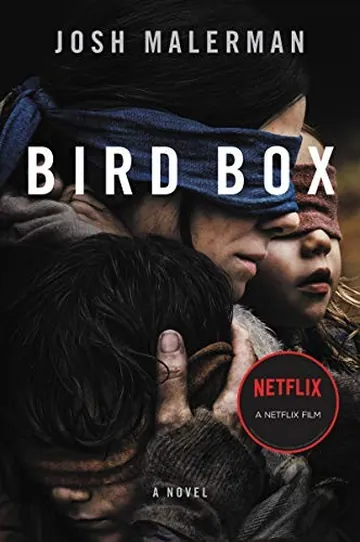
The first page of Bird Box
Malorie stands in the kitchen, thinking.
Her hands are damp. She is trembling. She taps her toe nervously on the cracked tile floor. It is early; the sun is probably only peeking above the horizon. She watches its meager light turn the heavy window drapes a softer shade of black and thinks,
That was a fog.
The children sleep under chicken wire draped in black cloth down the hall. Maybe they heard her moments ago on her knees in the yard. Whatever noise she made must have traveled through the microphones, then the amplifiers that sat beside their beds.
She looks to her hands and detects the subtlest sheen in the candlelight. Yes, they are damp. The morning's dew is still fresh upon them.
Now, in the kitchen, Malorie breathes deep before blowing the candle out. She looks around the small room, noting the rusted utensils and cracked dishes. The cardboard box used as a garbage can.
Continue reading
The chairs, some held together by twine. The walls are dirty. Dirt from the feet and hands of the children. But older stains, too. The bottom of the walls in the hall is discolored, profound purples that have dulled to brown over time. These are blood. The carpet in the living room is discolored, too, no matter how hard Malorie scrubs. There are no chemicals in the house to help clean it. Long ago, Malorie filled the buckets with water from the well and, using a suit coat, worked on removing the stains from all over the house. But they refused to go away. Even those that proved less persistent remained, a shadow perhaps of their original size, but still horribly visible. A box of candles hides a blotch in the foyer. The couch in the living room sits at an awkward angle, moved there to shield two blemishes that look like wolf heads to Malorie. On the second floor, by the attic stairs, a pile of musty coats conceals purple scratches, embedded deep into the foot of the wall. Ten feet away is the blackest stain in the house. She does not use the far end of the home's second floor because she cannot bring herself to cross it.
This was once a nice house in a nice suburb of Detroit. Once, it was family-ready and safe. Only half a decade ago, a real-estate agent would have proudly showed it off. But this morning, the windows are covered with cardboard and wood. There is no running water. A big wooden bucket sits upon the kitchen counter. It smells stale. There are no conventional toys for the children. Pieces of a wooden chair have been whittled to play the part of little people. Small faces have been painted upon them. The cupboards are bare. There are no paintings on the walls. Wires run from under the back door into the first-floor bedrooms, where amplifiers alert Malorie and the children to any sounds coming from outside the house. The three of them live this way. They do not go outside for long periods of time. When they do, they are blindfolded.
The children have never seen the world outside their home. Not even through the windows. And Malorie hasn’t looked in more than four years.
Four years.
She does not have to make this decision today. It’s October in Michigan. It’s cold. A twenty-mile trip on the river will be hard on the children. They may still be too young. What if one of them were to fall into the water? What would Malorie, blindfolded, do then?
An accident, Malorie thinks. How horrible. After all this struggling, all this survival. To die because of an accident.
Malorie looks at the drapes. She begins to cry. She wants to yell at someone. She wants to plead with anyone who might listen. This is unfair, she would say. This is cruel.
“The author uses understatement and allusion to create a lean, spellbinding thriller that Stephen King fans will relish.”
Publishers Weekly
Content note: graphic violence, suicide, children in danger
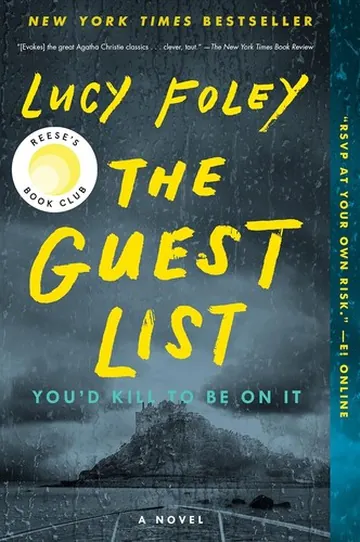
The first page of The Guest List
The lights go out.
In an instant, everything is in darkness. The band stop their playing. Inside the tent the wedding guests squeal and clutch at one another. The light from the candles on the tables only adds to the confusion, sends shadows racing up the canvas walls. It’s impossible to see where anyone is or hear what anyone is saying: above the guests’ voices the wind rises in a frenzy.
Outside a storm is raging. It shrieks around them, it batters the tent. At each assault the whole structure seems to flex and shudder with a loud groaning of metal; the guests cower in alarm. The doors have come free from their ties and flap at the entrance. The flames of the paraffin torches that illuminate the doorway snicker.
It feels personal, this storm. It feels as though it has saved all its fury for them.
This isn’t the first time the electric has shorted. But last time the lights snapped back on again within minutes. The guests returned to their dancing, their drinking, their pill-popping, their screwing, their eating, their laughing ... and forgot it ever happened.
Continue reading
How long has it been now? In the dark it’s difficult to tell. A few minutes? Fifteen? Twenty?
They’re beginning to feel afraid. This darkness feels somehow ominous, intent. As though anything could be happening beneath its cover.
Finally, the bulbs flicker back on. Whoops and cheers from the guests. They’re embarrassed now about how the lights find them: crouched as though ready to fend off an attack. They laugh it off. They almost manage to convince themselves that they weren’t frightened.
The scene illuminated in the three adjoining tents should be one of celebration, but it looks more like one of devastation. In the main dining section, clots of wine spatter the laminate floor, a crimson stain spreads across white linen. Bottles of champagne cluster on every surface; testament to an evening of toasts and celebrations. A forlorn pair of silver sandals peeks from beneath a tablecloth.
The Irish band begins to play again in the dance tent—a rousing ditty to restore the spirit of celebration. Many of the guests hurry in that direction, eager for some light relief. If you were to look closely at where they step you might see the marks where one barefoot guest has trodden in broken glass and left bloody footprints across the laminate, drying to a rusty stain. No one notices.
Other guests drift and gather in the corners of the main tent, nebulous as leftover cigarette smoke. Loath to stay, but also loath to step outside its sanctuary while the storm still rages. And no one can leave the island. Not yet. The boats can’t come until the wind dies down.
In the center of everything stands the huge cake. It has appeared whole and perfect before them for most of the day, its train of sugar foliage glittering beneath the lights. But only minutes before the lights went out the guests gathered around to watch its ceremonial disemboweling. Now the deep red sponge gapes from within.
Then from outside comes a new sound. You might almost mistake it for the wind. But it rises in pitch and volume until it is unmistakable.
The guests freeze. They stare at one another. They are suddenly afraid again. More so than they were when the lights went out. They all know what they are hearing. It is a scream of terror.
“Readers seeking thrills will find plenty.”
Publishers Weekly
Content note: sexual assault, suicide
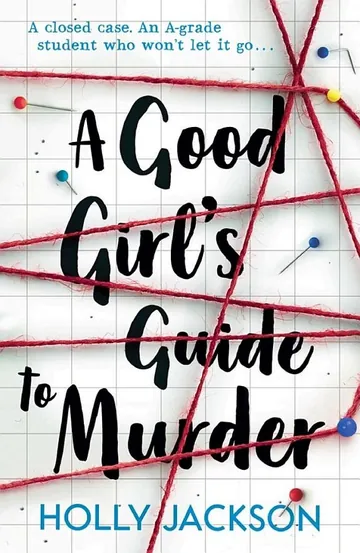
The first page of A Good Girl’s Guide to Murder
Pip knew where they lived.
Everyone in Little Kilton knew where they lived.
Their home was like the town’s own haunted house; people’s footsteps quickened as they walked by and their words strangled and died in their throats. Shrieking children would gather on their walk home from school, daring one another to run up and touch the front gate.
But it wasn’t haunted by ghosts, just three sad people trying to live their lives as before. A house not haunted by flickering lights or spectral falling chairs, but by dark spray-painted letters of Scum Family and stone-shattered windows.
Pip had always wondered why they didn’t move. Not that they had to; they hadn’t done anything wrong. But she didn’t know how they lived like that.
Pip knew a great many things; she knew that hippopotomonstrosesquipedaliophobia was the technical term for the fear of long words, she knew that babies were born without kneecaps, she knew verbatim the best quotes from Plato and Cato, and that there were more than four thousand types of potato. But she didn’t know how the Singhs found the strength to stay here. Here, in Kilton, under the weight of so many widened eyes, of the comments whispered just loud enough to be heard, of neighbourly small talk never stretching into long talk any more.
Continue reading
It was a particular cruelty that their house was so close to Little Kilton Grammar School, where both Andie Bell and Sal Singh had gone, where Pip would return for her final year in a few weeks when the August-pickled sun dipped into September.
Pip stopped and rested her hand on the front gate, instantly braver than half the town’s kids. Her eyes traced up the path to the front door. It might only look like a few feet but there was a rumbling chasm between where she stood and over there. It was possible that this was a very bad idea; she had considered that. The morning sun was hot and she could already feel her knee pits growing sticky in her jeans. A bad idea or a bold idea. And yet, history’s greatest minds always advised bold over safe; their words good padding for even the worst ideas.
Snubbing the chasm with the soles of her shoes, she walked up to the door and, pausing for just a second to check she was sure, knocked three times. Her tense reflection stared back at her: the long dark hair sun-dyed a lighter brown at the tips, the pale face, despite a week just spent in the south of France, the sharp muddy green eyes braced for impact.
“A treat for mystery readers who enjoy being kept in suspense.”
Kirkus Reviews

The first page of Verity
I hear the crack of his skull before the spattering of blood reaches me.
I gasp and take a quick step back onto the sidewalk. One of my heels doesn’t clear the curb, so I grip the pole of a No Parking sign to steady myself.
The man was in front of me a matter of seconds ago. We were standing in a crowd of people waiting for the crosswalk light to illuminate when he stepped into the street prematurely, resulting in a run-in with a truck. I lunged forward in an attempt to stop him—grasping at nothing as he went down. I closed my eyes before his head went under the tire, but I heard it pop like the cork of a champagne bottle.
He was in the wrong, looking casually down at his phone, probably a side effect of crossing the same street without incident many times before. Death by routine.
Continue reading
People gasp, but no one screams. The passenger of the offending vehicle jumps out of the truck and is immediately on his knees near the man’s body. I back away from the scene as several people rush forward to help. I don’t have to look at the man under the tire to know he didn’t survive that. I only have to look down at my once-white shirt—at the blood now splattered across it—to know that a hearse would serve him better than an ambulance.
I spin around to move away from the accident—to find a place to take a breath—but the crosswalk sign now says walk and the thick crowd takes heed, making it impossible for me to swim upstream in this Manhattan river. Some don’t even look up from their cell phones as they pass right by the accident. I stop trying to move, and wait for the crowd to thin. I glance back toward the accident, careful not to look directly at the man. The driver of the truck is now at the rear of the vehicle, wide-eyed, on a cell phone. Three, maybe four, people are assisting them. A few are led by their morbid curiosities, filming the gruesome scene with their phones.
If I were still living in Virginia, this would play out in a completely different manner. Everyone around would stop. Panic would ensue, people would be screaming, a news crew would be on scene in a matter of minutes. But here in Manhattan, a pedestrian struck by a vehicle happens so often, it’s not much more than an inconvenience. A delay in traffic for some, a ruined wardrobe for others. This probably happens so often, it won’t even end up in print.
As much as the indifference in some of the people here disturbs me, it’s exactly why I moved to this city ten years ago. People like me belong in overpopulated cities. The state of my life is irrelevant in a place this size. There are far more people here with stories much more pitiful than mine.
Here, I’m invisible. Unimportant. Manhattan is too crowded to give a shit about me, and I love her for it.
“Are you hurt?”
I look up at a man as he touches my arm and scans my shirt. Deep concern is embedded in his expression as he looks me up and down, assessing me for injuries. I can tell by his reaction that he isn’t one of the more hardened New Yorkers. He might live here now, but wherever he’s from, it’s a place that didn’t completely beat the empathy out of him.
“Are you hurt?” the stranger repeats, looking me in the eye this time.
“No. It’s not my blood. I was standing near him when…” I stop speaking. I just saw a man die. I was so close to him, his blood is on me.
I moved to this city to be invisible, but I am certainly not impenetrable. It’s something I’ve been working on—attempting to become as hardened as the concrete beneath my feet. It hasn’t been working out so well. I can feel everything I just witnessed settling in my stomach.
Content note: graphic violence, explicit sex, harm to children
Questions
Quick answers
What makes a book a page-turner?
A question raised early and answered slowly: someone is in danger, someone is lying, something is about to go wrong.
Are these all thrillers?
No. Dark Matter and The Martian are science fiction, Bird Box is horror, and A Good Girl’s Guide to Murder is a young adult mystery. What they share is pace.