Books like Normal People, about closeness that keeps shifting
Normal People opens on a doorbell in a school town in the west of Ireland. These five stay close to that careful voice: Dublin affairs, long emails, two brothers after a funeral, a Bushwick apartment and a babysitter called at night.
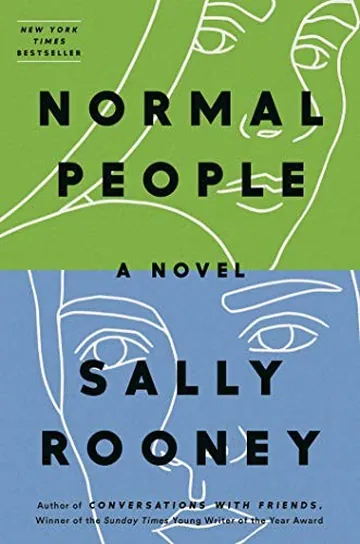
The first page of Normal People
Marianne answers the door when Connell rings the bell. She's still wearing her school uniform, but she's taken off the sweater, so it's just the blouse and skirt, and she has no shoes on, only tights.
Oh, hey, he says.
Come on in.
She turns and walks down the hall. He follows her, closing the door behind him. Down a few steps in the kitchen, his mother Lorraine is peeling off a pair of rubber gloves. Marianne hops onto the countertop and picks up an open jar of chocolate spread, in which she has left a teaspoon.
Marianne was telling me you got your mock results today, Lorraine says.
We got English back, he says. They come back separately. Do you want to head on?
Lorraine folds the rubber gloves up neatly and replaces them below the sink. Then she starts unclipping her hair. To Connell this seems like something she could accomplish in the car.
Continue reading
And I hear you did very well, she says.
He was top of the class, says Marianne.
Right, Connell says. Marianne did pretty good too. Can we go?
Lorraine pauses in the untying of her apron.
I didn’t realize we were in a rush, she says.
He puts his hands in his pockets and suppresses an irritable sigh, but suppresses it with an audible intake of breath, so that it still sounds like a sigh.
I just have to pop up and take a load out of the dryer, says Lorraine. And then we’ll be off. Okay?
He says nothing, merely hanging his head while Lorraine leaves the room.
Do you want some of this? Marianne says.
She’s holding out the jar of chocolate spread. He presses his hands down slightly further into his pockets, as if trying to store his entire body in his pockets all at once.
No, thanks, he says.
Did you get your French results today?
Yesterday.
He puts his back against the fridge and watches her lick the spoon. In school he and Marianne affect not to know each other. People know that Marianne lives in the white mansion with the driveway and that Connell’s mother is a cleaner, but no one knows of the special relationship between these facts.
I got an A1, he says. What did you get in German?
An A1, she says. Are you bragging?
You’re going to get six hundred, are you?
She shrugs. You probably will, she says.
Well, you’re smarter than me.
Don’t feel bad. I’m smarter than everyone.
Marianne is grinning now. She exercises an open contempt for people in school. She has no friends and spends her lunchtimes alone reading novels. A lot of people really hate her. Her father died when she was thirteen and Connell has heard she has a mental illness now or something. It’s true she is the smartest person in school. He dreads being left alone with her like this, but he also finds himself fantasizing about things he could say to impress her.
You’re not top of the class in English, he points out.
She licks her teeth, unconcerned.
Maybe you should give me grinds, Connell, she says.
He feels his ears get hot. She’s probably just being glib and not suggestive, but if she is being suggestive it’s only to degrade him by association, since she is considered an object of disgust.
She wears ugly thick-soled flat shoes and doesn’t put makeup on her face. People have said she doesn’t shave her legs or anything. Connell once heard that she spilled chocolate ice cream on herself in the school lunchroom, and she went to the girls’ bathrooms and took her blouse off to wash it in the sink. That’s a popular story about her, everyone has heard it. If she wanted, she could make a big show of saying hello to Connell in school. See you this afternoon, she could say, in front of everyone. Undoubtedly it would put him in an awkward position, which is the kind of thing she usually seems to enjoy. But she has never done it.
What were you talking to Miss Neary about today? says Marianne.
Oh. Nothing. I don’t know. Exams.
“Absolutely enthralling. Read it.”
Kirkus Reviews

The first page of Conversations with Friends
Bobbi and I first met Melissa at a poetry night in town, where we were performing together. Melissa took our photograph outside, with Bobbi smoking and me self-consciously holding my left wrist in my right hand, as if I was afraid the wrist was going to get away from me. Melissa used a big professional camera and kept lots of different lenses in a special camera pouch. She chatted and smoked while taking the pictures. She talked about our performance and we talked about her work, which we’d come across on the Internet. Around midnight the bar closed. It was starting to rain then, and Melissa told us we were welcome to come back to her house for a drink.
We all got into the back of a taxi together and started fixing up our seat belts. Bobbi sat in the middle, with her head turned to speak to Melissa, so I could see the back of her neck and her little spoon-like ear. Melissa gave the driver an address in Monkstown and I turned to look out the window. A voice came on the radio to say the words: eighties . . . pop . . . classics. Then a jingle played. I felt excited, ready for the challenge of visiting a stranger’s home, already preparing compliments and certain facial expressions to make myself seem charming.
Continue reading
The house was a semidetached red-brick, with a sycamore tree outside. Under the streetlight the leaves looked orange and artificial. I was a big fan of seeing the insides of other people’s houses, especially people who were slightly famous like Melissa. Right away I decided to remember everything about her home, so I could describe it to our other friends later and Bobbi could agree.
When Melissa let us in, a little red spaniel came racing up the hall and started barking at us. The hallway was warm and the lights were on. Next to the door was a low table where someone had left a stack of change, a hairbrush, and an open tube of lipstick. There was a Modigliani print hanging over the staircase, a nude woman reclining. I thought: this is a whole house. A family could live here.
We have guests, Melissa called down the corridor.
No one appeared so we followed her into the kitchen. I remember seeing a dark wooden bowl filled with ripe fruit, and noticing the glass conservatory. Rich people, I thought. I was always thinking about rich people then. The dog had followed us to the kitchen and was snuffling around at our feet, but Melissa didn’t mention the dog so neither did we.
Wine? Melissa said. White or red?
She poured huge, bowl-sized glasses and we all sat around a low table. Melissa asked us how we’d started out performing spoken word poetry together. We had both just finished our third year of university at the time, but we’d been performing together since we were in school. Exams were over by then. It was late May.
Melissa had her camera on the table and occasionally lifted it to take a photograph, laughing self-deprecatingly about being a “work addict.” She lit a cigarette and tipped the ash into a kitschy-looking glass ashtray. The house didn’t smell of smoke at all and I wondered if she usually smoked in there or not.
“A clever and current book about a complicated woman and her romantic relationships.”
Kirkus Reviews

The first page of Beautiful World, Where Are You
A woman sat in a hotel bar, watching the door. Her appearance was neat and tidy: white blouse, fair hair tucked behind her ears. She glanced at the screen of her phone, on which was displayed a messaging interface, and then looked back at the door again. It was late March, the bar was quiet, and outside the window to her right the sun was beginning to set over the Atlantic. It was four minutes past seven, and then five, six minutes past. Briefly and with no perceptible interest she examined her fingernails. At eight minutes past seven, a man entered through the door. He was slight and dark-haired, with a narrow face. He looked around, scanning the faces of the other patrons, and then took his phone out and checked the screen. The woman at the window noticed him but, beyond watching him, made no additional effort to catch his attention. They appeared to be about the same age, in their late twenties or early thirties. She let him stand there until he saw her and came over.
Continue reading
Are you Alice? he said.
That’s me, she replied.
Yeah, I’m Felix. Sorry I’m late.
In a gentle tone she replied: That’s alright. He asked her what she wanted to drink and then went to the bar to order. The waitress asked how he was getting on, and he answered: Good yeah, yourself? He ordered a vodka tonic and a pint of lager. Rather than carrying the bottle of tonic back to the table, he emptied it into the glass with a quick and practised movement of his wrist. The woman at the table tapped her fingers on a beermat, waiting. Her outward attitude had become more alert and lively since the man had entered the room. She looked outside now at the sunset as if it were of interest to her, though she hadn’t paid any attention to it before. When the man returned and put the drinks down, a drop of lager spilled over and she watched its rapid progress down the side of his glass.
You were saying you just moved here, he said. Is that right?
She nodded, sipped her drink, licked her top lip.
What did you do that for? he asked.
What do you mean?
I mean, there’s not much in the way of people moving here, usually. People moving away from here, that would be more the normal thing. You’re hardly here for work, are you?
Oh. No, not really.
A momentary glance between them seemed to confirm that he was expecting more of an explanation. Her expression flickered, as if she were trying to make a decision, and then she gave a little informal, almost conspiratorial smile.
Well, I was looking to move somewhere anyway, she said, and then I heard about a house just outside town here – a friend of mine knows the owners. Apparently they’ve been trying to sell it forever and eventually they just started looking for someone to live there in the meantime. Anyway, I thought it would be nice to live beside the sea. I suppose it was a bit impulsive, really. So —But that’s the entire story, there was no other reason.
He was drinking and listening to her. Toward the end of her remarks she seemed to have become slightly nervous, which expressed itself in a shortness of breath and a kind of self-mocking expression. He watched this performance impassively and then put his glass down.
Right, he said. And you were in Dublin before, was it?
Different places. I was in New York for a while. I’m from Dublin, I think I told you that. But I was living in New York until last year.
And what are you going to do now you’re here? Look for work or something?
“A novel of capacious intelligence and plenty of page-turning emotional drama.”
Kirkus Reviews

The first page of Intermezzo
Didn’t seem fair on the young lad. That suit at the funeral. With the braces on his teeth, the supreme discomfort of the adolescent. On such occasions, one could almost come to regret one’s own social brilliance. Gives him the excuse, or gives him in any case someone at whom to look pleadingly between the mandatory handshakes. God love him. Nearly twenty-three now: Ivan the terrible. Difficult actually to believe the suit on him. Picked it up perhaps in some little damp-smelling second-hand shop for the local hospice, paid in cash, rode it home on his bicycle crumpled in a reusable plastic bag. Yes, that in fact would make sense of it, would bring into alignment the suit in its resplendent ugliness and the personality of the younger brother, ten years younger. Not without style in his own way. Certain kind of panache in his absolute disregard for the material world.
Continue reading
Brains and beauty, an aunt said once. About them both. Or was it Ivan brains and Peter beauty. Thanks, I think. He crosses Watling Street now towards the apartment that is not an apartment, the house that is not a house, eleven or is it twelve days since the funeral, back in town. Back at work, such as it is. Or back anyway to Naomi’s place. And what will she be wearing when she answers the door. Slides his phone from his pocket into the palm of his hand as he reaches the front step, cool tactility of the screen as it lights under his fingers, typing. Outside. Evenings drawing in now and she’s back at her lectures, presumably. No reply but she sees the message, and then the predictable sequence, the so familiar and by now indirectly arousing sequence of sounds as behind the front door she comes up the old basement staircase and into the hall. Classical conditioning: how did it take so long to figure that out? Common sense. Not that. Everyday experience. The relationship of memory and feeling. The opening door.
Hello, Peter, she says.
A cropped cashmere tank top, thin gold necklace. And black sweatpants fitted slim at the ankle. Not elasticated, she hates that. Bare feet.
May I come in? he asks.
Down the staircase and into her room without seeing any of the others. Fairy lights glowing dim pinpricks against the wall. Takes his shoes off, leaves them by the door. Laptop lying splayed open on the unmade mattress. Fragrance of perfume, sweat and cannabis. In whose blent air all our compulsions meet. Curtains hanging closed, as always.
Where have you been? she asks.
Ah. I’m afraid something came up.
She’s looking at him, and then not looking, with a scoff. Off on a late summer holiday, were you? she asks.
Naomi, sweetheart, he says in a friendly voice. My dad died.
Stunned, she turns to look, saying: Your— Then she falls silent. Jesus, she adds. Oh my God, fuck. Peter, I’m so sorry.
Do you mind if I sit down?
They sit on the mattress together.
Christ, she says. Then: Are you okay?
Yeah, I think so.
She’s looking down at the soles of her feet, crossed on the mattress. Blackened with the dirt that never seems dirty exactly. You want to talk about it? she asks.
Not really.
How’s your brother doing?
Ivan, he says. Do you know he’s about your age?
Yeah, you told me. You said you wanted to introduce us. Is he okay?
With love, irresistibly, Peter smiles, and to avoid the spectacle of smiling with irresistible love at Naomi herself, he smiles instead, as if humorously, at the inside of his own extended wrist. Oh, he’s doing— I actually have no idea how he’s doing.
What did I tell you about him before?
I don’t know, you said he was 'a curio' or something.
Yeah, he’s a complete oddball. Really not your type.
“Though not perfect, a clear leap forward for Rooney; her grandmaster status remains intact.”
Kirkus Reviews
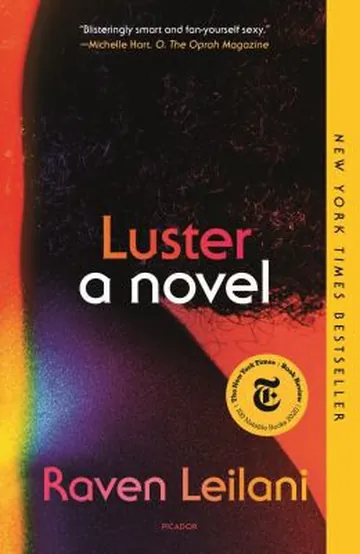
The first page of Luster
The first time we have sex, we are both fully clothed, at our desks during working hours, bathed in blue computer light. He is uptown processing a new bundle of microfiche and I am downtown handling corrections for a new Labrador detective manuscript. He tells me what he ate for lunch and asks if I can manage to take off my underwear in my cubicle without anyone noticing. His messages come with impeccable punctuation. He is fond of words like taste and spread. The empty text field is full of possibilities. Of course I worry about IT remoting into my computer, or my internet history warranting yet another disciplinary meeting with HR. But the risk. The thrill of a third pair of unseen eyes. The idea that someone in the office, with that sweet, post-lunch-break optimism, might come across the thread and see how tenderly Eric and I have built this private world.
Continue reading
In his first message, he points out a few typos in my online profile and tells me he has an open marriage. His profile pictures are candid and loose—a grainy photo of him asleep in the sand, a photo of him shaving, taken from behind. It is this last photo that moves me. The dirty tile and the soft recession of steam. His face in the mirror, stern with quiet scrutiny. I save the photo to my phone so I can look at it on the train. Women look over my shoulder and smile, and I let them believe he is mine.
Otherwise, I have not had much success with men. This is not a statement of self-pity. This is just a statement of the facts. Here's a fact: I have great breasts, which have warped my spine. More facts: My salary is very low. I have trouble making friends, and men lose interest in me when I talk too explicitly about my ovarian torsion or my rent. Eric is different. Two weeks into our correspondence, he tells me about the cancer that ravaged half of his maternal family. He tells me about an aunt he loved who made potions with fox hair and hemp. How she was buried with a corn husk doll she’d made of herself. Still, he describes his childhood home lovingly, the digressions of farmland between Milwaukee and Appleton, the yellow-breasted chats and tundra swans that would appear in his yard, looking for seed. When I talk about my childhood, I only talk about the happy parts. The VHS of Spice World I received for my fifth birthday, the Barbie I melted in the microwave when no one was home. Of course, the context of my childhood—the boy bands, the Lunchables, the impeachment of Bill Clinton—only emphasizes our generational gap. Eric is sensitive about his age and about mine, and he makes a considerable effort to manage the twenty-three-year discrepancy. He follows me on Instagram and leaves lengthy comments on my posts. Retired internet slang interspersed with earnest remarks about how the light falls on my face. Compared to the inscrutable advances of younger men, it is a relief.
We talk for a month before our schedules align. We try to meet earlier, but things always come up. This is just one way his life is different from mine. There are people who count on him, and sometimes they need him urgently. Between his abrupt cancellations, I realize I need him, too. In a way that makes my dreams delirious expressions of thirst—long stretches of yellow desert, cathedrals hemmed in dripping moss. By the time we set our first real date, I would’ve done anything. He wanted to go to Six Flags.
We decide to go on a Tuesday. When he rolls up in his white Volvo, I have only made it to the part of my pre-date routine where I try to find the most appropriate laugh. I put on three dresses before I find the right one. I tie up my braids and line my eyes. There are dishes in the sink and a pervasive salmon smell in the apartment, and I don’t want him to think it has anything to do with me. I put on a complex pair of underwear that is not so much underwear as a bundle of string, and I stand before the mirror. I think to myself, You are a desirable woman. You are not a dozen gerbils in a skin casing.
Outside, he is double-parked. He leans against the car and remains like this as I come out, his eyes bright and still. His hair is darker than I expected, a black so opaque it looks blue. His face is almost obscenely symmetrical, though one of his eyebrows is higher than the other, and it makes his smile seem a little smug. It is the second day of summer and all the city’s powers have no sway over him. I reach for his hand, trying not to swallow my tongue, and something feels strange. Of course there are nerves. In person he is a total daddy, his face alert and hard, softened only by the slight recession of his hair. But this strange feeling has nothing to do with that, nothing to do with me looking past his sensuous mouth and slightly askew nose for any indication that he is as nervous as I am. It is that it is 8:15 a.m. and I feel happy. I am not on the L, smelling someone’s lukewarm pickles, wishing I were dead. “Eddie,” I say, extending my hand. “I know,” he says, his long fingers settling between mine, too gently. I wanted to be more forward, to fold him into an easy, extroverted hug. But what happens is this limp handshake, this aversion of my eyes, this unsurprising and immediate surrender of power. And then the worst part of meeting a man in broad daylight, the part where you see him seeing you, deciding in this split second whether any future cunnilingus will be enthusiastic or perfunctory. He opens the door, and there is a fluffy blue die hanging from the rearview mirror. A half-eaten bag of Jolly Ranchers in the passenger seat. His correspondence online has been honest, full of his stuttering sincerity. However, as we have already told the stories you might tell on a first date, it is harder to begin. He brings up the weather and then we are talking about climate change. After a while of talking generally about burning to death, we pull into the park.

The first page of Such a Fun Age
That night, when Mrs. Chamberlain called, Emira could only piece together the words “. . . take Briar somewhere . . .” and “. . . pay you double.”
In a crowded apartment and across from someone screaming “That’s my song!,” Emira stood next to her girlfriends Zara, Josefa, and Shaunie. It was a Saturday night in September, and there was a little over an hour left of Shaunie’s twenty-sixth birthday. Emira turned the volume up on her phone and asked Mrs. Chamberlain to say it again.
“Is there any way you can take Briar to the grocery store for a bit?” Mrs. Chamberlain said. “I’m so sorry to call. I know it’s late.”
It was almost astonishing that Emira’s daily babysitting job (a place of pricey onesies, colorful stacking toys, baby wipes, and sectioned dinner plates) could interrupt her current nighttime state (loud music, bodycon dresses, lip liner, and red Solo cups). But here was Mrs. Chamberlain, at 10:51 p.m., waiting for Emira to say yes. Under the veil of two strong mixed drinks, the intersection of these spaces almost seemed funny, but what wasn’t funny was Emira’s current bank balance: a total of seventy-nine dollars and sixteen cents. After a night of twenty-dollar entrées, birthday shots, and collective gifts for the birthday girl, Emira Tucker could really use the cash.
Continue reading
“Hang on,” she said. She set her drink down on a low coffee table and stuck her middle finger into her other ear. “You want me to take Briar right now?”
On the other side of the table, Shaunie placed her head on Josefa’s shoulder and slurred, “Does this mean I’m old now? Is twenty-six old?” Josefa pushed her off and said, “Shaunie, don’t start.” Next to Emira, Zara untwisted her bra strap. She made a disgusted face in Emira’s direction and mouthed, Eww, is that your boss?
“Peter accidentally—we had an incident with a broken window and . . . I just need to get Briar out of the house.” Mrs. Chamberlain’s voice was calm and strangely articulate, as if she were delivering a baby and saying, Okay, mom, it’s time to push. “I’m so sorry to call you this late,” she said. “I just don’t want her to see the police.”
“Oh wow. Okay, but, Mrs. Chamberlain?” Emira sat down at the edge of a couch. Two girls started dancing on the other side of the armrest. The front door of Shaunie’s apartment opened to Emira’s left, and four guys came in yelling, “Ayyeee!”
“Jesus,” Zara said. “All these niggas tryna stunt.”
“I don’t exactly look like a babysitter right now,” Emira warned. “I’m at a friend’s birthday.”
“Oh God. I’m so sorry. You should stay—”
“No no, it’s not like that,” Emira said louder. “I can leave. I’m just letting you know that I’m in heels and I’ve like . . . had a drink or two. Is that okay?”
Baby Catherine, the youngest Chamberlain at five months old, wailed in the receiver. Mrs. Chamberlain said, “Peter, can you please take her?” and then, up close, “Emira, I don’t care what you look like. I’ll pay for your cab here and your cab home.”
Emira slipped her phone into the pouch of her crossbody bag, making sure all of her other belongings were present. When she stood and relayed the news of her early departure to her girlfriends, Josefa said, “You’re leaving to babysit? Are you fucking kidding me?”
“Guys . . . listen. No one needs to babysit me,” Shaunie informed the group. One of her eyes was open and the other was trying very hard to match.
Josefa wasn’t through asking questions. “What kind of mom asks you to babysit this late?”
Emira didn’t feel like getting into specifics. “I need the cash,” she said. She knew it was highly unlikely, but she added, “I’ll come back if I get done, though.”
Zara nudged her and said, “Imma roll witchyou.”
Emira thought, Oh, thank God. Out loud, she said, “Okay, cool.”
The two girls finished their drinks in one long tip as Josefa crossed her arms. “I can’t believe you guys are leaving Shaunie’s birthday right now.”
“Charming, challenging, and so interesting you can hardly put it down.”
Kirkus Reviews
Questions
Quick answers
Are all of these by Sally Rooney?
No. The first four are. Luster and Such a Fun Age are here for the same kind of sharp, present-tense closeness, not the same author.