Novels without quotation marks, and how they sound on the first page
Some writers drop the quotation marks and let speech sit inside the narration. Read a page of each of these six and see whether it pulls you in or puts you off.
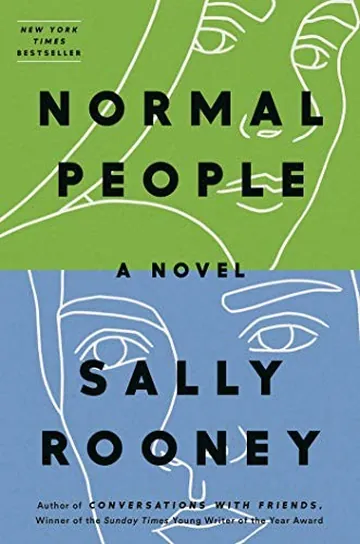
The first page of Normal People
Marianne answers the door when Connell rings the bell. She's still wearing her school uniform, but she's taken off the sweater, so it's just the blouse and skirt, and she has no shoes on, only tights.
Oh, hey, he says.
Come on in.
She turns and walks down the hall. He follows her, closing the door behind him. Down a few steps in the kitchen, his mother Lorraine is peeling off a pair of rubber gloves. Marianne hops onto the countertop and picks up an open jar of chocolate spread, in which she has left a teaspoon.
Marianne was telling me you got your mock results today, Lorraine says.
We got English back, he says. They come back separately. Do you want to head on?
Lorraine folds the rubber gloves up neatly and replaces them below the sink. Then she starts unclipping her hair. To Connell this seems like something she could accomplish in the car.
Continue reading
And I hear you did very well, she says.
He was top of the class, says Marianne.
Right, Connell says. Marianne did pretty good too. Can we go?
Lorraine pauses in the untying of her apron.
I didn’t realize we were in a rush, she says.
He puts his hands in his pockets and suppresses an irritable sigh, but suppresses it with an audible intake of breath, so that it still sounds like a sigh.
I just have to pop up and take a load out of the dryer, says Lorraine. And then we’ll be off. Okay?
He says nothing, merely hanging his head while Lorraine leaves the room.
Do you want some of this? Marianne says.
She’s holding out the jar of chocolate spread. He presses his hands down slightly further into his pockets, as if trying to store his entire body in his pockets all at once.
No, thanks, he says.
Did you get your French results today?
Yesterday.
He puts his back against the fridge and watches her lick the spoon. In school he and Marianne affect not to know each other. People know that Marianne lives in the white mansion with the driveway and that Connell’s mother is a cleaner, but no one knows of the special relationship between these facts.
I got an A1, he says. What did you get in German?
An A1, she says. Are you bragging?
You’re going to get six hundred, are you?
She shrugs. You probably will, she says.
Well, you’re smarter than me.
Don’t feel bad. I’m smarter than everyone.
Marianne is grinning now. She exercises an open contempt for people in school. She has no friends and spends her lunchtimes alone reading novels. A lot of people really hate her. Her father died when she was thirteen and Connell has heard she has a mental illness now or something. It’s true she is the smartest person in school. He dreads being left alone with her like this, but he also finds himself fantasizing about things he could say to impress her.
You’re not top of the class in English, he points out.
She licks her teeth, unconcerned.
Maybe you should give me grinds, Connell, she says.
He feels his ears get hot. She’s probably just being glib and not suggestive, but if she is being suggestive it’s only to degrade him by association, since she is considered an object of disgust.
She wears ugly thick-soled flat shoes and doesn’t put makeup on her face. People have said she doesn’t shave her legs or anything. Connell once heard that she spilled chocolate ice cream on herself in the school lunchroom, and she went to the girls’ bathrooms and took her blouse off to wash it in the sink. That’s a popular story about her, everyone has heard it. If she wanted, she could make a big show of saying hello to Connell in school. See you this afternoon, she could say, in front of everyone. Undoubtedly it would put him in an awkward position, which is the kind of thing she usually seems to enjoy. But she has never done it.
What were you talking to Miss Neary about today? says Marianne.
Oh. Nothing. I don’t know. Exams.
“Absolutely enthralling. Read it.”
Kirkus Reviews
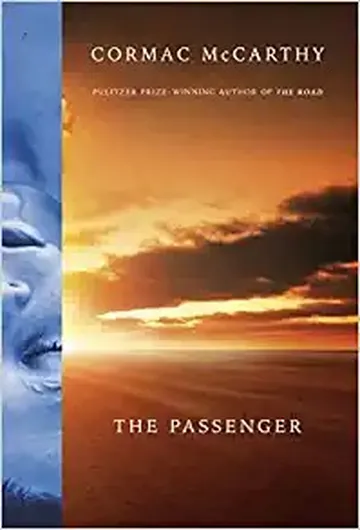
The first page of The Passenger
It had snowed lightly in the night and her frozen hair was gold and crystalline and her eyes were frozen cold and hard as stones. One of her yellow boots had fallen off and stood in the snow beneath her. The shape of her coat lay dusted in the snow where she'd dropped it and she wore only a white dress and she hung among the bare gray poles of the winter trees with her head bowed and her hands turned slightly outward like those of certain ecumenical statues whose attitude asks that their history be considered. That the deep foundation of the world be considered where it has its being in the sorrow of her creatures. The hunter knelt and stogged his rifle upright in the snow beside him and took off his gloves and let them fall and folded his hands one upon the other. He thought that he should pray but he'd no prayer for such a thing.
Continue reading
He bowed his head. Tower of Ivory, he said. House of Gold. He knelt there for a long time. When he opened his eyes he saw a small shape half buried in the snow and he leaned and dusted away the snow and picked up a gold chain that held a steel key, a whitegold ring. He slipped them into the pocket of his huntingcoat. He'd heard the wind in the night. The wind's work. A trashcan clattering over the bricks behind his house. The snow blowing out there in the forest in the dark. He looked up into those cold enameled eyes glinting blue in the weak winter light. She had tied her dress with a red sash so that she'd be found. Some bit of color in the scrupulous desolation. On this Christmas day. This cold and barely spoken Christmas day.
This then would be Chicago in the winter of the last year of her life. In a week's time she would return to Stella Maris and from there wander away into the bleak Wisconsin woods. The Thalidomide Kid found her in a roominghouse on Clark Street. Near North Side. He knocked at the door. Unusual for him. Of course she knew who it was. She’d been expecting him. And anyway it wasnt really a knock. Just a sort of slapping sound.
He paced up and back at the foot of her bed. He stopped to speak: and thought better of it and paced again, kneading his hands before him like the villain in a silent film. Except of course they werent really hands. Just flippers. Sort of like a seal has. In the left of which he now cradled his chin as he paused and stood to study her. Back by popular demand, he said. In the flesh.
It took you long enough to get here.
Yeah. The lights were against us all the way.
How did you know which room it was?
Easy. Room 4-C. I foresaw it. What are you using for money?
I've still got money.
The Kid looked around. I like what you've done with the place. Maybe we can tour the garden after tea. What are your plans?
I think you know what my plans are.
Yeah. Things dont look too promising, do they?
Nothing's forever.
You leaving a note?
“Enigmatic, elegant, extraordinary: a welcome return after a too-long absence.”
Kirkus Reviews
Content note: suicide
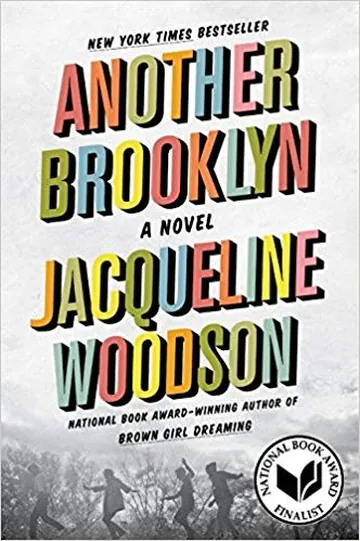
The first page of Another Brooklyn
For a long time, my mother wasn't dead yet. Mine could have been a more tragic story. My father could have given in to the bottle or the needle or a woman and left my brother and me to care for ourselves—or worse, in the care of New York City Children's Services, where, my father said, there was seldom a happy ending. But this didn't happen. I know now that what is tragic isn't the moment. It is the memory.
If we had had jazz, would we have survived differently? If we had known our story was a blues with a refrain running through it, would we have lifted our heads, said to each other, This is memory again and again until the living made sense? Where would we be now if we had known there was a melody to our madness? Because even though Sylvia, Angela, Gigi, and I came together like a jazz improv—half notes tentatively moving toward one another until the ensemble found its footing and the music felt like it had always been playing—we didn’t have jazz to know this was who we were. We had the Top 40 music of the 1970s trying to tell our story. It never quite figured us out.
Continue reading
The summer I turned fifteen, my father sent me to a woman he had found through his fellow Nation of Islam brothers. An educated sister, he said, who I could talk to. By then, I was barely speaking. Where words had once flowed easily, I was suddenly silent, breath snatched from me, replaced by a melancholy my family couldn’t understand.
Sister Sonja was a thin woman, her brown face all angles beneath a black hijab. So this is who the therapist became to me—the woman with the hijab, fingers tapered, dark eyes questioning. By then, maybe it was too late.
Who hasn’t walked through a life of small tragedies? Sister Sonja often asked me, as though to understand the depth and breadth of human suffering would be enough to pull me outside of my own.
Somehow, my brother and I grew up motherless yet halfway whole. My brother had the faith my father brought him to, and for a long time, I had Sylvia, Angela, and Gigi, the four of us sharing the weight of growing up Girl in Brooklyn, as though it was a bag of stones we passed among ourselves saying, Here. Help me carry this.
Twenty years have passed since my childhood. This morning, we buried my father. My brother and I stood shoulder to shoulder at the gravesite, willows weeping down around us, nearly bare-branched against the snow. The brothers and sisters from mosque surrounding us. In the silver light of the morning, my brother reached for and found my gloved hand.
Afterward, at a diner in Linden, New Jersey, my brother pulled off his black coat. Beneath it, he wore a black turtleneck and black wool pants. The black kufi his wife had knitted for him stopped just above his brow.
The diner smelled of coffee and bread and bleach. A neon sign flickered EAT HERE NOW in bright green, dusty silver tinsel draping below it. I had spent Christmas Day at the hospital, my father moaning for pain medication, the nurses too slow in responding.
A waitress brought my brother more hot water for his mint tea. I picked at my eggs and lukewarm home fries, having eaten the bacon slowly to tease my brother.
You hanging in, Big Sis? he asked, his deep voice breaking up a bit.
I’m good.
Still whole?
Still whole.
Still eating pork and all the other Devil’s food, I see.
Everything but the grunt.
“A stunning achievement from one of the quietly great masters of our time.”
Kirkus Reviews
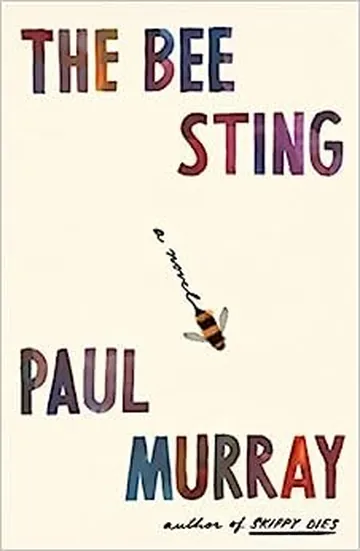
The first page of The Bee Sting
In the next town over, a man had killed his family. He'd nailed the doors shut so they couldn't get out; the neighbours heard them running through the rooms, screaming for mercy. When he had finished he turned the gun on himself.
Everyone was talking about it - about what kind of man could do such a thing, about the secrets he must have had. Rumours swirled about affairs, addiction, hidden files on his computer.
Elaine just said she was surprised it didn't happen more often. She thrust her thumbs through the belt loops of her jeans and looked down the dreary main street of their town. I mean, she said, it's something to do.
Cass and Elaine first met in Chemistry class, when Elaine poured iodine on Cass's eczema during an experiment. It was an accident; she'd cried more than Cass did, and insisted on going with her to the nurse. They'd been friends ever since. Every morning Cass called to Elaine's house and they walked to school together. At lunchtime, they rolled up their long skirts and wandered around the supermarket, listening to music from Elaine's phone, eating croissants from the bakery section that were gone by the time they got to the checkout. In the evening, they went to each other's houses to study.
Continue reading
Cass felt she'd known Elaine for ever; it made no sense that they had not always been friends. Their lives were so similar it was almost eerie. Both girls came from well-known families in the town: Cass's father, Dickie, owned the local Volkswagen dealership, while Elaine's dad, Big Mike, was a businessman and cattle farmer. Both girls were of slightly above-average height; both were bright, in fact they were consistently at the top of their class. Both intended to leave here some day and never come back.
Elaine had golden hair, green eyes, a perfect figure. When she bought clothes online, they always fitted perfectly, as if they’d been made with her in mind. Writing about her in her journal, Cass used words like grace and style. She had what the French called je ne sais quoi. Even when she was clipping her toenails, she looked like she was eating a peach.
When Cass came round to Elaine’s house, they would sit in her bedroom with the carousel lamp on and look at the Miss Universe Ireland website. Elaine was thinking seriously about entering, though not for the title itself so much as the opportunities it might offer. The previous year’s winner was now brand ambassador for a juice company.
Cass thought Elaine was prettier than any of the contestants pictured online. But it was tricky. Each of the girls competing to be Miss Universe Ireland, and from there to be Miss Universe for the world/universe overall, had an adversity they had overcome. One had been a refugee from a war in Africa. Another had needed surgery when she was a small girl. A very thin contestant had once been very fat. The adversity had to be something bad, like a learning disability, but not really bad, like being chained up in a basement for ten years by a paedophile. Cass’s eczema would be a perfect adversity; they wondered, if she held her skin up against Elaine’s long enough, whether she could pass it on to her. But it didn’t seem to work. Elaine said the adversity requirement was unfair. When you think about it, it’s almost like a kind of discrimination, she said.
The housekeeper knocked on the door to say it was time for Elaine’s swimming lesson. Elaine rolled her eyes. The swimming pool was always full of Band-Aids and old people. Coming from here, she said. If that isn’t an adversity, I don’t know what is.
Elaine hated their town.
“A grim and demanding and irresistible anatomy of misfortune.”
Kirkus Reviews
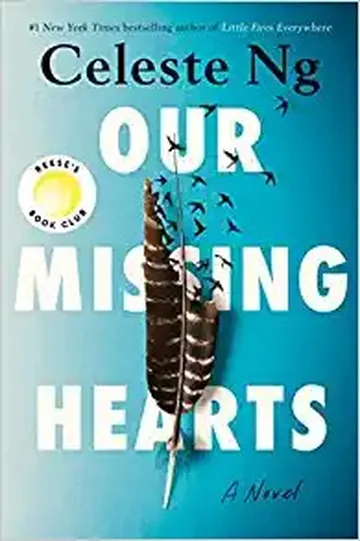
The first page of Our Missing Hearts
The letter arrives on a Friday. Slit and resealed with a sticker, of course, as all their letters are: Inspected for your safety—PACT. It had caused confusion at the post office, the clerk unfolding the paper inside, studying it, passing it up to his supervisor, then the boss. But eventually it had been deemed harmless and sent on its way. No return address, only a New York, NY postmark, six days old. On the outside, his name—Bird—and because of this he knows it is from his mother.
He has not been Bird for a long time.
We named you Noah after your father’s father, his mother told him once. Bird was all your own doing.
The word that, when he said it, felt like him. Something that did not belong on earth, a small quick thing. An inquisitive chirp, a self that curled up at the edges.
The school hadn’t liked it. Bird is not a name, they’d said, his name is Noah. His kindergarten teacher, fuming: He won’t answer when I call him. He only answers to Bird.
Continue reading
Because his name is Bird, his mother said. He answers to Bird, so I suggest you call him that, birth certificate be damned. She’d taken a Sharpie to every handout that came home, crossing off Noah, writing Bird on the dotted line instead.
That was his mother: formidable and ferocious when her child was in need.
In the end the school conceded, though after that the teacher had written Bird in quotation marks, like a gangster’s nickname. Dear “Bird,” please remember to have your mother sign your permission slip. Dear Mr. and Mrs. Gardner, “Bird” is respectful and studious but needs to participate more fully in class. It wasn’t until he was nine, after his mother left, that he became Noah.
His father says it’s for the best, and won’t let anyone call him Bird anymore.
If anyone calls you that, he says, you correct them. You say: Sorry, no, that’s not my name.
It was one of the many changes that took place after his mother left. A new apartment, a new school, a new job for his father. An entirely new life. As if his father had wanted to transform them completely, so that if his mother ever came back, she wouldn’t even know how to find them.
He’d passed his old kindergarten teacher on the street last year, on his way home. Well, hello, Noah, she said, how are you this morning? and he could not tell whether it was smugness or pity in her voice.
He is twelve now; he has been Noah for three years, but Noah still feels like one of those Halloween masks, something rubbery and awkward he doesn’t quite know how to wear.
So now, out of the blue: a letter from his mother. It looks like her handwriting—and no one else would call him that. Bird. After all these years he forgets her voice sometimes; when he tries to summon it, it slips away like a shadow dissolving in the dark.
He opens the envelope with trembling hands. Three years without a single word, but finally he’ll understand. Why she left. Where she’s been.
But inside: nothing but a drawing. A whole sheet of paper, covered edge to edge in drawings no bigger than a dime: cats. Big cats, little cats, striped and calico and tuxedo, sitting pert, licking their paws, lolling in puddles of sunlight. Doodles really, like the ones his mother drew on his lunch bags many years ago, like the ones he sometimes draws in his class notebooks today. Barely more than a few curved lines, but recognizable. Alive. That’s all—no message, no words even, just cat after cat in ballpoint squiggle. Something about it tugs at the back of his mind, but he can’t quite hook it.
He turns the paper over, looking for clues, but the back of the page is blank.
Do you remember anything about your mother, Sadie had asked him once. They were on the playground, atop the climbing structure, the slide yawning down before them. Fifth grade, the last year with recess. Everything too small for them by then, meant for little children. Across the blacktop they watched their classmates hunting each other out: ready or not, here I come.
The truth was that he did, but he didn’t feel like sharing, even with Sadie. Their motherlessness bound them together, but it was different, what had happened to them. What had happened with their mothers.
Not much, he’d said, do you remember much about yours?
“From the very first page of this thoroughly engrossing and deeply moving novel, Bird’s story takes wing.”
Kirkus Reviews
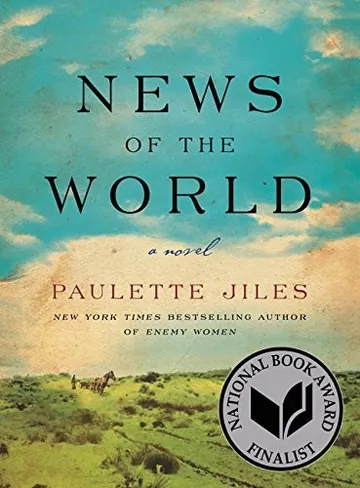
The first page of News of the World
Captain Kidd laid out the Boston Morning Journal on the lectern and began to read from the article on the Fifteenth Amendment. He had been born in 1798 and the third war of his lifetime had ended five years ago and he hoped never to see another but now the news of the world aged him more than time itself. Still he stayed his rounds, even during the cold spring rains. He had been at one time a printer but the war had taken his press and everything else, the economy of the Confederacy had fallen apart even before the surrender and so he now made his living in this drifting from one town to another in North Texas with his newspapers and journals in a waterproof portfolio and his coat collar turned up against the weather. He rode a very good horse and was concerned that someone might try to take the horse from him but so far so good. So he had arrived in Wichita Falls on February 26 and tacked up his posters and put on his reading clothes in the stable. There was a hard rain outside and it was noisy but he had a good strong voice.
Continue reading
He shook out the Journal’s pages.
The Fifteenth Amendment, he read, which has just been ratified on February 3, 1870, allows the vote to all men qualified to vote without regard to race or color or previous condition of servitude. He looked up from the text. His reading glasses caught the light. He bent slightly forward over the lectern. That means colored gentlemen, he said. Let us have no vaporings or girlish shrieks. He turned his head to search the crowd of faces turned up to him. I can hear you muttering, he said. Stop it. I hate muttering.
He glared at them and then said, Next. The Captain shook out another newspaper. The latest from the New-York Tribune states that the polar exploration ship Hansa is reported by a whaler as being crushed and sunk in the pack ice in its attempt to reach the North Pole; sunk at seventy degrees north latitude off Greenland. There is nothing in this article about survivors. He flipped the page impatiently.
The Captain had a clean-shaven face with runic angles, his hair was perfectly white, and he was still six feet tall. His hair shone in the single hot ray from the bull’s-eye lantern. He carried a short-barreled Slocum revolver in his waistband at the back. It was a five-shot, .32 caliber and he had never liked it all that much but then he had rarely used it.
“Jiles unfolds the stories of the Captain and Johanna, past and present, with the smooth assuredness of a burnished fireside tale…”
Publishers Weekly
Questions
Quick answers
Is dialogue harder to follow without quotation marks?
For most readers it takes a page or two to adjust. Each opening here has some unmarked speech in it, so you can judge for yourself.