Spy novels, from the misfits of Slough House to a cottage on the Cornish coast
Five spy novels: an MI5 officer tailing a target through King’s Cross, a retired academic who goes downstairs with a poker in the night, an art restorer with a secret on the Lizard Peninsula, Gabriel Allon sent to clean a Raphael for a Swiss banker and the Gray Man hired to kidnap the mistress of Syria’s president. Read the first page of each.
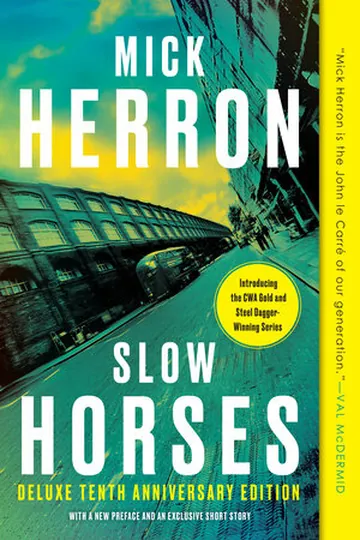
The first page of Slow Horses
This is how River Cartwright slipped off the fast track and joined the slow horses.
Eight twenty Tuesday morning, and King’s Cross crammed with what the O.B. called other people: “Non-combatants, River. Perfectly honourable occupation in peacetime.” He had a codicil. “We’ve not been at peace since September ’14.”
The O.B.’s delivery turning this to Roman numerals in River’s head. MCMXIV.
Stopping, he pretended to check his watch; a manoeuvre indistinguishable from actually checking his watch. Commuters washed round him like water round a rock, their irritation evident in clicking of tongues and expulsions of breath. At the nearest exit—a bright space through which weak January daylight splashed—two of the black-clad achievers stood like statues, their heavy weaponry unremarked by non-combatants, who’d come a long way since 1914.
The achievers—so called because they got the job done—were keeping well back, as per instructions.
Twenty yards ahead was the target. “White tee under a blue shirt,” River repeated under his breath. Adding details, now, to Spider’s skeleton outline: young, male, Middle Eastern looking; the blue shirt’s sleeves rolled up; the black jeans stiff and new.
Continue reading
Would you buy new trousers for a jaunt like this? He stuffed the information away; a question to be asked later.
A rucksack on the target’s right shoulder listed, suggesting weight. The wire coiled into his ear, like River’s own, might have been an iPod.
“Confirm visual.” River, touching his left ear with his left hand, spoke quietly into what looked like a button on his cuff. “Confirmed.”
A gaggle of tourists crowded the concourse, their distribution of luggage suggesting they were circling the wagons. River skirted them without taking his eyes off the target, who was heading for the annexe platforms; those which waved off trains towards Cambridge, and points east.
Trains generally less packed than the northbound HSTs.
Unbidden images arrived: of twisted metal scattered along miles of broken rails. Of trackside bushes lit with flame, and hung with scraps of meat.
“What you have to bear in mind”—the O.B.’s words—“is that worst sometimes does come to worst.”
The worst had increased exponentially over the last few years.
Two transport cops by a ticket barrier ignored the target but studied River. Don’t approach, he warned silently. Don’t come anywhere near me. It was the small details on which enterprises foundered. Last thing he wanted was an audible altercation; anything that startled the target.
The cops went back to their conversation.
River paused, and mentally regrouped.
He was of average height, this young man River Cartwright; was fair-haired and pale-skinned, with grey eyes that often seemed inward-looking, a sharpish nose and a small mole on his upper lip. When he concentrated, his brow furrowed in a way that led some to suspect him of puzzlement. Today he wore blue jeans and a dark jacket. But if you’d asked him that morning about his appearance, he’d have mentioned his hair.
“…avoids the easy cliché of misfits banding together to right a wrong…”
Publishers Weekly
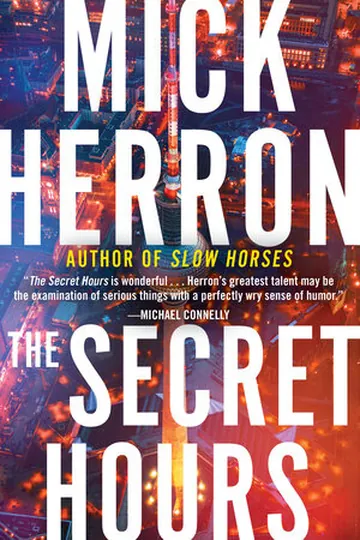
The first page of The Secret Hours
The worst smell in the world is dead badger. He’d encountered it on his morning walk down a green lane; had caught the odour without seeing the corpse, but had guessed what it was before returning later with a shovel. Whether they all smelled that bad or whether this one had expired of noxious causes he didn’t know. As it turned out, he couldn’t do anything about it either—the creature had crawled into a tangled nest of roots to die, and it would require heavy machinery and a strong stomach to recover it. Lacking the former, and not wanting to put the latter to the test, Max opted for a third way: he’d walk a different route for a while, and see if one of the local farmers shifted it in the meantime. Which was why he wasn’t sure the badger would still be there a couple of nights later, when he was running for his life.
Continue reading
The first of the intruders entered through the kitchen window. Max hadn’t been asleep, though anyone watching the cottage would have been forgiven for thinking otherwise: the lights were out, the curtains drawn. He’d been lying in bed, not so much struggling with insomnia as letting it do its worst, when he’d heard the window latch being finessed open: a piece of wire sliding through the draughty gap he’d been meaning to repair, lifting the metal hook from its eye. Quieter than taking out the glass, but a long way short of silent. He’d pulled on jogging pants and a sweatshirt, slipped into a pair of trainers, then froze in place, caught between two lives, trying to remember where he’d stashed his flight kit. You could worry you were losing your mind. That they were coming too late, and you’d long ago turned into whoever you were pretending to be.
(Max Janáček. Retired (early) academic; still footling around with a history book, but mostly just passing the days—taking long walks, cooking slow meals, losing himself in Dickens.)
The stairs were an out-of-tune orchestra of squeaks and whistles, every tread announcing that Peter or the wolf were on their way, unless you’d practised descending, and knew where to put your feet. So almost noiselessly he reached the sitting room, whose doorway was catty-corner to the kitchen, and plucked the poker from its stand by the wood-burning stove. Not a great weapon, for all its iconic status in fiction. You needed high ceilings to accommodate your swing. Max Janáček understood a good swing: he was the man you saw walking the lanes, beheading dandelions with a stick. Who lived in a five-hundred-year-old cottage in North Devon, and could be counted on to do the neighbourly thing: keep an eye out for the old folk, whose company he was on the threshold of joining; litter-pick after the bank holiday rush; sign the petition resisting the makeshift industrial estate down the lane—numbering seventeen cabins now. This and more he’d been for more than twenty years, and whether the locals took him at face value or gave less than a tuppenny damn had become irrelevant, or had done until someone slipped the latch on his kitchen window and climbed inside more or less gracefully, breaking no crockery, dislodging no pans, and moving across the flagged floor in careful silence, intent—it would seem—on unlocking the back door and allowing his comrades ingress. Or her comrades, as it turned out. Whether Max would have jabbed her so hard at the base of the skull with the poker, then slammed her head on the floor when she fell had he known it was a woman beneath the break-in gear was something he could ponder at leisure, if he survived the night. Meanwhile, he checked her for weapons. She was carrying a Taser, which put her outside the range of opportunist burglars, but no ID, and nothing to indicate what she was up to. But he had to work on the assumption that she wasn’t alone, an assumption confirmed when he picked up the landline to hear the deep silence of a well on a windless night. Inside the cottage—anywhere down this lane—his mobile made for a useful paperweight. So sitting tight and calling the cavalry wasn’t an option, and wouldn’t necessarily have been a sensible move anyway. Sometimes, it was the cavalry you had to watch out for.
The cottage sat midway down a sloping lane, and was half of a twinned pair. In the other lived Old Dolly, who had probably forgotten a time when she’d simply been Dolly. Certainly she’d earned the Old by the time Max moved in, and still regarded him as three quarters a stranger, though he’d long reached the point where he was doing most of her shopping, all of her firewood gathering and a strong seventh-eighths of listening to her bang on about immigration, which left him less uneasy than her habit of leaving a gas ring lit, to save striking a match for every cigarette. The next cottage along, a hundred yards distant, had been empty since Jonas Trippelhorn had gone to live with his daughter in Exeter; the cottage opposite—“cottage” by local tradition; it had four bedrooms—was a second home, and invariably unoccupied during the week. And farther down the lane were other dwellings, some housing young families, some retired labourers, and some home-based industries—IT and retro clothing; bespoke greetings cards and editorial services—and beyond them, on the other side of the railway bridge across which the London-Plymouth service rattled, the field now playing host to the makeshift estate which had roused such local ire. Corrugated iron structures had been erected, one at a time, and makeshift cabins built, now storing the kind of heavy machinery you could dismember a dead badger with. Since this shanty town’s foundation, traffic had multiplied tenfold, most of the vehicles heavily laden vans, with scaffolding poles tethered to flatbeds as the drivers headed to renovation jobs in the surrounding area; work which hadn’t extended as far as repairing the potholes their vehicles left behind. Even now, as Max slipped out of a side window, he could hear an engine coughing in that direction, as if it were having one last drag before lying down for the night.
“Fans will rejoice to see MI5 survive despite its members’ best efforts.”
Kirkus Reviews
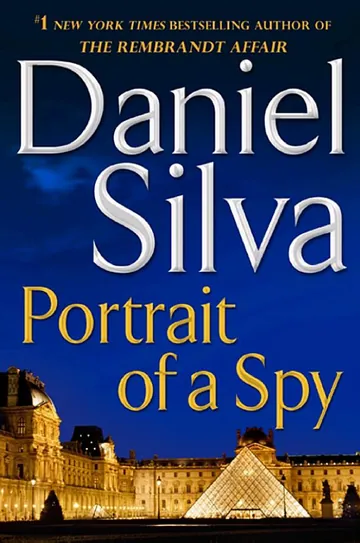
The first page of Portrait of a Spy
It was the Rembrandt that solved the mystery once and for all. Afterward, in the quaint shops where they did their marketing and the dark little seaside pubs where they did their drinking, they would chide themselves for having missed the telltale signs, and they would share a good-natured laugh at some of their more outlandish theories about the true nature of his work. Because in their wildest dreams there was not one among them who ever considered the possibility that the taciturn man from the far end of Gunwalloe Cove was an art restorer, and a world-famous art restorer at that.
He was not the first outsider to wander down to Cornwall with a secret to keep, yet few had guarded theirs more jealously, or with more style and intrigue. A case in point was the peculiar manner in which he had secured lodgings for himself and his beautiful but much younger wife. Having chosen the picturesque cottage at the edge of the cliffs—by all accounts, sight unseen—he had paid the entire twelve-month lease in advance, with all the paperwork handled discreetly by an obscure lawyer in Hamburg. He settled into the cottage a fortnight later as if he were conducting a raid on a distant enemy outpost. Those who met him during his first forays into the village were struck by his notable lack of candor. He seemed to have no name—at least not one he was willing to share—and no country of origin that any of them could place. Duncan Reynolds, thirty years retired from the railroad and regarded as the worldliest of Gunwalloe’s residents, described him “as a cipher of a man” while other reviews ranged from “standoffish” to “unbearably rude.” Even so, all agreed that, for better or worse, the little west Cornish village of Gunwalloe had become a far more interesting place.
Continue reading
With time, they were able to establish that his name was Giovanni Rossi and that, like his beautiful wife, he was of Italian descent. Which made it all the more curious when they began to notice government-issue cars filled with government-issue men prowling the streets of the village late at night. And then there were the two blokes who sometimes fished the cove. Opinion was universal that they were the worst fishermen anyone had ever seen. In fact, most assumed they were not fishermen at all. Naturally, as is wont to happen in a small village like Gunwalloe, there began an intense debate about the true identity of the newcomer and the nature of his work—a debate that was finally resolved by Portrait of a Young Woman, oil on canvas, 104 by 86 centimeters, by Rembrandt van Rijn.
Precisely when it arrived would never be clear. They assumed it was sometime in mid-January because that was when they noticed a dramatic change in his daily routine. One day he was marching along the rugged cliff tops of the Lizard Peninsula as though wrestling with a guilty conscience; the next he was standing before an easel in his living room, a paintbrush in one hand, a palette in the other, and opera music blasting so loudly you could hear the wailing clear across Mount’s Bay in Marazion. Given the proximity of his cottage to the Coastal Path, it was possible—if one paused in just the right spot, mind you, and craned one’s neck at just the right angle—to see him in his studio. At first, they assumed he was working on a painting of his own. But as the weeks ground slowly past, it became clear he was involved in the craft known as conservation or, more commonly, as restoration.
“Covert action more le Carré than Ludlum.”
Kirkus Reviews
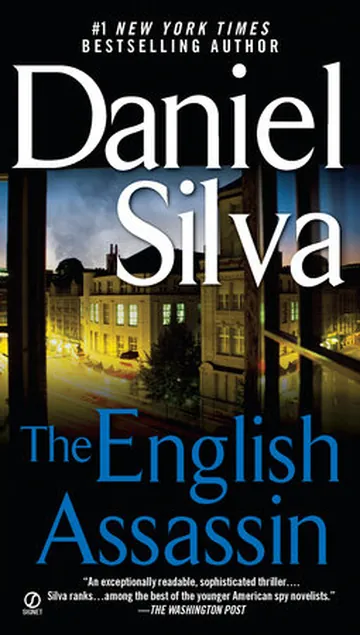
The first page of The English Assassin
Marguerite Rolfe was digging in her garden because of the secrets she’d found hidden in her husband’s study. It was late to be working in the garden, well past midnight by now. The spring thaw had left the earth soft and moist, and her spade split the soil with little effort, allowing her to progress with minimal noise. For this she was grateful. Her husband and daughter were asleep in the villa, and she didn’t want to wake them.
Why couldn’t it have been something simple, like love letters from another woman? There would have been a good row, Marguerite would have confessed her own affair. Lovers would have been relinquished, and soon their home would return to normal. But she hadn’t found love letters—she’d found something much worse.
For a moment she blamed herself. If she hadn’t been searching his study, she never would have found the photographs. She could have spent the rest of her life in blissful oblivion, believing her husband was the man he appeared to be. But now she knew. Her husband was a monster, his life a lie—a complete and meticulously maintained lie. Therefore she too was a lie.
Continue reading
Marguerite Rolfe concentrated on her work, making slow and steady progress. After an hour it was done. A good hole, she decided: about six feet in length and two feet across. Six inches below the surface she had encountered a dense layer of clay. As a result it was a bit shallower than she would have preferred. It didn’t matter. She knew it wasn’t permanent.
She picked up the gun. It was her husband’s favorite weapon, a beautiful shotgun, handcrafted for him by a master gunsmith in Milan. He would never be able to use it again. This pleased her. She thought of Anna. Please don’t wake up, Anna. Sleep, my love.
Then she stepped into the ditch, lay down on her back, placed the end of the barrel in her mouth, pulled the trigger.
The girl was awakened by music. She did not recognize the piece and wondered how it had found its way into her head. It lingered a moment, a descending series of notes, a serene diminishment. She reached out, eyes still closed, and searched the folds of the bedding until her palm found the body which lay a few inches away. Her fingers slipped over the narrow waist, up the slender, elegant neck, toward the graceful curved features of the scroll. Last night they had quarreled. Now it was time to set aside their differences and make peace.
She eased from the bed, pulled on a dressing gown.
“…this superbly crafted thriller that puts Silva at the forefront of his generation of foreign intrigue specialists…”
Publishers Weekly
Content note: suicide
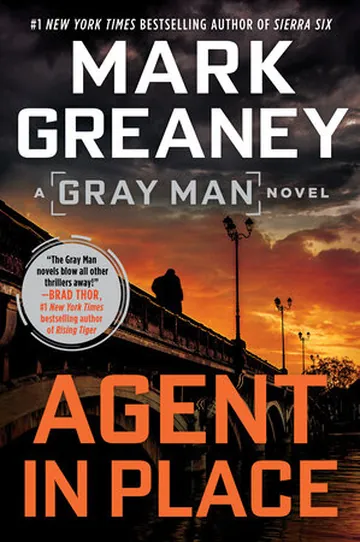
The first page of Agent in Place
The prisoners were slaughtered one by one, with efficiency as true as a ticking clock. Two dozen dead now, and the executioner was just hitting his stride.
The scene of the massacre was one of abject horror: the stench of fresh blood, the cloying smell of bodies floating in the brown lake, the viscous brain matter splattered and thickening on the sun-blanched pier.
Above the slaughter the rocky hillside sparkled in the midday heat, the reflection of broken glass and twisted metal jutting out of the wreckage of a battle fought months ago. Many had died, and the few vanquished who survived had run for their lives and left the ruined land to the victors.
The black flags of ISIS hung in the town square now, and they waved from the rooftops of the wrecked buildings and whipped in the back of most every pickup truck that rolled through the broken streets: certainly every vehicle that was filled to capacity with young bearded men wearing cheap tactical gear and brandishing weapons, eyes wild with the fervency of their sickening death cult.
Continue reading
Here by the lake, between the broken hillside and the water, ran a narrow shoreline of salt flat and brown brush. Forty-three condemned men in orange jumpsuits knelt, the remainder of the sixty-seven who had been trucked here just twenty minutes earlier.
The captives were surrounded by masked fighters holding rifles at the ready; the prisoners’ wrists were tied with rough cord in front of their bodies, and they were all lashed together by a long rope. This removed the chance that any one of them would get up and leg it, though it hardly mattered. Nobody was going to run. It was nearly a hundred kilometers across the dead ground of war-torn Syria to the Turkish border, so what chance would they have if they ran?
No one entwined and kneeling here would resist the fate that awaited him. There was no use to it, and virtually all these men understood that their last few moments left on this foul Earth would be better spent praying.
The executioner wore a pair of daggers in his belt, but these were just for show. The real tool of choice for the slaughter wasn’t the blades; it was the Avtomat Kalashnikova, model 740, held in the arms of the hooded executioner standing at the end of the pier.
As had been the routine for the past twenty minutes, two guards shoved a prisoner to his knees next to the executioner, the masked man pointed the muzzle of his weapon behind the condemned man’s right ear, and then, without a pause or a comment or a moment’s hesitation, he pulled the trigger.
Sanguine spray erupted from the captive’s head, and the body snapped forward, the mangled face leading the way down to the water. It crashed into the surface of the lake, just like so many before it, and just like so many more, waiting on the shore for their turn to die.
And a videographer on the shoreline recorded it all for posterity.
The shrinking row of prisoners remained passive, kneeling on the lakeside, over a dozen armed men at the ready standing on all sides of them. Some flinched with the rifle’s report; others flinched with the sound of the splash, knowing their ruined dead bodies would follow suit in moments; and soon two armed ISIS fighters walked down the fifteen-meter-long wooden pier, stepped onto the rocky shoreline, and took the closest man in orange by his shoulders. Two more captors had just cut him from the rope tied around his waist, so the walking crew hefted the condemned from his knees to his feet and guided him back down the pier, shoving him onward if he slowed for an instant. The doomed man prayed softly in Arabic as he walked with his hands secured in front of him, his eyes on the wooden planks at his feet, not on the water, not on the dozens of bodies floating just off the end of the pier… not on his dead friends and comrades.
“…make this entry in the exemplary Gray Man series a can’t-miss…”
Publishers Weekly
Content note: mass execution
Questions
Quick answers
Which two feature Gabriel Allon?
Portrait of a Spy and The English Assassin, both by Daniel Silva. Publishers Weekly describes Allon as an art restorer and Israeli hit man.
Is Slow Horses the first Slough House novel?
Yes. River Cartwright joins the slow horses on its first page.