Books like Jack Reacher, from a Wyoming game warden to a man who never forgets
Six thrillers about people who end up on the wrong side of trouble: a freelance assassin with teams of killers on his trail, a Navy SEAL out for revenge, a detective who remembers everything, a Wyoming game warden, a former government assassin who takes calls from the desperate and a counterterror operator chasing the kidnappers of the vice president’s son. Read the first page of each.
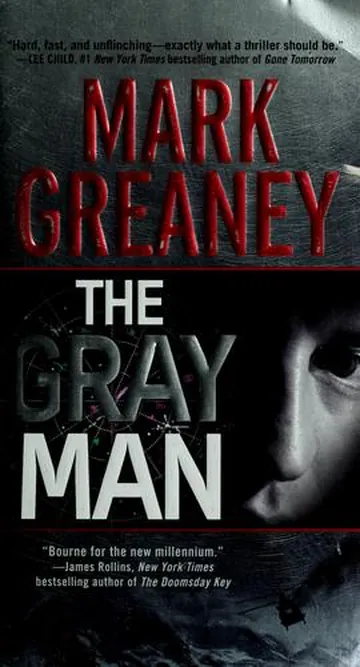
The first page of The Gray Man
A flash of light in the distant morning sky captured the attention of the Land Rover’s blood-soaked driver. Polarized Oakleys shielded his eyes from the brunt of the sun’s rays; still, he squinted through his windshield’s glare, desperate to identify the burning aircraft that now spun and hurtled towards earth, a smoldering comet’s tail of black smoke left hanging above it.
It was a helicopter, a large Army Chinook, and horrific though the situation must have been for those on board, the driver of the Land Rover breathed a subdued sigh of relief. His extraction transport was to be a Russian-built KA-32T, crewed by Polish mercenaries and flown in from over the border in Turkey. The driver found the dying Chinook regrettable but preferable to a dying KA-32T.
He watched the chopper spin in its uncontrolled descent, staining the blue sky directly in front of him with burning fuel.
He turned the Land Rover hard to the right and accelerated eastward. The blood-soaked driver wanted to get as far away from here as fast as possible. As much as he wished there was something he could do for the Americans on board the Chinook, he knew their fate was out of his hands.
Continue reading
And he had his own problems. For five hours he’d raced across the flatlands of western Iraq, fleeing the dirty work he’d left behind, and now he was less than twenty minutes from his exfiltration. A shot-down chopper meant that in minutes this place would be crawling with armed fighters, defiling bodies, shooting assault rifles into the air, and jumping around like fucking morons.
It was a party the bloodstained driver would not mind missing, lest he himself become a party favor.
The Chinook sank off to his left and disappeared behind a brown ridge in the distance.
The driver fixed his eyes on the road ahead. Not my problem, he told himself. He was not trained to search and to rescue, he was not trained to give aid, and he certainly was not trained to negotiate for hostages.
He was trained to kill. He’d done so back over the border in Syria, and now it was time to get out of the kill zone.
As his Rover accelerated through the haze and dust at over one hundred kilometers an hour, he began a dialogue with himself. His inner voice wanted to turn back, to race to the Chinook’s crash site to check for survivors. His outer voice, on the other hand, was more pragmatic.
“Keep moving, Gentry, just keep moving. Those dudes are fucked. Nothing you can do about it.”
Gentry’s spoken words were sensible, but his inner monologue just would not shut up.
“…the reader begins to cheer for this unlikely hero…”
Publishers Weekly

The first page of The Terminal List
It didn’t take a tactical genius to pick the spot. Humans are creatures of habit and some were more religious about it than others. Accountants, it seemed, were practically monastic in their routines. From June 1 to November 1 of every year, Marcus Boykin lived in his mountain house in Star Valley Ranch, Wyoming. Star Valley sounded far more appealing to the East and West Coast real estate buyers than its previous name of Starvation Valley. It was an enclave of wealthy outsiders in otherwise rural western Wyoming, stuck into the mountainside like a well-manicured finger of civilization, full of multimillion-dollar homes in a part of the world otherwise populated by ranchers and cowboys.
Every Monday, Wednesday, and Friday, Boykin rose early and climbed into his silver Mercedes G550 SUV to drive the fifty miles to the relative metropolis of Jackson. With a summertime population of bankers and hedge fund managers that would rival the Hamptons, it was the only place within hours where he could eat a gourmet meal with an eight-hundred-dollar bottle of wine. In Jackson he could sip lattes and read the Wall Street Journal in the company of fellow seasonal residents from New York, Greenwich, Boston, and Los Angeles. Three days a week he could connect with real people in person instead of waiting impatiently for his friends to comment on his Facebook posts. Dinners at Rendezvous Bistro were far tastier and the conversation more stimulating than his usual meal alone on the deck, no matter how spectacular the view.
Continue reading
U.S. 89 runs north and south through the steep valley that straddles the line between Wyoming and Idaho. Irrigated hayfields near the roadway lie in the shadows of the rugged ten-thousand-foot peaks to the east and more gentle hills to the west. Just north of the tiny town of Alpine, the route to Jackson turns east along the Snake River and winds into the mountains of the Bridger-Teton National Forest. At this point in the journey, the jagged ridgelines of the Tetons run nearly to the roadside, like towering cruise ships moored alongside an asphalt pier. Ten feet from the well-maintained road was terrain as rugged as nearly anywhere in the Lower 48, the home of trophy mule deer and giant elk as well as plenty of black bears and the occasional moose. Having never touched a gun or hunted in his life, it would never occur to Boykin that September 15, the opening day of deer season in Wyoming’s Region G, fell on a Monday that year.
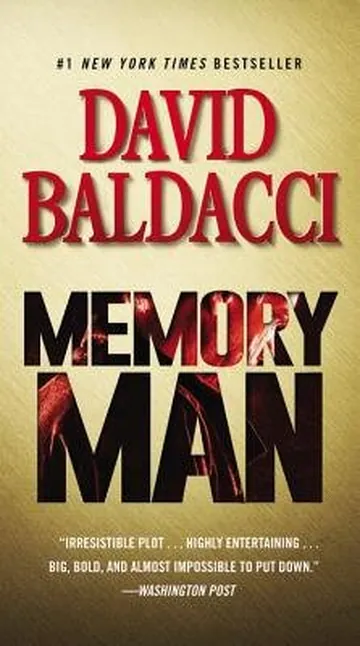
The first page of Memory Man
Amos Decker would forever remember all three of their violent deaths in the most paralyzing shade of blue. It would cut into him at unpredictable moments, like a gutting knife made of colored light. He would never be free from it.
The stakeout had been long and ultimately unproductive. Driving home, he had been looking forward to catching a few hours of sleep before hitting the streets once more. He’d pulled into the driveway of the modest two-story vinyl-sider that was twenty-five years old and would take at least that long to pay off. The rain had slicked the pavement, and as his size fourteen boots made contact, he slipped a bit before traction was gained. He closed the car door quietly, certain that all inside would be asleep at this late hour. He trudged to the screen door leading into the kitchen and let himself in.
The quiet was to be expected. But the too quiet nature of the setting was not. He had not sensed that then and later wondered why not. It was one of many failures on his part that night. He had paused in the kitchen to pour a glass of water from the tap. He chugged it, set the glass in the sink, wiped his chin dry, and headed to the next room.
Continue reading
He slipped on the floor and this time his big body tumbled. It was slick herringbone-patterned parquet and he had fallen before. Yet this time would be far different because of what he was about to observe. The moonlight had shafted in through the front window enough that he could see clearly.
When he held up his hand it was a different color.
Red. Blood.
It had come from somewhere. And he picked himself up to find out where.
He discovered the source in the next room. Johnny Sacks. His brother-in-law. A big, burly fellow like him, laid low. He bent closer, got on his knees, his face an inch or so from Johnny’s. His throat had been slit from ear to ear. There was no need to check for a pulse; there could be none. Most of his blood was on the floor.
He should have pulled his phone and hit 911 at that very moment. He knew better. He knew not to stampede around a crime scene, for that was what his home had become by virtue of the dead man, killed by violent means. It was now a museum; you didn’t touch anything. His professional side screamed this at him.
But this was only one body. His gaze jerked to the stairs and his mind suddenly disengaged as total panic seized every bit of him—the gut feeling that life had just robbed Decker of everything he would ever have. So he ran, his boots pushing coagulating pools of blood outward like an incoming tide.
He was destroying vital evidence, royally screwing up what should have been kept pristine. Right now he didn’t give a damn.
He tracked Johnny’s blood right up the stairs, taking the treads three at a time. His breaths were gasps and his heart was pumping so fast and feeling so bloated it was a wonder his chest wall could contain it. His mind seemed paralyzed, but his limbs were somehow still moving of their own accord.
He hit the hallway, bounced off one wall and then its twin as he rocketed down to the first door on the right. He never took out his gun, not even bothering to think that the killer could still be there. Waiting for him to come home.
He smashed open the door with his shoulder and looked wildly around.
Nothing.
No, not true.
He froze in the doorway as the light on the nightstand dimly illuminated the bare foot that protruded above the mattress on the far side.
“…a quirky, original antihero with a definite method to his madness…”
Kirkus Reviews
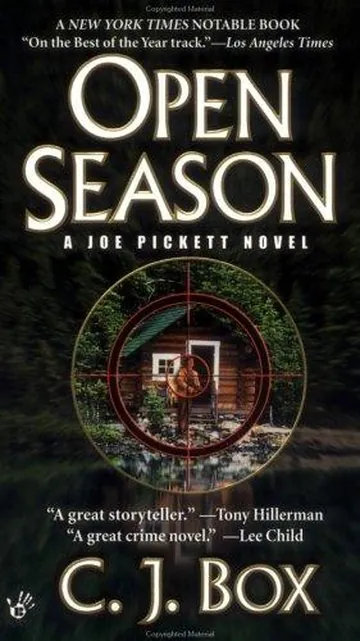
The first page of Open Season
When a high-powered rifle bullet hits living flesh it makes a distinctive—pow-WHOP—sound that is unmistakable even at tremendous distance. There is rarely an echo or fading reverberation or the tailing rumbling hum that is the sound of a miss. The guttural boom rolls over the terrain but stops sharply in a close-ended way, as if jerked back. A hit is blunt and solid like an airborne grunt. When the sound is heard and identified, it isn’t easily forgotten.
When Wyoming Game Warden Joe Pickett heard the sound, he was building a seven-foot elk fence on the perimeter of a rancher’s haystack. He paused, his fencing pliers frozen in midtwirl. Then he stepped back, lowered his head, and listened. He slipped the pliers into the back pocket of his jeans and took off his straw cowboy hat to wipe his forehead with a bandanna. His red uniform shirt stuck to his chest, and he felt a single, warm trickle of sweat crawl down his spine into his Wranglers.
Continue reading
He waited. He had learned over the years that it was easy to be fooled by sounds of any kind outside, away from town.
A single, sharp crack heard at a distance could be a rifle shot, yes, but it could also be a tree falling, a branch snapping, a cow breaking through a sheet of ice in the winter, or the backfire of a motor. “Don’t confirm the first gunshot until you hear the second” was a basic tenet of the outdoors. Good poachers knew that, too. It tended to improve their aim.
In a way, Joe hoped he wouldn’t hear a second shot. The fence wasn’t done, and if someone was shooting, it was his duty to investigate. Joe had been on the job for a only a week, and he was hopelessly backlogged with work that had accumulated since the legendary Warden Vern Dunnegan had retired three months before. It was the state’s responsibility to keep the elk herds out of private hay, and the pile of work orders on his desk for elk fence was nearly an inch high. Even if he built fence from dawn to dusk, he didn’t see how he could possibly get it all done before hunting season started.
There was nothing really unusual about gunshots ringing out at any time of day or night or at any time of the year in Twelve Sleep County, Wyoming. Everybody owned guns. A rancher could be shooting at a coyote, or some of the boys from town could be out sighting in their rifles on a target.
Pow-WHOP.
Joe’s eyes swung northwest toward the direction of the second shot, toward the foothills of the mountains where outstretched fingers of timber reached down into the high sage that reflected blue in the heat. The shot had come from a long way, three to five miles. Maxine, Joe’s eight-year-old yellow Labrador, also heard the shot, and bounded from her pool of shadow under Joe’s green Ford pickup. She knew it was time to go to work. Joe opened the passenger door with the Wyoming Game and Fish logo on it, and she leaped in.
“…a debut of riveting tensions…”
Publishers Weekly
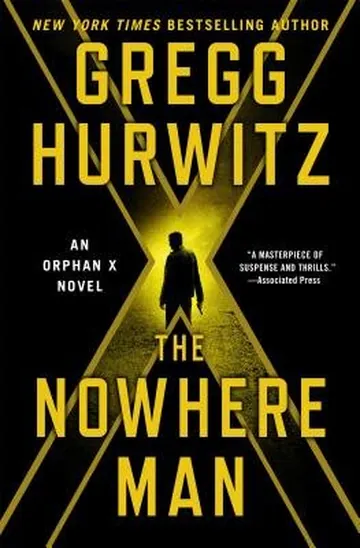
The first page of The Nowhere Man
A naked selfie.
It starts with that.
Hector Contrell sends a seventeen-year-old kid to troll middle schools in East L.A. The kid, improbably named Addison, makes for fine bait. Seedily handsome, starter mustache, pop-star cheekbones, dirty blond hair flipped just so. He wears a hoodie and rides a skateboard, the better to look like he’s fifteen. He says he’s a pro skater with a contract. He says he’s a rapper with a deal at a major label. He’s really a pot-smoking dropout who lives in a rented garage with his older brother and his friends, spends his nights playing Call of Duty and hitting a green glass water bong named Fat Boy.
He hangs out near campuses at lunch, after classes, his skateboard rat-a-tat-tatting across sidewalk cracks just barely past schoolground limits.
The girls cluster and giggle, and he chooses one to peel off the herd.
He tells her to snap pictures.
Continue reading
He tells her to get a secret Facebook account, one her parents don’t know about, and upload them there.
He tells her that everyone does this in high school, and he’s mostly right, but not everyone is hooked into a scheme like this.
He targets Title I schools, broke girls, easily impressed, looking for a dream, a romance, a way out.
Girls whose parents lack the resources to do much if they disappear.
The secret Facebook page links go to Hector Contrell.
The genius of it is, the girls create the sales catalog themselves.
From Contrell the links go to all sorts of men with unorthodox tastes. Austrian industrialists. Sheikhs. Three brothers in Detroit with a padlocked metal shed. Online they can peruse the merchandise discreetly and, if need be, ask for more product information— different photographic angles, specific poses. They make their selections.
Given immigration confusion, gang influence, and splintered family trees, disappearances aren’t rare when you’re dealing with broke ethnic girls. They’re a renewable resource.
Hector Contrell comes in the black of night, and another girl vanishes off the streets and wakes up in a stupor in Islamabad or Birmingham or São Paulo. Some of the girls are kept. Some are designated for onetime use.
Anna Rezian is the next prospect. Her father is a plumber, works hard, comes home late and tired. Her mother, a cocktail waitress, comes home later and more tired. Only fifteen, Anna takes care of her younger brothers and sisters, tries to remember to look at her textbooks after she gets the kids down. It’s a hard routine for a girl her age.
One day after school, Addison’s blue eyes peer out from beneath his scraggly bangs and pick her and only her. That night she touches up her eyeliner, sheds the flat-front Dickies with the worn knees, checks the lighting. This choice, this moment, is going to be a portal to a Whole New Her.
But after she uploads the selfie, nothing magical happens. Staring at the image she has released into the world, she feels an unease begin to gnaw at her.
She decides to stop after the one photo. But Addison needs more; they’ve been requested from a buyer in Serbia.
“Hurwitz’s engaging, sympathetic characters who place this thriller above the pack…”
Publishers Weekly
Content note: sex trafficking
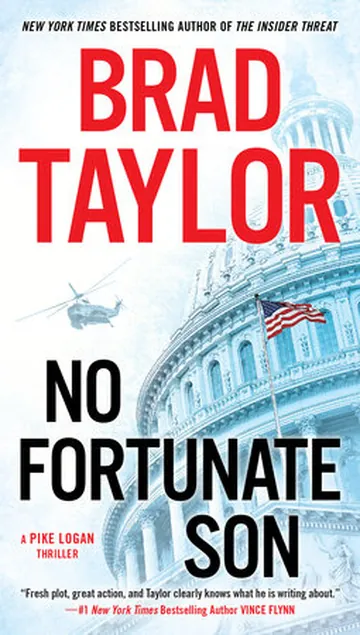
The first page of No Fortunate Son
The car windows began to steam, Kylie feeling the man’s hands fumbling inexpertly at her bra, half of her brain begging him to figure it out while the other half focused on his belt. She felt the strap on her back release and had a split second of regret, wondering if she should stop the train of hormones raging in the cloistered confines. Get back to just talking, like she’d promised herself would happen.
She thought of what her Scottish roommate had told her just before she’d left, after she’d emphatically stated yet again that she wasn’t seeing anyone. An impish grin on her face, the roommate had said, “I know what you Americans call this. When I did my student exchange to Virginia, it was all about ‘what happens on an exchange stays on the exchange.'”
And now she was in the backseat of a car, not with a British aristocrat, but an American soldier. Someone she’d been trying hard not to like, but had been failing. Her mother would lose her mind if she knew she was seeing someone in the military, which is why she’d been so secretive—even in a foreign country.
Continue reading
But maybe that was part of the attraction.
He parted her shirt and leaned forward, using his mouth, causing an involuntary gasp. She forgot about his belt and arched her back, wrapping her hands in his hair with her eyes closed.
She heard metal hammer the window behind her and felt an explosion of glass rain down. Her date jerked upright, shouting something unintelligible, and then it was a tangle of confusion, men all over her, dragging her out of the car.
She heard, “What the fuck is this? He was supposed to be alone.”
Irish.
Her date began to fight like a wild thing until he was cuffed in the head with the barrel of a pistol. He shouted and rolled onto the ground, holding his skull. He was hoisted to his knees and shown the gun.
He said, “What do you want? Money? The car? Take it.”
Since I’d been expecting to hear about a mission-impossible tasking, the words made no sense. I stood up so fast the chair I was in fell over.
She said, “It’s a letter saying they no longer need our services.”
I took it and saw professional letterhead, wondering what intelligence egghead had created it. I read Dear sir, While we hold your services in the utmost regard, we won’t be requiring your assistance in the foreseeable future. . . .
The rest was a bunch of legalese BS about settling accounts and turning in any outstanding equipment. It was signed Kurt Hale, President.
What the hell?
Jennifer said, “They can’t fire us. We aren’t even in the government.”
I said nothing, only staring at the official piece of paper that would destroy my life. I knew I’d gone a little overboard on our last mission, but it had turned out pretty damn good. In fact, better than good. If I hadn’t gone off the reservation, tens of thousands of people would have died. Knuckles had warned me of the repercussions, but I never thought it would come to pass. I mean, surely results mattered. Didn’t they?
She said, “Pike?”
Brought out of my reverie, I said, “I don’t know, but Knuckles will.”
I knew he was in North Carolina running our unit’s Assessment and Selection, so he would be away from the flagpole and able to talk. Although it sort of pissed me off that he hadn’t called to warn me in the first place. He was still on active duty and tied into the goings-on of the unit we called the Taskforce.
An unorthodox command so far off the books it didn’t even have an official name, it routinely flouted the law to protect civilian lives—and did so successfully. There were many, many souls walking the streets unwitting of how close they had come to seeing the afterlife. Firing me for exceeding the limits of operational risk was like handing out speeding tickets at Daytona. At least that was my opinion.
“The nonstop action, intricate story line, and jaw-dropping plot twists…”
Publishers Weekly
Questions
Quick answers
Which one started a long series?
Open Season, the first Joe Pickett novel. Publishers Weekly wrote at the time: “Meet Joe Pickett: he’s going to be a mystery star.”
Is any of these a Jack Reacher novel?
No. These are editor picks in a similar vein, thrillers about capable people who end up on the wrong side of trouble. Read the first page of each.