Nordic noir, from the first snow outside Oslo to a train stuck in a blizzard
Five crime novels from Norway, Denmark and Sweden: Harry Hole and a killer who leaves a snowman behind, a corporate headhunter who steals art on the side, Department Q reopening a twenty-year-old double murder, a retired detective snowed in with the passengers of a derailed train and a Stockholm crime reporter on the Costa del Sol. Read the first page of each.
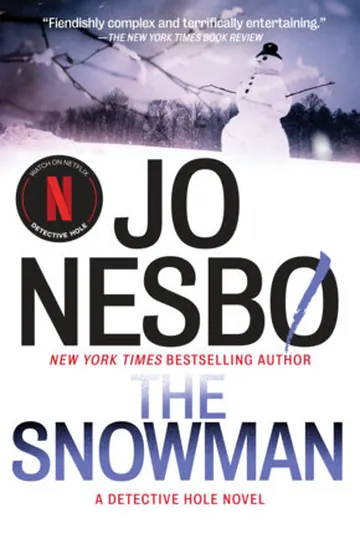
The first page of The Snowman
It was the day the snow came. At eleven o’clock in the morning, large flakes appeared from a colourless sky and invaded the fields, gardens and lawns of Romerike like an armada from outer space. At two, the snowploughs were in action in Lillestrom, and when, at half past two, Sara Kvinesland slowly and carefully steered her Toyota Corolla SR5 between the detached houses in Kolloveien, the November snow was lying like a down duvet over the rolling countryside.
She was thinking that the houses looked different in daylight. So different that she almost passed his drive. The car skidded as she applied the brakes, and she heard a groan from the back seat. In the rear-view mirror she saw her son’s disgruntled face.
“It won’t take long, my love,” she said.
In front of the garage there was a large patch of black tarmac amid all the white, and she realised that the removal van had been there. Her throat constricted. She hoped she wasn’t too late.
Continue reading
‘Who lives here?’ came from the back seat.
‘Just someone I know,’ Sara said, automatically checking her hair in the mirror. ‘Ten minutes, my love. I’ll leave the key in the ignition so you can listen to the radio.’
She went without waiting for a response, slithered in her slippery shoes up to the door she had been through so many times, but never like this, not in the middle of the day, in full view of all the neighbours’ prying eyes. Not that late-night visits would seem any more innocent, but for some reason acts of this kind felt more appropriate when performed after the fall of darkness.
She heard the buzz of the doorbell inside, like a bumblebee in a jam jar. Feeling her desperation mount, she glanced at the windows of the neighbouring houses. They gave nothing away, just returned reflections of bare black apple trees, grey sky and milky-white terrain. Then, at last, she heard footsteps behind the door and heaved a sigh of relief.
The next moment she was inside and in his arms.
‘Don’t go, darling,’ she said, hearing the sob already straining at her vocal cords.
‘I have to,’ he said in a monotone that suggested a refrain he had tired of long ago. His hands sought familiar paths, of which they never tired.
‘No, you don’t,’ she whispered into his ear. ‘But you want to. You don’t dare any longer.’
‘This has nothing to do with you and me.’
She could hear the irritation creeping into his voice at the same time as his hand, the strong but gentle hand, slid down over her spine and inside the waistband of her skirt and tights. They were like a pair of practised dancers who knew their partner’s every move, step, breath, rhythm. First, the white lovemaking. The good one. Then the black one. The pain.
His hand caressed her coat, searching for her nipple under the thick material. He was eternally fascinated by her nipples; he always returned to them. Perhaps it was because he didn’t have any himself.
‘Did you park in front of the garage?’ he asked with a firm tweak.
She nodded and felt the pain shoot into her head like a dart of pleasure. Her sex had already opened for the fingers which would soon be there. ‘My son’s waiting in the car?’
His hand came to an abrupt halt.
‘He knows nothing,’ she groaned, sensing his hand falter.
“…breathes new life into the serial killer subgenre, giving it a Norwegian twist…”
Publishers Weekly
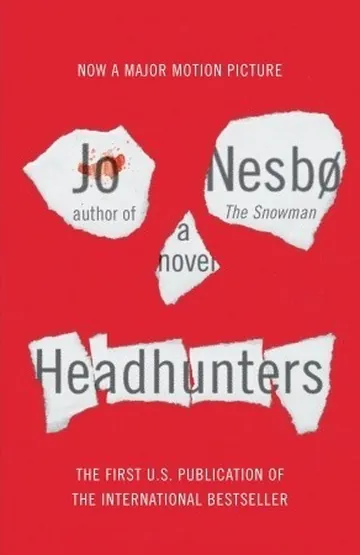
The first page of Headhunters
A collision between two vehicles is basic physics. It all comes down to chance, but chance phenomena can be explained by the equation Energy x Time = Mass x difference in Velocity. Add values to the chance variables and you have a story that is simple, true and remorseless. It tells you, for example, what happens when a fully loaded juggernaut weighing 25 tons and travelling at a speed of 80 kph hits a sedan weighing 1,800 kilos and moving at the same speed. Based on chance with respect to point of impact, construction of bodywork and the angle of the two bodies relative to one another, a multitude of variants to this story are possible, but they share two common features: they are tragedies. And it is the sedan which is in trouble.
It is strangely quiet; I can hear the wind rushing through the trees and the river shifting its water. My arm is numb and I am hanging upside down, trapped between flesh and steel. Above me, blood and petrol drip from the floor. Beneath me, on the chessboard ceiling, I can see a pair of nail scissors, a severed arm, two dead men and an open overnight bag. The white queen is broken, I am a killer and no one is breathing inside the car. Not even me. That is why I will die soon. Close my eyes and give up. Giving up is wonderful. I don’t want to wait any longer now. Hence the hurry to tell this story, this variant, this story about the angle of the bodies relative to one another.
Continue reading
The candidate was terrified.
He was dressed in Gunnar Øye attire: grey Ermenegildo Zegna suit, hand-sewn Borelli shirt and burgundy tie with sperm-cell pattern, I guessed Cerruti 1881. However, I was certain about the shoes: hand-sewn Ferragamo. I once had a pair myself.
The papers in front of me revealed that the candidate came armed with excellent credentials from NHH – the Norwegian School of Economics and Business Administration, in Bergen – a spell in Stortinget for the Conservative Party and a four-year success story as the managing director of a medium-sized manufacturing company.
Nevertheless, Jeremias Lander was terrified. His upper lip glistened with sweat.
He raised the glass of water my secretary had placed on the low table between us.
‘I’d like . . .’ I said with a smile. Not the open, unconditional smile that invites a complete stranger to come in from the cold, not the frivolous one. But the courteous, semi-warm smile that, according to the literature, signals the interviewer’s professionalism, objectivity and analytical approach. Indeed, it is this lack of emotional commitment that causes the candidate to trust his interviewer’s integrity.
“…a delightful roller-coaster ride…”
Publishers Weekly
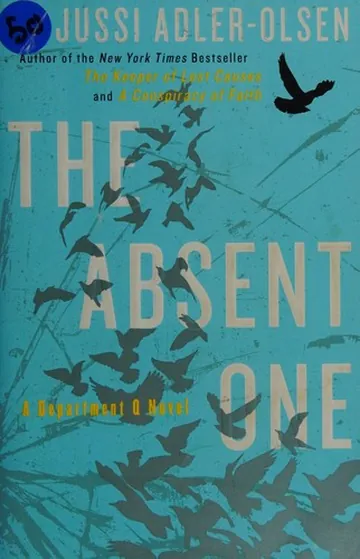
The first page of The Absent One
Another shot echoed over the treetops.
The beaters’ calls had grown clearer. A throbbing pulse was thundering against my eardrums, the damp air forcing its way into my lungs so fast and hard that it hurt.
Run, run, don’t fall. I’ll never get up again if I do. Fuck, fuck. Why can’t I get my hands free? Oh, run, run. shhh. Can’t let them hear me. Did they hear me? Is this it? Is this really how my life is going to end?
Branches slapped against my face, drawing streaks of blood, the blood mixing with sweat.
The men’s shouts were all around now. It was at this moment that I was seized by the fear of death.
More shots. A bolt whistled through the chill air so close that sweat poured off me, settling like a compress beneath my clothes.
In a minute or two they’ll catch me. Why won’t my hands behind my back obey? How can the tape be that strong?
Continue reading
Frightened birds suddenly flew from the treetops, wings beating the air. The dancing shadows beyond the dense line of spruces grew clearer. Maybe they were only about a hundred yards away. Everything was more distinct now. The voices. The hunters’ bloodlust.
How would they do it? A single shot, a single arrow, and it would be over? Was that it?
No, no, why would they settle for that? Those bastards were not that merciful. That wasn’t their way. They had their rifles and their bloodsplattered knives. They had shown how efficient their crossbows were.
Where can I hide? Is there any place? Can I make it back? Can I? I searched the forest floor, looking back and forth. But it was difficult since my eyes were nearly covered over with tape, and my legs continued their stumbling flight.
Now I’ll see for myself how it feels to be in their snares. They won’t make any exceptions for me. This is how they get their kicks. It’s the only way to get this over with.
My heart was hammering so hard now that it hurt.
When she ventured down the pedestrian street called Stroget, she was poised as if on the edge of a knife. With her face half covered by a dirty green shawl, she slipped past well-lit shop windows, alert eyes scanning the street. It was vital to know how to recognize people without being recognized. To be able to live in peace with her demons and leave the rest to those who hurried past her. Leave the rest to the fucking bastards who wanted to harm her, to those whose blank stares shunned her.
Kimmie glanced up at the streetlights, which threw an icy brightness across Vesterbrogade. She flared her nostrils. The nights would soon grow cold. She had to prepare her winter lair.
She was standing in a crowd by the crossing, among a group of frozen people emerging from Tivoli Gardens, looking toward the central train station, when she noticed the woman beside her in the tweed jacket. The woman squinted at her, wrinkled her nose, and then eased away. It was only a few inches, but more than enough.
Take it easy now, Kimmie, the warning signal flashed in her head as the rage tried to take hold.
Her eyes glided down the woman’s body until they reached her legs. The woman’s stockings gleamed, her ankles taut in high-heeled shoes. Kimmie felt a treacherous smile curling at the corners of her mouth. With a hard kick she could crack those heels. The woman would topple over, and she would learn how even a Christian Lacroix dress gets soiled on a wet pavement. That would teach her to mind her own business.
Kimmie looked directly at the woman’s face. Heavy eyeliner, powdered nose, a meticulous haircut, fashioned one strand at a time. Her expression was rigid and dismissive. Yes, Kimmie knew her type better than most people did. She had once been like her. Arrogant upper-class snobs who were thunderously hollow inside. Back then her so-called women friends had been like that; her stepmother, too.
She loathed them.
So do something, the voices in her head whispered. Don’t let her get away with it. Show her who you are. Do it!
Kimmie stared at a group of dark-skinned boys on the other side of the street. Had it not been for their roving eyes, she would have shoved the woman just as the 47 bus whizzed past. She saw it clearly in her mind’s eye: what a wonderful bloodstain the bus would leave behind. What a shockwave the snooty woman’s crushed body would send through the crowd. What a delicious sense of justice it would give her.
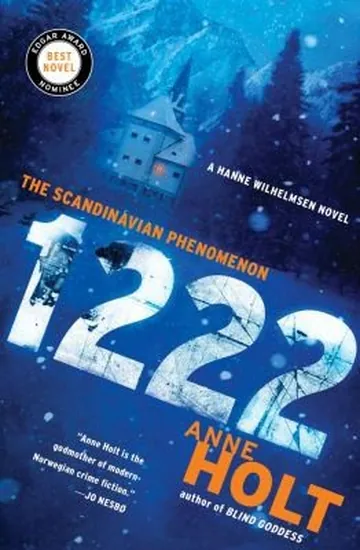
The first page of 1222
As it was only the train driver who died, you couldn’t call it a disaster. There were 269 people on board when the train, due to a meteorological phenomenon that I have not yet understood completely, came off the rails and missed the tunnel through Finsenut. A dead train driver comprises only 0.37 per cent of this number of people. Given the circumstances, in other words, we were incredibly lucky. Although many individuals were injured in the collision, these injuries were mostly minor in nature. Broken arms and legs. Concussion. Superficial cuts and grazes, of course; there was hardly one person on board who wasn’t physically marked in some way after the crash. But only one fatality. Judging by the screams that ripped through the train minutes after the accident, one could have gained the impression that a total disaster had taken place.
I didn’t say anything for quite some time. I was convinced that I was one of only a few survivors, and besides I had a tiny baby I had never seen before in my arms. It came flying from behind when the impact occurred, brushed against my shoulder, and hit the wall right in front of my wheelchair before landing on my lap with a soft thud. In a pure reflex action I put my arms around the bundle, which was yelling. I started to get my breath back, and became aware of the dry smell of snow.
Continue reading
The temperature dropped from unpleasant static heat to the level of cold that threatens frostbite within a remarkably short time. The train listed to one side. Not very much, but enough to cause pain in one of my shoulders.
I was sitting on the left in the carriage and was the only person in a wheelchair on the entire train. A wall of dirty white was pressing against the window on my side. It struck me that the enormous quantities of snow had saved us; without them the train would have jackknifed.
The cold was debilitating. I had taken off my sweater back in Hønefoss. Now I was sitting here in a thin T-shirt, clutching a baby to my chest, as I realized it was snowing into the carriage. The bare skin on my arms was already so cold that the whirling, blue-white flakes lay there for a chilly second before melting. The windows had caved in all along the right-hand side of the carriage.
The wind must have increased in strength during the few minutes that had passed since we stopped to allow people to get on and off the train at Finse station. Only two passengers had disembarked. I had noticed how they leaned forward against the wind as they struggled across the platform towards the entrance to the hotel, but it didn’t seem any worse than normal bad weather up in the high mountains. Sitting here now, with my sweater tightly wrapped around the baby and with no chance of being able to reach for my jacket, I was afraid that the wind was so strong and the snow so cold that we would freeze to death within a very short time. I curled my body over the tiny baby as best I could. With hindsight I can’t actually say how long I sat like that, without any contact with anyone, without saying anything, with the shouts of the other passengers like disconnected fragments in the dense howling of the storm. Perhaps it was ten minutes. It might have been only a few seconds.
“Sara!”
A woman was glaring furiously at me and the child, which was entirely pink, from its cardigan to its tiny little socks. The small, clenched fists that I was trying to cover with my own hands, along with the furious, yelling face, had a pale pink tinge. The mother’s face, on the other hand, was blood-red.
“…the prickly Hanne is worth getting to know…”
Publishers Weekly

The first page of The Long Shadow
The night was pitch-black. She could just make out the orange trees lining the road as black shadows on the edge of her vision. Three cats’ heads stuck up out of a rubbish bin, the headlights catching their eyes.
The rain had stopped, but the tarmac was still wet and shiny, reflecting the light from the streetlamps. She had the car window wound down and was listening to the wet hiss of the tires on the road surface, the crickets chirping, the wind rustling the trees. The air coming through the window was chill with damp.
It was as peaceful as could be.
She braked and stopped uncertainly at a crossroad. Was this where she was supposed to turn left, or was that the next one? She was clutching the steering wheel in a cramped ten-and-two grip. All this random building work; they didn’t have any planning regulations, no town planning, and therefore no maps. Not even Google Earth had been able to help with these new districts.
Continue reading
Well, this must be it. She recognized the golden knobs at the top of the gate to her right. Everything looked so different in the dark.
She put the indicator on so that the truck behind her could see which way she was heading.
The two vehicles were driving with dipped headlights; anything else would have been impossible on such terrible roads.
And a car with no lights would arouse more suspicion than one with headlights on. She swerved to avoid a large pothole in the middle of the road, then checked in the rearview mirror that the driver following her did the same.
Then the car’s headlights swept across the gateway at the edge of the neighborhood, an overblown affair in black wrought iron with a pair of concrete lions on either side of the gates. She felt her shoulders relax in relief. She quickly tapped the code on the pillar below one of the lions, and the gates shuddered and then slid open. She peered up at the night sky.
The clouds had rolled in from Africa during the afternoon and settled like a thick blanket over the whole coast. Somewhere behind them was a full moon. She noted that the wind was picking up and hoped they’d be finished before the cloud cover started to break.
The roads inside the gates were, in marked contrast to those outside, smooth, with perfectly edged pavements and hedges that were absolutely straight. She passed three turnings before she swung off to the right and carried on down a slight hill.
The villa was off to the left, with its terraces and pool facing south.
She drove some ten meters past the house, parked by the pavement in front of a vacant plot, and waited patiently as the truck driver pulled up behind her.
Then she took her briefcase, locked the car, went over to the truck, and clambered up into the cab.
The men looked focused, slightly sweaty.
She pulled on a pair of latex gloves, then took out the syringes for the injections and attached the first needle.
“Lean forward,” she said to one of them.
The man groaned quietly and obeyed; there was hardly room for his fat stomach under the dashboard.
She didn’t bother cleaning the area on his buttock, just stabbed the needle quickly almost the whole way into the muscle and injected the liquid.
“…this installment in the Bengtzon chronicles offers plenty of suspense…”
Publishers Weekly
Questions
Quick answers
Which one is closest to a classic whodunit?
1222. Kirkus compares it to Agatha Christie’s And Then There Were None.