Funny novels that start being funny on page one
A man in a green hunting cap judges a crowd for bad taste, a bank robbery turns into a hostage drama, and a doughnut-eating race ends on the floor. Read the first page and see if the joke lands for you.
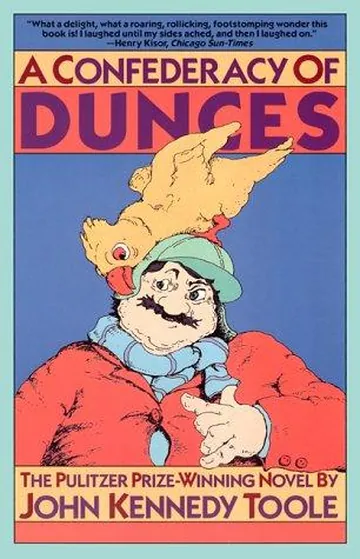
The first page of A Confederacy of Dunces
A green hunting cap squeezed the top of the fleshy balloon of a head. The green earflaps, full of large ears and uncut hair and the fine bristles that grew in the ears themselves, stuck out on either side like turn signals indicating two directions at once. Full, pursed lips protruded beneath the bushy black moustache and, at their corners, sank into little folds filled with disapproval and potato chip crumbs. In the shadow under the green visor of the cap Ignatius J. Reilly's supercilious blue and yellow eyes looked down upon the other people waiting under the clock at the D. H. Holmes department store, studying the crowd of people for signs of bad taste in dress. Several of the outfits, Ignatius noticed, were new enough and expensive enough to be properly considered offenses against taste and decency. Possession of anything new or expensive only reflected a person's lack of theology and geometry; it could even cast doubts upon one's soul.
Continue reading
Ignatius himself was dressed comfortably and sensibly. The hunting cap prevented head colds. The voluminous tweed trousers were durable and permitted unusually free locomotion. Their pleats and nooks contained pockets of warm, stale air that soothed Ignatius. The plaid flannel shirt made a jacket unnecessary while the muffler guarded exposed Reilly skin between earflap and collar. The outfit was acceptable by any theological and geometrical standards, however abstruse, and suggested a rich inner life.
Shifting from one hip to the other in his lumbering, elephantine fashion, Ignatius sent waves of flesh rippling beneath the tweed and flannel, waves that broke upon buttons and seams. Thus rearranged, he contemplated the long while that he had been waiting for his mother. Principally he considered the discomfort he was beginning to feel. It seemed as if his whole being was ready to burst from his swollen suede desert boots, and, as if to verify this, Ignatius turned his singular eyes toward his feet. The feet did indeed look swollen. He was prepared to offer the sight of those bulging boots to his mother as evidence of her thoughtlessness. Looking up, he saw the sun beginning to descend over the Mississippi at the foot of Canal Street. The Holmes clock said almost five. Already he was polishing a few carefully worded accusations designed to reduce his mother to repentance or, at least, confusion. He often had to keep her in her place.
She had driven him downtown in the old Plymouth, and while she was at the doctor's seeing about her arthritis, Ignatius had bought some sheet music at Werlein's for his trumpet and a new string for his lute. Then he had wandered into the Penny Arcade on Royal Street to see whether any new games had been installed. He had been disappointed to find the miniature mechanical baseball game gone. Perhaps it was only being repaired. The last time that he had played it the batter would not work and, after some argument, the management had returned his nickel, even though the Penny Arcade people had been base enough to suggest that Ignatius had himself broken the baseball machine by kicking it.
Concentrating upon the fate of the miniature baseball machine, Ignatius detached his being from the physical reality of Canal Street and the people around him and therefore did not notice the two eyes that were hungrily watching him from behind one of D. H. Holmes' pillars, two sad eyes shining with hope and desire.
Was it possible to repair the machine in New Orleans?
“A masterpiece of character comedy…”
Kirkus Reviews
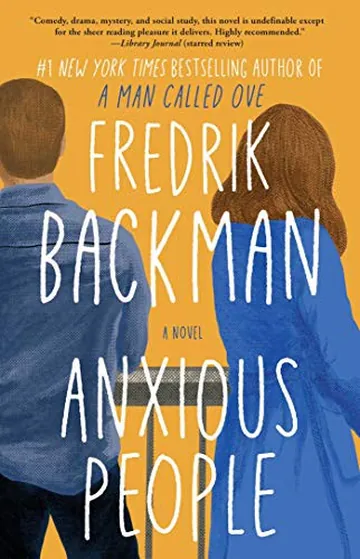
The first page of Anxious People
A bank robbery. A hostage drama. A stairwell full of police officers on their way to storm an apartment. It was easy to get to this point, much easier than you might think. All it took was one single really bad idea.
This story is about a lot of things, but mostly about idiots. So it needs saying from the outset that it's always very easy to declare that other people are idiots, but only if you forget how idiotically difficult being human is. Especially if you have other people you're trying to be a reasonably good human being for.
Because there's such an unbelievable amount that we're all supposed to be able to cope with these days. You're supposed to have a job, and somewhere to live, and a family, and you're supposed to pay taxes and have clean underwear and remember the password to your damn Wi-Fi. Some of us never manage to get the chaos under control, so our lives simply carry on, the world spinning through space at two million miles an hour while we bounce about on its surface like so many lost socks.
Continue reading
Our hearts are bars of soap that we keep losing hold of; the moment we relax, they drift off and fall in love and get broken, all in the wink of an eye. We're not in control. So we learn to pretend, all the time, about our jobs and our marriages and our children and everything else. We pretend we're normal, that we're reasonably well educated, that we understand "amortization levels" and "inflation rates." That we know how sex works. In truth, we know as much about sex as we do about USB leads, and it always takes us four tries to get those little buggers in. (Wrong way round, wrong way round, wrong way round, there! In!) We pretend to be good parents when all we really do is provide our kids with food and clothing and tell them off when they put chewing gum they find on the ground in their mouths. We tried keeping tropical fish once and they all died. And we really don't know more about children than tropical fish, so the responsibility frightens the life out of us each morning. We don't have a plan, we just do our best to get through the day, because there'll be another one coming along tomorrow.
Sometimes it hurts, it really hurts, for no other reason than the fact that our skin doesn't feel like it's ours. Sometimes we panic, because the bills need paying and we have to be grown-up and we don't know how, because it's so horribly, desperately easy to fail at being grown-up.
Because everyone loves someone, and anyone who loves someone has had those desperate nights where we lie awake trying to figure out how we can afford to carry on being human beings. Sometimes that makes us do things that seem ridiculous in hindsight, but which felt like the only way out at the time.
One single really bad idea. That's all it takes.
One morning, for instance, a thirty-nine-year-old resident of a not particularly large or noteworthy town left home clutching a pistol, and that was—in hindsight—a really stupid idea. Because this is a story about a hostage drama, but that wasn't the intention. That is to say, it was the intention that it should be a story, but it wasn't the intention that it should be about a hostage drama. It was supposed to be about a bank robbery. But everything got a bit messed up, because sometimes that happens with bank robberies.
“A story with both comedy and heartbreak sure to please Backman fans.”
Kirkus Reviews
The first page of Skippy Dies
Skippy and Ruprecht are having a doughnut-eating race one evening when Skippy turns purple and falls off his chair. It is a Friday in November, and Ed's is only half full; if Skippy makes a noise as he topples to the floor, no one pays any attention. Nor is Ruprecht, at first, overly concerned; rather he is pleased, because it means that he, Ruprecht, has won the race, his sixteenth in a row, bringing him one step closer to the all-time record held by Guido 'The Gland' LaManche, Seabrook College class of '93.
Apart from being a genius, which he is, Ruprecht does not have all that much going for him. A hamster-cheeked boy with a chronic weight problem, he is bad at sports and most other facets of life not involving complicated mathematical equations; that is why he savours his doughnut-eating victories so, and why, even though Skippy has been on the floor for almost a minute now, Ruprecht is still sitting there in his chair, chuckling to himself and saying, exultantly, under his breath, ‘Yes, yes’ – until the table jolts and his Coke goes flying, and he realizes that something is wrong.
Continue reading
On the chequered tiles beneath the table Skippy is writhing in silence. ‘What’s the matter?’ Ruprecht says, but gets no answer. Skippy’s eyes are bulging and a strange, sepulchral wheezing issues from his mouth; Ruprecht loosens his tie and unbuttons his collar, but that doesn’t seem to help, in fact the breathing, the writhing, the pop-eyed stare only get worse, and Ruprecht feels a prickling climb up the back of his neck. ‘What’s wrong?’ he repeats, raising his voice, as if Skippy were on the other side of a busy motorway. Everyone is looking now: the long table of Seabrook fourth-years and their girlfriends, the two St Brigid’s girls, one fat, one thin, both still in their uniforms, the trio of shelf-stackers from the shopping mall up the road – they turn and watch as Skippy gasps and dry-heaves, for all the world as if he’s drowning, though how could he be drowning here, Ruprecht thinks, indoors, with the sea way over on the other side of the park? It doesn’t make any sense, and it’s all happening too quickly, without giving him time to work out what to do –
At that moment a door opens and a young Asian man in an Ed’s shirt and a badge on which is written, in mock-cursive, Hi I’m, and then, in an almost unreadable scrawl, Zhang Xielín, emerges behind the counter, carrying a tray of change. Confronted by the crowd, which has risen to its feet to get a better view, he halts; then he spies the body on the floor, and dropping the tray, vaults over the counter, pushes Ruprecht aside and prises open Skippy’s mouth. He peers in, but it’s too dark to see anything, so hoisting him to his feet, he fastens his arms around Skippy’s midriff and begins to yank at his stomach.
“Long and impossibly involved, but also beautifully written, with much truth and not a wasted word.”
Kirkus Reviews
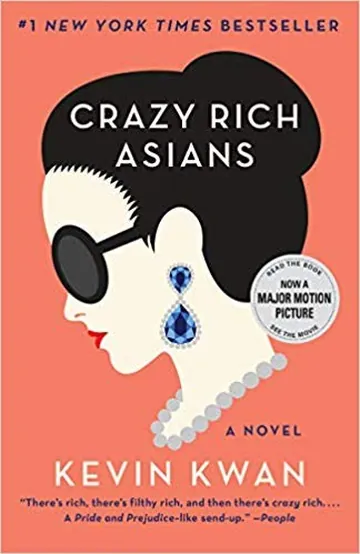
The first page of Crazy Rich Asians
Nicholas Young slumped into the nearest seat in the hotel lobby, drained from the sixteen-hour flight from Singapore, the train ride from Heathrow Airport, and trudging through the rain-soaked streets. His cousin Astrid Leong shivered stoically next to him, all because her mother, Felicity, his dai gu cheh—or "big aunt" in Cantonese—said it was a sin to take a taxi nine blocks and forced everyone to walk all the way from Piccadilly Tube Station.
Anyone else happening upon the scene might have noticed an unusually composed eight-year-old boy and an ethereal wisp of a girl sitting quietly in a corner, but all Reginald Ormsby saw from his desk overlooking the lobby were two little Chinese children staining the damask settee with their sodden coats. And it only got worse from there. Three Chinese women stood nearby, frantically blotting themselves dry with tissues, while a teenager slid wildly across the lobby, his sneakers leaving muddy tracks on the black-and-white checkerboard marble.
Continue reading
Ormsby rushed downstairs from the mezzanine, knowing he could more efficiently dispatch these foreigners than his front-desk clerks. “Good evening, I am the general manager. Can I help you?” he said slowly, over-enunciating every word.
“Yes, good evening, we have a reservation,” the woman replied in perfect English.
Ormsby peered at her in surprise. “What name is it under?”
“Eleanor Young and family.”
Ormsby froze—he recognized the name, especially since the Young party had booked the Lancaster Suite. But who could have imagined that “Eleanor Young” would turn out to be Chinese, and how on earth did she end up here? The Dorchester or the Ritz might let this kind in, but this was the Calthorpe, owned by the Calthorpe-Cavendish-Gores since the reign of George IV and run for all intents and purposes like a private club for the sort of families that appeared in Debrett’s or the Almanach de Gotha. Ormsby considered the bedraggled women and the dripping children. The Dowager Marchioness of Uckfield was staying through the weekend, and he could scarcely imagine what she would make of these folk appearing at breakfast tomorrow. He made a swift decision. “I’m terribly sorry, but I can’t seem to find a booking under that name.”
“Are you sure?” Eleanor asked in surprise.
“Quite sure.” Ormsby grinned tightly.
Felicity Leong joined her sister-in-law at the front desk. “Is there a problem?” she asked impatiently, eager to get to the room to dry her hair.
“Alamak, they can’t find our reservation,” Eleanor sighed.
“How come? Maybe you booked it under another name?” Felicity inquired.
“No, lah. Why would I do that? It was always booked under my name,” Eleanor replied irritatedly. Why did Felicity always assume she was incompetent? She turned back to the manager. “Sir, can you please check again? I reconfirmed our reservation just two days ago. We’re supposed to be in your largest suite.”
“Yes, I know you booked the Lancaster Suite, but I can’t find your name anywhere,” Ormsby insisted.
“Excuse me, but if you know we booked the Lancaster Suite, why don’t we have the room?” Felicity asked, confused.
Bloody hell. Ormsby cursed at his own slip-up. “No, no, you misunderstood. What I meant was that you might think you booked the Lancaster Suite, but I certainly can’t find any record of it.” He turned away for a moment, pretending to rummage through some other paperwork.
“An elegant comedy and an auspicious debut.”
Kirkus Reviews
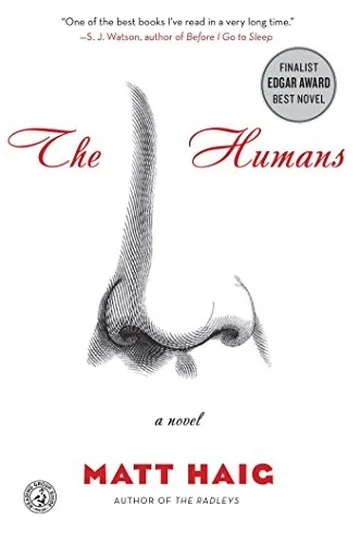
The first page of The Humans
I know that some of you reading this are convinced humans are a myth, but I am here to state that they do actually exist. For those that don't know, a human is a real bipedal life form of midrange intelligence, living a largely deluded existence on a small, waterlogged planet in a very lonely corner of the universe.
For the rest of you, and those who sent me, humans are in many respects exactly as strange as you would expect them to be. Certainly it is true that on a first sighting you would be appalled by their physical appearance.
Their faces alone contain all manner of hideous curiosities. A protuberant central nose, thin-skinned lips, primitive external auditory organs known as "ears," tiny eyes, and unfathomably pointless eyebrows. All of which take a long time to mentally absorb and accept.
The manners and social customs too are a baffling enigma at first. Their conversation topics are very rarely the things they want to be talking about, and I could write ninety-seven books on body shame and clothing etiquette before you would get even close to understanding them.
Continue reading
Oh, and let's not forget the Things They Do to Make Themselves Happy That Actually Make Them Miserable. This is an infinite list. It includes shopping, watching TV, taking the better job, getting the bigger house, writing a semiautobiographical novel, educating their young, making their skin look mildly less old, and harboring a vague desire to believe there might be a meaning to it all.
Yes, it is all very amusing, in a painful kind of way. But I have discovered human poetry while on Earth. One of these poets, the very best one (her name was Emily Dickinson), said this: "I dwell in possibility." So let us humor ourselves and do the same. Let us open our minds entirely, for what you are about to read will need every prejudice you may have to stand aside in the name of understanding.
And let us consider this: what if there actually is a meaning to human life? And what if—humor me—life on Earth is something not just to fear and ridicule but also to cherish? What then?
Some of you may know what I have done by now, but none of you know the reason. This document, this guide, this account—call it what you will—will make everything clear. I plead with you to read this book with an open mind, and to work out for yourself the true value of human life.
Let there be peace.
“For all its later outbreaks of Vonnadorian mawkishness, The Humans still deserves to live long and prosper.”
The Guardian
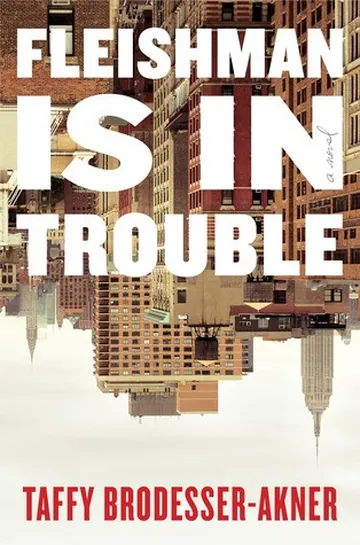
The first page of Fleishman Is in Trouble
Toby Fleishman awoke one morning inside the city he'd lived in all his adult life and which was suddenly somehow now crawling with women who wanted him. Not just any women, but women who were self-actualized and independent and knew what they wanted. Women who weren't needy or insecure or self-doubting, like the long-ago prospects of his long-gone youth—meaning the women he had thought of as prospects but who had never given him even a first glance. No, these were women who were motivated and available and interesting and interested and exciting and excited. These were women who would not so much wait for you to call them one or two or three socially acceptable days after you met them as much as send you pictures of their genitals the day before. Women who were open-minded and up for anything and vocal about their desires and needs and who used phrases like “put my cards on the table” and “no strings attached” and “I need to be done in ten because I have to pick up Bella from ballet.” Women who would fuck you like they owed you money, was how our friend Seth put it.
Continue reading
Yes, who could have predicted that Toby Fleishman, at the age of forty-one, would find that his phone was aglow from sunup to sundown (in the night the glow was extra bright) with texts that contained G-string and ass cleavage and underboob and sideboob and just straight-up boob and all the parts of a woman he never dared dream he would encounter in a person who was three-dimensional—meaning literally three-dimensional, as in a person who wasn’t on a page or a computer screen. All this, after a youth full of romantic rejection! All this, after putting a lifetime bet on one woman! Who could have predicted this? Who could have predicted that there was such life in him yet?
Still, he told me, it was jarring. Rachel was gone now, and her goneness was so incongruous to what had been his plan. It wasn’t that he still wanted her—he absolutely did not want her. He absolutely did not wish she were still with him. It was that he had spent so long waiting out the fumes of the marriage and busying himself with the paperwork necessary to extricate himself from it—telling the kids, moving out, telling his colleagues—that he had not considered what life might be like on the other side of it. He understood divorce in a macro way, of course. But he had not yet adjusted to it in a micro way, in the other-side-of-the-bed-being-empty way, in the nobody-to-tell-you-were-running-late way, in the you-belong-to-no-one way. How long was it before he could look at the pictures of women on his phone—pictures the women had sent him eagerly and of their own volition—straight on, instead of out of the corner of his eye? Okay, sooner than he thought but not immediately. Certainly not immediately.
He hadn’t looked at another woman once during his marriage, so in love with Rachel was he—so in love was he with any kind of institution or system. He made solemn, dutiful work of trying to save the relationship even after it would have been clear to any reasonable person that their misery was not a phase. There was nobility in the work, he believed. There was nobility in the suffering. And even after he realized that it was over, he still had to spend years, plural, trying to convince her that this wasn’t right, that they were too unhappy, that they were still young and could have good lives without each other—even then he didn’t let one millimeter of his eye wander. Mostly, he said, because he was too busy being sad. Mostly because he felt like garbage all the time, and a person shouldn’t feel like garbage all the time. More than that, a person shouldn’t be made horny when he felt like garbage. The intersection of horniness and low self-esteem seemed reserved squarely for porn consumption.
But now there was no one to be faithful to. Rachel wasn’t there.
“This is a sardonically cheerful novel that readers will adore.”
Publishers Weekly
Questions
Quick answers
Are these all light reads?
No. They are all funny, but Skippy Dies and Anxious People mix the comedy with grief, and Fleishman Is in Trouble is a divorce novel at heart.