Enemies to lovers books, from rival novelists to a vampire bride
They start out unable to stand each other. Read how each of these six romances begins, from the White House roof to a lake house next door to a rival writer.
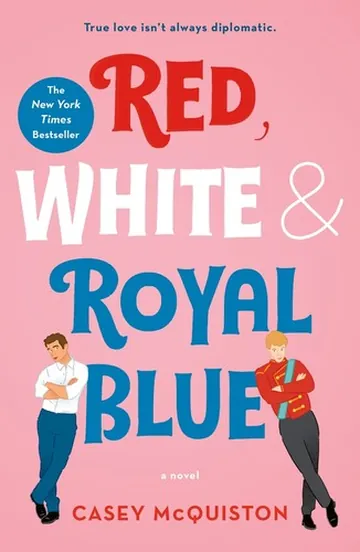
The first page of Red, White & Royal Blue
On the White House roof, tucked into a corner of the Promenade, there’s a bit of loose paneling right on the edge of the Solarium. If you tap it just right, you can peel it back enough to find a message etched underneath, with the tip of a key or maybe a stolen West Wing letter opener.
In the secret history of First Families—an insular gossip mill sworn to absolute discretion about most things on pain of death—there’s no definite answer for who wrote it. The one thing people seem certain of is that only a presidential son or daughter would have been daring enough to deface the White House. Some swear it was Jack Ford, with his Hendrix records and split-level room attached to the roof for late-night smoke breaks. Others say it was a young Luci Johnson, thick ribbon in her hair. But it doesn’t matter. The writing stays, a private mantra for those resourceful enough to find it.
Continue reading
Alex discovered it within his first week of living there. He’s never told anyone how.
It says:
RULE #1: DON’T GET CAUGHT
The East and West Bedrooms on the second floor are generally reserved for the First Family. They were first designated as one giant state bedroom for visits from the Marquis de Lafayette in the Monroe administration, but eventually they were split. Alex has the East, across from the Treaty Room, and June uses the West, next to the elevator.
Growing up in Texas, their rooms were arranged in the same configuration, on either side of the hallway. Back then, you could tell June’s ambition of the month by what covered the walls. At twelve, it was watercolor paintings. At fifteen, lunar calendars and charts of crystals.
At sixteen, clippings from The Atlantic, a UT Austin pennant, Gloria Steinem, Zora Neale Hurston, and excerpts from the papers of Dolores Huerta.
His own room was forever the same, just steadily more stuffed with lacrosse trophies and piles of AP coursework. It’s all gathering dust in the house they still keep back home. On a chain around his neck, always hidden from view, he’s worn the key to that house since the day he left for DC.
Now, straight across the hall, June’s room is all bright white and soft pink and minty green, photographed by Vogue and famously inspired by old ’60s interior design periodicals she found in one of the White House sitting rooms. His own room was once Caroline Kennedy’s nursery and, later, warranting some sage burning from June, Nancy Reagan’s office. He’s left up the nature field illustrations in a neat symmetrical grid above the sofa, but painted over Sasha Obama’s pink walls with a deep blue.
Typically, the children of the president, at least for the past few decades, haven’t lived in the Residence beyond eighteen, but Alex started at Georgetown the January his mom was sworn in, and logistically, it made sense not to split their security or costs to whatever one-bedroom apartment he’d be living in. June came that fall, fresh out of UT. She’s never said it, but Alex knows she moved in to keep an eye on him. She knows better than anyone else how much he gets off on being this close to the action, and she’s bodily yanked him out of the West Wing on more than one occasion.
Behind his bedroom door, he can sit and put Hall & Oates on the record player in the corner, and nobody hears him humming along like his dad to “Rich Girl.” He can wear the reading glasses he always insists he doesn’t need. He can make as many meticulous study guides with color-coded sticky notes as he wants. He’s not going to be the youngest elected congressman in modern history without earning it, but nobody needs to know how hard he’s kicking underwater. His sex-symbol stock would plummet.
“The two heartthrobs are arch-nemeses at first.”
Publishers Weekly
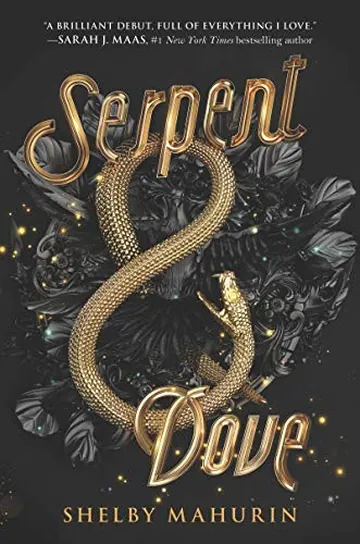
The first page of Serpent & Dove
There’s something haunting about a body touched by magic. Most people first noticed the smell: not the rot of decay, but a cloying sweetness in their noses, a sharp taste on their tongues. Rare individuals also sensed a tingle in the air. A lingering aura on the corpse’s skin. As if the magic itself was still present somehow, watching and waiting.
Alive.
Of course, those stupid enough to talk about such things ended up on the stake.
Thirteen bodies had been found throughout Belterra over the past year—more than double the amount of years prior. Though the Church did its best to conceal the mysterious circumstances of each death, all had been buried in closed caskets.
“There he is.” Coco motioned to a man in the corner. Though candlelight bathed half of his face in shadow, there was no mistaking the gold brocade on his coat or the heavy insignia around his neck. He sat rigid in his chair, clearly uncomfortable, as a scantily-clad woman draped herself across his plump midsection. I couldn’t help but grin.
Continue reading
Only Madame Labelle would leave an aristocrat such as Pierre Tremblay waiting in the bowels of a brothel.
“Come on.” Coco motioned toward a table in the opposite corner. “Babette should be here soon.”
“What sort of pompous ass wears brocade while mourning?” I asked.
Coco glanced at Tremblay over her shoulder and smirked. “The sort of pompous ass with money.”
His daughter, Filippa, had been the seventh body found.
After her disappearance in the dead of night, the aristocracy had been shaken when she’d reappeared—throat slashed—at the edge of L’Eau Mélancolique. But that wasn’t the worst of it. Rumors had crawled through the kingdom about her silver hair and wrinkled skin, her cloudy eyes and gnarled fingers. At twenty-four, she’d been transformed into a hag. Tremblay’s peers simply couldn’t understand it. She’d had no known enemies, no vendettas against her to warrant such violence.
But while Filippa might’ve had no enemies, her pompous ass of a father had accumulated plenty while trafficking magical objects.
His daughter’s death had been a warning: one did not exploit the witches without consequence.
“Bonjour, messieurs.” A honey-haired courtesan approached us, batting her lashes hopefully. I cackled at the brazen way she eyed Coco. Even disguised as a man, Coco was striking. Though scars marred the rich brown skin of her hands—she covered them with gloves—her face remained smooth, and her black eyes sparkled even in the semidarkness. “Can I tempt you to join me?”
“Sorry, darling.” Adopting my smarmiest voice, I patted the courtesan’s hand the way I’d seen other men do. “But we’re spoken for this morning. Mademoiselle Babette will be joining us shortly.”
She pouted for only a second before moving on to our neighbor, who eagerly accepted her invitation.
“Do you think he has it on him?” Coco scrutinized Tremblay from the top of his bald head to the bottom of his polished shoes, lingering on his unadorned fingers. “Babette could’ve been lying. This could be a trap.”
“Babette might be a liar, but she isn’t stupid. She won’t sell us out before we pay her.” I watched the other courtesans with morbid fascination. With cinched waists and overflowing bosoms, they danced lithely amongst the patrons as if their corsets weren’t slowly suffocating them.
To be fair, however, many of them weren’t wearing corsets. Or anything at all.
“You’re right.” Coco dug our coin pouch from her coat and threw it on the table. “It’ll be after.”
“Ah, mon amour, you wound me.” Babette materialized beside us, grinning and flicking the brim of my hat. Unlike her peers, she swathed as much of her pale skin as possible with crimson silk. Thick, white makeup covered the rest—and her scars. They snaked up her arms and chest in a similar pattern to Coco’s. “And for ten more golden couronnes, I would never dream of betraying you.”
“Lou acquiesces, provided that she can conceal her true nature; who better to protect her than a witch hunter?”
Publishers Weekly
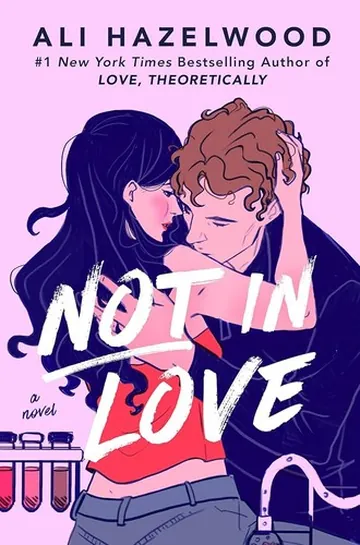
The first page of Not in Love
Ladies, this is a genuine, nonrhetorical question: How do the two of you survive in the real world?
I stared at Nyota’s contemptuous expression, reflecting on the unique brand of humiliation that came with having one’s best friend’s little sister (who’d been repeatedly rebuffed when attempting to enter the backyard tree house; who’d publicly feasted on a booger at Christmas 2009; who’d been caught French-kissing a clementine in the linen closet a few short months later) question one’s ability to carry out a productive existence.
Then again, back in the day, Tisha and I had been three whole years older than her, and we’d harbored a clearly misplaced superiority complex. We knew better now that little Nyota was twenty-four, a law school prodigy, and a newly minted bankruptcy lawyer whose billable hours were worth more than my tragically high car insurance premium. To add insult to injury, I followed her on Instagram, which was how I knew she could bench-press more than her weight, looked incredible in a monokini, and regularly baked onion rosemary focaccia from scratch.
Continue reading
In a powerful flex whose brilliance kept me awake at night, Nyota had never followed me back.
“You know us,” I said, choosing honesty over pride. Tisha and I were holed up inside my closet-sized office at Kline, FaceTiming someone who’d probably never even saved our phone numbers. Dignity was the least of our worries. “We are barely hanging on.”
“Can you just answer the question?” Tisha bristled. As humbling as this was for me, it had to be much worse for her. Nyota was her sister, after all.
“Really? You call me in the middle of the workday to ask what a loan assignment is? You couldn’t google it?”
“We did,” I said, omitting that we’d added for dummies to the search. And yet. “We got the gist of it, we think.”
“Great, then you’re golden. I’m hanging up, see you both at Thanksgiving—”
“However,” I interrupted. It was late May. “The reactions of other Kline employees seem to suggest that we might not be fully grasping the implications of this loan assignment.” My threshold for odd was high, and I’d been able to brush off the HR rep brazenly browsing monster.com at his standing desk, the chemists who’d bumped into me face-first and run away with nary an oops, the vacant stare of my usually dictatorial boss, Matt, when I’d informed him that the report he was waiting on would take at least three more hours. Then, while I was emptying my water bottle into a potted plant that had lived in the break room longer than I’d been in the workforce, a technician had burst into tears and suggested, You should take Christofern home, Dr. Siebert. It shouldn’t die just because of what’s about to happen to Kline.
I had no clue what was going on. All I knew was that I loved my current job at Kline, the most important project of my life was at a pivotal point, and I was too socially challenged to easily transition to another workplace. Today’s event did not bode well. “There’s going to be an assembly in fifteen minutes,” I explained, “and we’d love to walk in with a better idea of what—”
“Ny, stop bitching and just regurgitate it for us like we’re five,” Tisha ordered.
“You guys are doctors,” Nyota pointed out—not as a compliment.
“Okay, listen carefully, Ny, ’cause this will blow your mind and we might have to report it to the UN and have a trial at The Hague: the topic of private equity firms and loan assignments did not come up in any class during our chemical engineering PhDs. A shocking oversight, I know, and I’m sure NATO will want to take military action—”
“Zip it, Tish. You don’t get to snark when you need something from me. Rue, how did you find out about the loan assignment?”
“Florence sent out a company-wide email,” I said. “This morning.”
“Florence is Kline’s CEO?”
“Yes.” It seemed reductive, so I added, “And founder.” Still not exhaustive, but there was a time and place for fangirling, and this wasn’t it.
“Though across corporate enemy lines, neither Eli nor Rue can stop thinking about their aborted date.”
Publishers Weekly
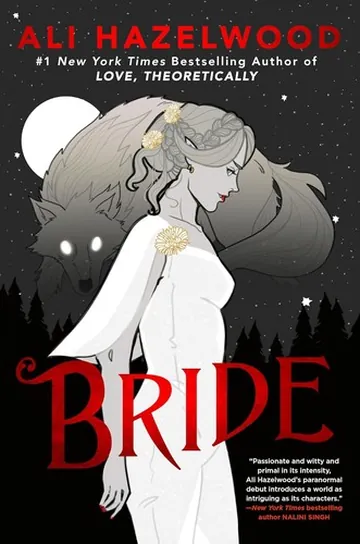
The first page of Bride
This marriage, it's going to be a problem.
She is going to be a problem.
This war of ours, the one between the Vampyres and the Weres, began several centuries ago with brutal escalations of violence, culminated amid flowing torrents of varicolored blood, and ended in a whimper of buttercream cake on the day I met my husband for the first time. Which, as it happens, was also the day of our wedding.
Not quite the stuff of childhood dreams. Then again, I'm no dreamer. I only ever contemplated marriage once, back in the gloomy days of my childhood. Following a few too-harsh punishments and a poorly executed assassination attempt, Serena and I concocted plans for a grand escape, which was going to involve pyrotechnics-based diversions, stealing our math tutor's car, and flipping off our caregivers in the rearview mirror. “We'll stop by the animal shelter and adopt one of those shaggy dogs. Pick up a Slurpee for me, some blood for you. Disappear forever into Human territory.”
Continue reading
“Will they let me in if I'm not Human?” I asked, even though that was the least of our plan's flaws. We were both eleven. Neither of us could drive. Interspecies peace in the Southwest region relied, quite literally, on me staying the hell put.
“I'll vouch for you.”
“Will that be enough?”
“I'll marry you! They'll believe you're Human—my Human wife.”
As proposals went, it seemed solid. So I nodded solemnly and said, “I accept.”
That was fourteen years ago, though, and Serena never married me. In fact, she's long gone. I'm here alone, with a giant heap of expensive wedding favors that'll hopefully fool guests into overlooking the lack of love, genetic compatibility, or even previous acquaintance between me and the groom.
I did try to arrange a meeting. Suggested to my people that they suggest to his people that we could grab lunch the week before the ceremony. Coffee the previous day. A glass of tap water the morning of—anything to avoid a “How do you do?” in front of the officiant. My request was escalated to the Vampyre council, and resulted in a phone call from one of the members' aides. His tone managed to be polite while heavily implying that I was a cuckoo nutbird. “He's a Were. A very powerful and dangerous Were. Just the logistics of providing security for such a meeting would be—”
“I'll be marrying this dangerous Were,” I pointed out evenly, and a bashful throat was cleared.
“He is an Alpha, Miss Lark. Too busy to meet.”
“Busy with . . .?”
“His pack, Miss Lark.”
I pictured him in a home gym, tirelessly working on his abs, and shrugged.
“In an effort to maintain goodwill between the Vampyres and their longtime nemeses the Weres, Misery must wed their Alpha, Lowe Moreland.”
Kirkus Reviews
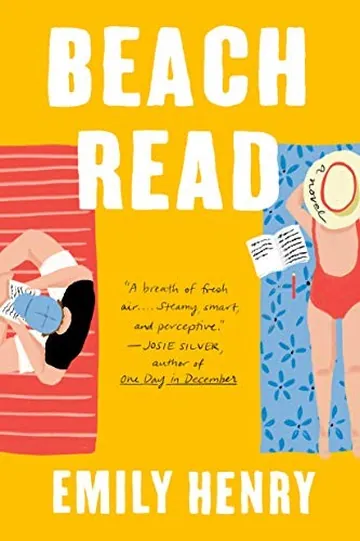
The first page of Beach Read
I have a fatal flaw.
I like to think we all do. Or at least that makes it easier for me when I'm writing—building my heroines and heroes up around this one self-sabotaging trait, hinging everything that happens to them on a specific characteristic: the thing they learned to do to protect themselves and can't let go of, even when it stops serving them.
Maybe, for example, you didn't have much control over your life as a kid. So, to avoid disappointment, you learned never to ask yourself what you truly wanted. And it worked for a long time. Only now, upon realizing you didn't get what you didn't know you wanted, you're barreling down the highway in a midlife-crisis-mobile with a suitcase full of cash and a man named Stan in your trunk.
Maybe your fatal flaw is that you don’t use turn signals.
Or maybe, like me, you’re a hopeless romantic. You just can’t stop telling yourself the story. The one about your own life, complete with melodramatic soundtrack and golden light lancing through car windows.
Continue reading
It started when I was twelve. My parents sat me down to tell me the news. Mom had gotten her first diagnosis—suspicious cells in her left breast—and she told me not to worry so many times I suspected I’d be grounded if she caught me at it. My mom was a do-er, a laugher, an optimist, not a worrier, but I could tell she was terrified, and so I was too, frozen on the couch, unsure how to say anything without making things worse.
But then my bookish homebody of a father did something unexpected. He stood and grabbed our hands—one of Mom’s, one of mine—and said, You know what we need to get these bad feelings out? We need to dance!
Our suburb had no clubs, just a mediocre steak house with a Friday night cover band, but Mom lit up like he’d just suggested taking a private jet to the Copacabana.
She wore her buttery yellow dress and some hammered metal earrings that twinkled when she moved. Dad ordered twenty-year-old Scotch for them and a Shirley Temple for me, and the three of us twirled and bobbed until we were dizzy, laughing, tripping all over. We laughed until we could barely stand, and my famously reserved father sang along to “Brown Eyed Girl” like the whole room wasn’t watching us.
And then, exhausted, we piled into the car and drove home through the quiet, Mom and Dad holding tight to each other’s hands between the seats, and I tipped my head against the car window and, watching the streetlights flicker across the glass, thought, It’s going to be okay. We will always be okay.
And that was the moment I realized: when the world felt dark and scary, love could whisk you off to go dancing; laughter could take some of the pain away; beauty could punch holes in your fear. I decided then that my life would be full of all three. Not just for my own benefit, but for Mom’s, and for everyone else around me.
There would be purpose. There would be beauty. There would be candlelight and Fleetwood Mac playing softly in the background.
The point is, I started telling myself a beautiful story about my life, about fate and the way things work out, and by twenty-eight years old, my story was perfect.
Perfect (cancer-free) parents who called several times a week, tipsy on wine or each other’s company. Perfect (spontaneous, multilingual, six foot three) boyfriend who worked in the ER and knew how to make coq au vin. Perfect shabby chic apartment in Queens. Perfect job writing romantic novels—inspired by perfect parents and perfect boyfriend—for Sandy Lowe Books.
Perfect life.
But it was just a story, and when one gaping plot hole appeared, the whole thing unraveled. That’s how stories work.
“Their contentious front-porch chats lead them to construct a challenge: they’ll each spend the summer writing a novel in the other’s genre…”
Publishers Weekly
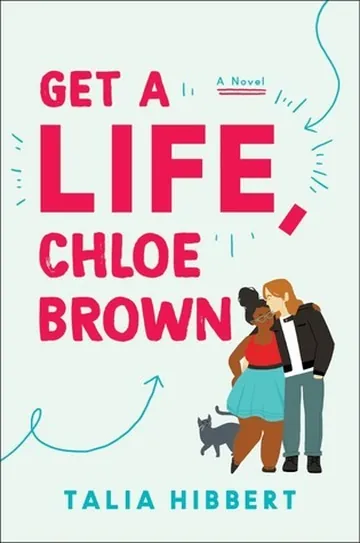
The first page of Get a Life, Chloe Brown
Once upon a time, Chloe Brown died.
Nearly.
It happened on a Tuesday afternoon, of course. Disturbing things always seemed to happen on Tuesdays. Chloe suspected that day of the week was cursed, but thus far, she’d only shared her suspicions via certain internet forums—and with Dani, the weirdest of her two very weird little sisters. Dani had told Chloe that she was cracked, and that she should try positive affirmations to rid herself of her negative weekday energy.
So when Chloe heard shouts and the screech of tires, and looked to her right, and found a shiny, white Range Rover heading straight for her, her first ridiculous thought was: I’ll die on a Tuesday, and Dani will have to admit that I was right all along.
But in the end, Chloe didn’t actually die. She wasn’t even horribly injured—which was a relief, because she spent enough time in hospitals as it was. Instead, the Range Rover flew past her and slammed into the side of a coffee shop. The drunk driver’s head-on collision with a brick wall missed being a head-on collision with a flesh-and-blood Chloe by approximately three feet. Metal crunched like paper. The middle-aged lady in the driver’s seat slumped against an airbag, her crisp, blond bob swinging. Bystanders swarmed and there were shouts to call an ambulance.
Continue reading
Chloe stared, and stared, and stared.
People buzzed by her, and time ticked on, but she barely noticed. Her mind flooded with irrelevant data, as if her head were a trash folder. She wondered how much the repairs to the coffee shop would cost. She wondered if insurance would cover it, or if the driver would have to. She wondered who had cut the lady’s hair, because it was a beautiful job. It remained relatively sleek and stylish, even when she was hauled out of her car and onto a gurney.
Eventually, a man touched Chloe’s shoulder and asked, “Are you okay, my darling?”
She turned and saw a paramedic with a kind, lined face and a black turban. “I believe I’m in shock,” she said. “Could I have some chocolate? Green and Black’s. Sea salt is my favorite, but the eighty-five percent dark probably has greater medicinal properties.”
The paramedic chuckled, put a blanket around her shoulders, and said, “Would a cuppa do, Your Maj?”
“Oh, yes please.” Chloe followed him to the back of his ambulance. Somewhere along the way, she realized she was shaking so hard that it was a struggle to walk. With a skill borne of years of living in her highly temperamental body, she gritted her teeth and forced one foot in front of the other.
When they finally reached the ambulance, she sat down carefully because it wouldn’t do to collapse. If she did, the paramedic would start asking questions. Then he might want to check her over. Then she’d have to tell him about all her little irregularities, and why they were nothing to worry about, and they’d both be here all day. Adopting her firmest I-am-very-healthy-and-in-control tone, she asked briskly, “Will the lady be all right?”
“The driver? She’ll be fine, love. Don’t you worry about that.”
Muscles she hadn’t realized were tense suddenly relaxed.
In the end, after two cups of tea and some questions from the police, Chloe was permitted to finish her Tuesday-afternoon walk. No further near-death experiences occurred, which was excellent, because if they had, she’d probably have done something embarrassing, like cry.
“Their relationship begins antagonistically, but the more time they spend together, with Red coaching Chloe through her list, the more sparks fly.”
Publishers Weekly
Questions
Quick answers
Which of these are fantasy romances?
Serpent & Dove, about a witch forced to marry a witch hunter, and Bride, about a vampire who marries a werewolf.