Domestic thrillers, from an island off Maine to a motorway in France
A family who move into a dead woman’s house on a Maine island, a man whose girlfriend vanished at a rest stop twelve years ago, a seventeen-year-old who knows how to go unseen, a stranger in an airport bar who offers to help with a murder, a woman called home to the town where her best friend disappeared and a teenager who has been letting himself into the neighbors’ houses. Read the first page of each.
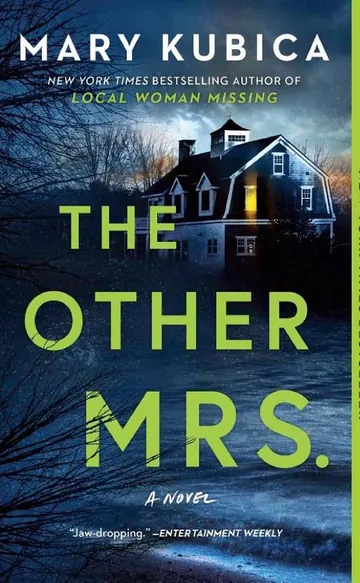
The first page of The Other Mrs.
There’s something off about the house. Something that nags at me, makes me feel uneasy, though I don’t know what it is that makes me feel this way. On the surface, it’s perfectly idyllic, gray with a large covered porch, one that runs the full width of the house. It’s boxy and big, a foursquare farmhouse with windows aligned in rows, symmetrical in a way I find eye-pleasing. The street itself is charming, sloped and tree-covered, each home as lovely and well kept as the next.
On the surface, there’s nothing not to like. But I know better than to take things at face value. It doesn’t help that the day, like the house, is gray. If the sun were out maybe I’d feel differently.
“That one,” I say to Will, pointing at it because it’s identical to the one in the picture that was given to Will from the executor of the estate. He’d flown in last week, to Portland, to take care of the official paperwork. Then he’d flown back, so we could drive here together. He hadn’t had time to see the house then.
Continue reading
Will pauses, bringing the car to rest in the street. He and I lean forward in our seats at exactly the same time, taking it in, as do the boys in the back seat. No one speaks, not at first, not until Tate blurts out that the house is gigantic—transposing his soft and his hard g’s as seven-year-olds have a tendency to do—and Will laughs, overjoyed that someone besides him can see the advantage of our move to Maine.
The house is not gigantic, not really, but in comparison to a 1,200-square-foot condo, it is, especially when it comes with its own yard. Tate has never had his own yard before.
Will gently steps on the gas, easing the car into the driveway. Once in Park, we climb out—some more quickly than others, though the dogs are the quickest of all—stretching our legs, grateful, if for nothing else, to be done with the long drive. The air outside is different than what I’m used to, infused with the scent of damp earth, salty ocean and the woodsy terrain. It smells nothing like home. The street is quiet in a way I don’t like. An eerie quiet, an unsettling quiet, and at once I’m reminded of the notion that there’s safety in numbers. That bad things are less likely to happen among crowds. There’s a misconception that rural living is better, safer than urban living, and yet it’s simply not true. Not when you take into account the disproportionate number of people living in cities, the inadequate health care system in rural parts.
I watch Will walk toward the porch steps, the dogs running along beside him, passing him up. He’s not reluctant like me. He struts as much as he walks, anxious to get inside and check things out. I feel resentful because of it, because I didn’t want to come.
At the base of the steps he hesitates, aware only then that I’m not coming. He turns toward me, standing still next to the car, and asks, “Everything all right?” I don’t answer because I’m not sure if everything is all right.
Tate goes dashing after Will, but fourteen-year-old Otto hovers like me, also reluctant. We’ve always been so much alike.
“Sadie,” Will says, modifying his question, asking this time, “are you coming?” He tells me it’s cold out, a fact of which I was unaware because of my focus on other things, like how the trees around the house tower high enough to block the light. And how dangerously slick the steep street must be when it snows. A man stands up at the top of the hill, on his lawn with a rake in hand. He’s stopped raking and stands perched, watching me, I think.
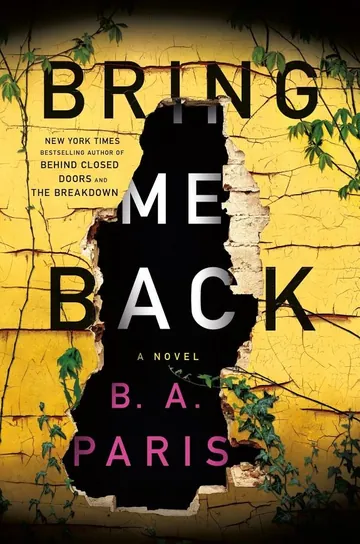
The first page of Bring Me Back
We were on our way back from skiing in Megève. I decided to stop in Paris on the way up as a surprise for Layla, because she had never been there before. We had dinner in a restaurant by the Notre-Dame Cathedral and then went for a walk along the Seine. We could have stayed the night there—now, I wish we had—but we were both eager to get home to our cottage in St. Mary’s, in Devon.
It must have been around midnight by the time we left Paris. About an hour and a half into our journey I wanted to go to the toilet so I pulled off the motorway, into the picnic area at Fonches. It’s not a service station, you can’t get petrol there or anything, but I knew it had toilets because I’d stopped there before, on previous skiing trips to Megève. The place was deserted apart from the car I told you about, the one parked directly outside the toilet block. I think there were a couple of trucks in the truck bay on the other side; there must have been at least two, the one I saw leaving and the other one, the one whose driver we spoke to after.
Continue reading
There was an empty bottle of water rolling around the car and we’d been eating snacks on the way up from Megève so I drove past the toilet block and down to the end of the car park where there was a rubbish bin, so that I could get rid of the wrappers. I—I should have just parked outside the toilet and walked down. If I had, then I would have been nearer. I should have been nearer.
Layla was asleep—she’d fallen asleep as soon as we’d hit the motorway, and I didn’t want to wake her so I sat for a while, just to relax a bit. She woke up when I started gathering up the stuff to throw away.
She didn’t want to use the toilet there, she said she’d rather wait until we stopped at a proper service station, so as I got out of the car I told her to lock the doors behind me, because I didn’t like leaving her there in the dark. She really hates the dark, you see. On my way into the toilets, I passed a man coming out and a minute or so later, I heard a car drive off. He was shorter than me, maybe six foot? I think he had dark hair, he definitely had a beard. I was quick in the toilet, I didn’t like being in there, I felt unnerved, as if someone was watching. Maybe it was because one of the stall doors was closed.
As I made my way back to the car, I heard a truck pull out of the parking bay and I watched it as it headed along the slip road to the motorway. He was driving fast, as if he was in a hurry, but I honestly didn’t think anything of it at the time.
“Paris plays fair with the reader as she builds to a satisfying resolution. Fans of intelligent psychological suspense will be richly rewarded.”
Publishers Weekly

The first page of Invisible Girl
My name is Saffyre Maddox. I am seventeen years old.
I am mostly Welsh on my dad’s side and partly Trinidadian, partly Malaysian, and a tiny bit French from my mum. Sometimes people try to guess my heritage, but they always end up getting it wrong. If anyone asks I just say that I am a mixed bag and leave it at that. No reason for anyone to know who slept with who, you know. It’s my business really, isn’t it?
I’m in my first year of sixth form at a school in Chalk Farm, where I’m doing maths, physics, and biology because I’m a bit of a nerd. I don’t really know what I want to do when I leave school; everyone expects me to go to university, but sometimes I think I’d just like to go and work in a zoo, maybe, or a dog groomer’s.
I live in a two-bedroom flat on the eighth floor of a tower on Alfred Road, right opposite a school I don’t go to, because they hadn’t actually built it when I started secondary.
Continue reading
My grandma died shortly before I was born, my mum died shortly afterward, my dad didn’t want to know, and my granddad died a few months ago. So I live alone with my uncle.
He’s only ten years older than me, and his name is Aaron. He looks after me like a father. He works at a betting shop, nine to five, and does people’s gardens on the weekends. He’s probably the best human being in the world. I have another uncle, Lee, who lives in Essex with his wife and two tiny daughters. So there are finally some girls in the family, but it’s a bit late for me now.
I grew up with two men, and, as a result, I’m not that great with girls. Or, more accurately, I’m better with boys. I used to hang out with the boys when I was a kid and got called a tomboy, which I don’t think I ever was. But then I started to change and became “pretty” (and I do not think I’m pretty; I just know that everyone I meet tells me that I am), and boys stopped wanting to hang out as a mate and got all weird around me, and I could tell that I’d be better off if I could harvest some girls. So I harvested some girls, and we’re not close—don’t reckon I’ll ever see any of them again once I’ve left school—but we get on OK just as something to do. We’ve all known each other a long, long time now: It’s easy.
So that’s the bare outline of me. I’m not a happy, happy kind of person. I don’t have a big laugh, and I don’t do that hugging thing that the other girls like to do. I have boring hobbies: I like to read, and I like to cook. I’m not big on going out. I like a bit of rum with my uncle on a Friday night while we’re watching TV, but I don’t smoke weed or take drugs or anything like that. It’s amazing how boring you can get away with being when you’re pretty. No one seems to notice. When you’re pretty everyone just assumes you must have a great life. People are so short-sighted, sometimes. People are so stupid.
I have a dark past, and I have dark thoughts. I do dark things, and I scare myself sometimes. I wake in the middle of the night, and I’ve twisted myself into my bedsheets.
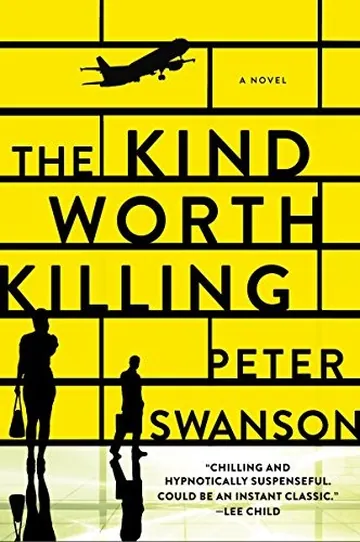
The first page of The Kind Worth Killing
“Hello, there,” she said.
I looked at the pale, freckled hand on the back of the empty bar seat next to me in the business class lounge at Heathrow Airport, then up into the stranger’s face.
“Do I know you?” I asked. She didn’t look particularly familiar, but her American accent, her crisp white shirt, her sculpted jeans tucked into knee-high boots, all made her look like one of my wife’s awful friends.
“No, sorry. I was just admiring your drink. Do you mind?” She folded her long, slender frame onto the leather-padded swivel stool, and set her purse on the bar. “Is that gin?” she asked about the martini in front of me.
“Hendrick’s,” I said.
She gestured toward the bartender, a teenager with spiky hair and a shiny chin, and asked for a Hendrick’s martini with two olives. When her drink came she raised it in my direction. I had one sip left, and said, “Here’s to inoculation against international travel.”
Continue reading
“I’ll drink to that.”
I finished my drink, and ordered another. She introduced herself, a name I instantly forgot. And I gave her mine—just Ted, and not Ted Severson, at least not right then. We sat, in the overly padded and overly lit Heathrow lounge, drinking our drinks, exchanging a few remarks, and confirming that we were both waiting to board the same direct flight to Logan Airport in Boston. She removed a slim paperback novel from her purse and began to read it. It gave me an opportunity to really look at her. She was beautiful—long red hair, eyes a lucid greenish blue like tropical waters, and skin so pale it was the almost bluish white of skim milk. If a woman like that sits down next to you at your neighborhood bar and compliments your drink order, you think your life is about to change. But the rules are different in airport bars, where your fellow drinkers are about to hurtle away from you in opposite directions. And even though this woman was on her way toward Boston, I was still filled with sick rage at the situation with my wife back home. It was all I had been able to think about during my week in England. I’d barely eaten, barely slept.
An announcement came over the loudspeaker in which the two discernible words were Boston and delayed. I glanced at the board above the rows of backlit top-shelf liquor and watched as our departure time was moved back an hour.
“Time for another,” I said. “My treat.”
“Why not,” she said, and closed her book, placing it faceup on the bar by her purse. The Two Faces of January. By Patricia Highsmith.
“How’s your book?”
“Not one of her best.”
“Nothing worse than a bad book and a long flight delay.”
“What are you reading?” she asked.
“The newspaper. I don’t really like books.”
“So what do you do on flights?”
“Drink gin. Plot murders.”
“Interesting.” She smiled at me, the first I’d seen. It was a wide smile that caused a crease between her upper lip and nose, and that showed perfect teeth, and a sliver of pink gums. I wondered how old she was. When she first sat down I’d thought she was in her midthirties, closer to my age, but her smile, and the spray of faded freckles across the bridge of her nose made her look younger. Twenty-eight maybe. My wife’s age.
“And I work, of course, when I fly,” I added.
“What do you do?”
“Revenge has rarely been served colder than in Swanson’s exceptional thriller…”
Publishers Weekly
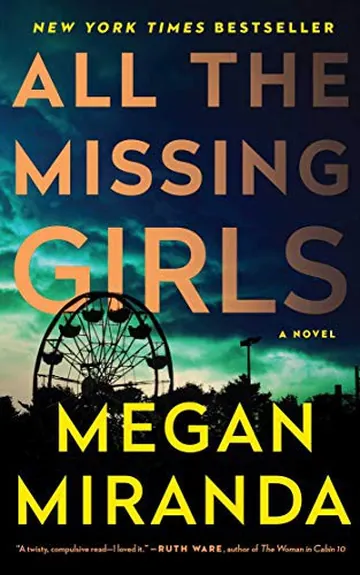
The first page of All the Missing Girls
It started with a phone call, deceptively simple and easy to ignore. The buzzing on Everett’s nightstand, the glow of the display—too bright in the bedroom he kept so dark, with the light-blocking shades pulled to the sill and the tinted windows a second line of defense against the glare of the sun and the city. Seeing the name, hitting the mute, turning my phone facedown beside the clock. But then. Lying awake, wondering why my brother would call so early on a Sunday. Running through the possibilities: Dad; the baby; Laura.
I felt my way through the dark, my hands brushing the sharp corners of furniture until I found the light switch in the bathroom. My bare feet pressed into the cold tile floor as I sat on the toilet lid with the phone held to my ear, goose bumps forming on my legs.
Daniel’s message echoed in the silence: “The money’s almost gone. We need to sell the house. Dad won’t sign the papers, though.” A pause. “He’s in bad shape, Nic.”
Continue reading
Not asking for my help, because that would be too direct. Too unlike us.
I hit delete, slipped back under the sheets before Everett woke, felt for him beside me to be sure.
But later that day, back at my place, I flipped through the previous day’s mail and found the letter—Nic Farrell, written in familiar handwriting, in blue ink; the address filled in by someone else, with a different, darker pen.
Dad didn’t call anymore. Phones made him feel more disoriented, too far removed from the person he was trying to place. Even if he remembered whom he’d been dialing, we’d slip from his mind when we answered, nothing more than disembodied voices in the ether.
I unfolded the letter—a lined journal page with jagged edges, his handwriting stretching beyond the lines, veering slightly to the left, as if he’d been racing to get the thoughts down before they slipped from his grasp.
No greeting.
I need to talk to you. That girl. I saw that girl.
No closing.
I called Daniel back, the letter still trembling in my hand. “Just got your message,” I said. “I’m coming home. Tell me what’s going on.”
DAY 1
I took inventory of the apartment one last time before loading up my car: suitcases waiting beside the door; key in an envelope on the kitchen counter; an open box half full of the last-minute things I’d packed up the night before. I could see every angle of the apartment from the galley kitchen—exposed and empty—but still, I had the lingering feeling that I was forgetting something.
I’d gotten everything together in a rush, finishing out the last few weeks of the school year while fielding calls from Daniel and finding someone to sublet my place for the summer—no time to pause, to take in the fact that I was actually doing this. Going back. Going there. Daniel didn’t know about the letter. He knew only that I was coming to help, that I had two months before I needed to return to my life here.
Now the apartment was practically bare. An industrial box, stripped of all warmth, awaiting the moderately responsible-looking grad student who would be staying through August.
“Miranda convincingly conjures a haunted setting that serves as a character in its own right…”
Publishers Weekly

The first page of Someone We Know
She’s standing in the kitchen, looking out the large back windows. She turns toward me—there’s a swing of thick, brown hair—and I see the confusion and then the sudden fear in her wide brown eyes. She has registered the situation, the danger. Our eyes lock. She looks like a beautiful, frightened animal. But I don’t care. I feel a rush of emotion—pure, uncontrolled rage; I don’t feel any pity for her at all.
We’re both aware of the hammer in my hand. Time seems to slow down. It must be happening quickly, but it doesn’t feel that way. Her mouth opens, about to form words. But I’m not interested in what she has to say. Or maybe she was going to scream.
I lunge toward her. My arm moves fast, and the hammer connects hard with her forehead. There’s a grisly sound and a shocking spurt of blood. Nothing comes out of her mouth but a gasp of air. She starts to drop even as she raises her hands up toward me, as if she’s pleading for mercy. Or maybe she’s reaching for the hammer. She staggers, like a bull about to go down. I bring the hammer down again, this time on the top of her head, and there’s extra force this time because her head is lower. I have more momentum in my swing, and I want to finish her off. She’s on her knees now, crumpling, and I can’t see her face. She falls forward, face down, and lies still. I stand above her, breathing heavily, the hammer in my hand dripping blood onto the floor. I need to be sure she’s dead, so I hit her a few more times. My arm is tired now, and my breathing labored. The hammer is covered in gore, and my clothes are streaked with blood. I reach down and turn her over. One eye is smashed. The other is still open, but there’s no life in it.
Continue reading
Aylesford, a city in New York’s Hudson Valley, is a place of many charms—chief among them the historic downtown along the Hudson River and two majestic bridges that draw the eye. The Hudson Valley is renowned for its natural beauty, and across the river, an hour’s drive on mostly good highways can get you deep into the Catskill Mountains, which are dotted with little towns. The Aylesford train station has ample parking and frequent trains into New York City; you can be in Manhattan in under two hours. In short, it’s a congenial place to live. There are problems, of course, as there are anywhere.
Robert Pierce enters the Aylesford police station—a new, modern building of brick and glass—and approaches the front desk. The uniformed officer at the desk is typing something into a computer and glances at him, holding up a hand to indicate he’ll just be a second.
What would a normal husband say? Robert clears his throat.
The officer looks up at him. “Okay, just give me a minute.” He finishes entering something into the computer while Robert waits. Finally, the officer turns to him. “How can I help?” he asks.
“I’d like to report a missing person.”
The officer now gives Robert his full attention. “Who’s missing?”
“My wife. Amanda Pierce.”
“Your name?”
“Robert Pierce.”
“When was the last time you saw your wife?”
Questions
Quick answers
Which one is told backward?
All the Missing Girls. Publishers Weekly points to Miranda’s inspired use of reverse chronology, with each chapter stepping further back in time.