Books like Lessons in Chemistry, about difficult people who are easy to love
Elizabeth Zott is certain her life is over, and still packs her daughter’s lunch. These five follow people just as set in their ways: an octopus counting his days, a woman who knows where the cutlery goes, a widowed bookseller, a caseworker who loves rules and a count under house arrest.
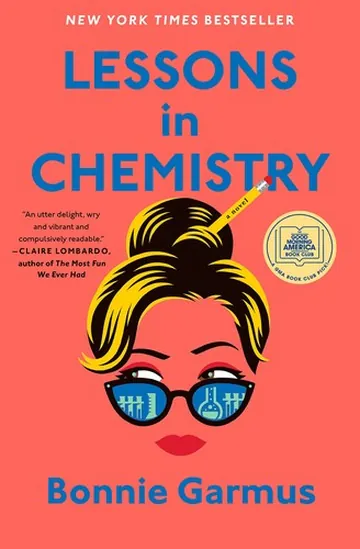
The first page of Lessons in Chemistry
Back in 1961, when women wore shirtwaist dresses and joined garden clubs and drove legions of children around in seatbeltless cars without giving it a second thought; back before anyone knew there'd even be a sixties movement, much less one that its participants would spend the next sixty years chronicling; back when the big wars were over and the secret wars had just begun and people were starting to think fresh and believe everything was possible, the thirty-year-old mother of Madeline Zott rose before dawn every morning and felt certain of just one thing: her life was over.
Despite that certainty, she made her way to the lab to pack her daughter's lunch.
Fuel for learning, Elizabeth Zott wrote on a small slip of paper before tucking it into her daughter's lunch box. Then she paused, her pencil in midair, as if reconsidering. Play sports at recess but do not automatically let the boys win, she wrote on another slip. Then she paused again, tapping her pencil against the table. It is not your imagination, she wrote on a third. Most people are awful. She placed the last two on top.
Continue reading
Most young children can't read, and if they can, it's mostly words like "dog" and "go." But Madeline had been reading since age three and, now, at age five, was already through most of Dickens.
“A more adorable plea for rationalism and gender equality would be hard to find.”
Kirkus Reviews
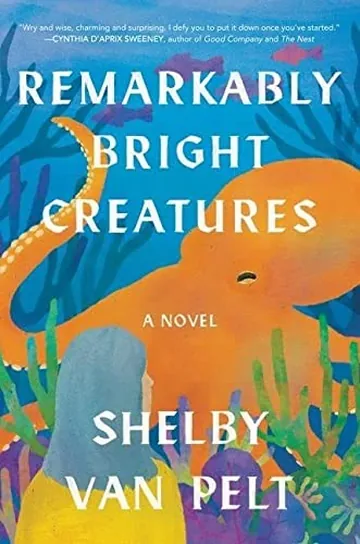
The first page of Remarkably Bright Creatures
Darkness suits me.
Each evening, I await the click of the overhead lights, leaving only the glow from the main tank. Not perfect, but close enough.
Almost-darkness, like the middle-bottom of the sea. I lived there before I was captured and imprisoned. I cannot remember, yet I can still taste the untamed currents of the cold open water. Darkness runs through my blood.
Who am I, you ask? My name is Marcellus, but most humans do not call me that. Typically, they call me that guy. For example: Look at that guy—there he is—you can just see his tentacles behind the rock.
I am a giant Pacific octopus. I know this from the plaque on the wall beside my enclosure.
I know what you are thinking. Yes, I can read. I can do many things you would not expect.
The plaque states other facts: my size, preferred diet, and where I might live were I not a prisoner here. It mentions my intellectual prowess and penchant for cleverness, which for some reason seems a surprise to humans: Octopuses are remarkably bright creatures, it says. It warns the humans of my camouflage, tells them to take extra care in looking for me in case I have disguised myself to match the sand.
Continue reading
The plaque does not state that I am named Marcellus. But the human called Terry, the one who runs this aquarium, sometimes shares this with the visitors who gather near my tank. See him back there? His name's Marcellus. He's a special guy.
A special guy. Indeed.
Terry's small daughter chose my name. Marcellus McSquiddles, in full. Yes, it is a preposterous name. It leads many humans to assume I am a squid, which is an insult of the worst sort.
How shall you refer to me, you ask? Well, that is up to you. Perhaps you will default to calling me that guy, like the rest of them. I hope not, but I will not hold it against you. You are only human, after all.
I must advise you that our time together may be brief. The plaque states one additional piece of information: the average life span of a giant Pacific octopus. Four years.
My life span: four years—1,460 days.
I was brought here as a juvenile. I shall die here, in this tank. At the very most, one hundred and sixty days remain until my sentence is complete.
“A debut novel about a woman who befriends an octopus is a charming, warmhearted read.”
Kirkus Reviews
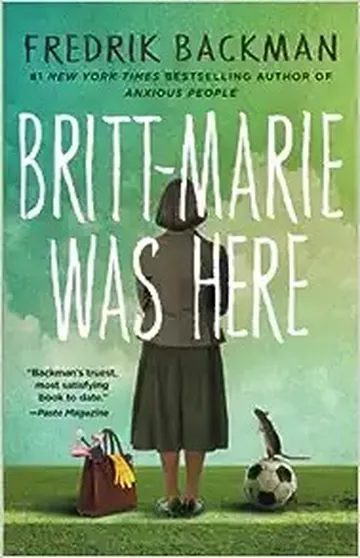
The first page of Britt-Marie Was Here
Forks. Knives. Spoons.
In that order.
Britt-Marie is certainly not the kind of person who judges other people. Far from it.
But surely no civilized person would even think of arranging a cutlery drawer in a different way from how cutlery drawers are supposed to be arranged?
We're not animals, are we?
It's a Monday in January. She's sitting at a desk in the unemployment office. Admittedly there's no cutlery in sight, but it's on her mind because it sums up everything that's gone wrong recently. Cutlery should be arranged as it always has been, because life should go on unchanged. Normal life is presentable. In normal life you clean up the kitchen and keep your balcony tidy and take care of your children. It's hard work—harder than one might think. In normal life you certainly don't find yourself sitting in the unemployment office.
The girl who works here has staggeringly short hair, Britt-Marie thinks, like a man’s. Not that there’s anything wrong with that, of course—it’s modern, no doubt. The girl points at a piece of paper and smiles, evidently in a hurry.
Continue reading
“Just fill in your name, social security number, and address here, please.”
Britt-Marie has to be registered. As if she were a criminal. As if she has come to steal a job rather than find one.
“Milk and sugar?” the girl asks, pouring some coffee into a plastic mug.
Britt-Marie doesn’t judge anyone. Far from it. But who would behave like that? A plastic mug! Are we at war? She’d like to say just that to the girl, but because Kent is always urging Britt-Marie to “be more socially aware” she just smiles as diplomatically as she can and waits to be offered a coaster.
Kent is Britt-Marie’s husband. He’s an entrepreneur. Incredibly, incredibly successful. Has business dealings with Germany and is extremely, extremely socially aware.
The girl offers her two tiny disposable cartons of the sort of milk that doesn’t have to be kept in the fridge. Then she holds out a plastic mug with plastic teaspoons protruding from it. Britt-Marie could not have looked more startled if she’d been offered roadkill.
She shakes her head and brushes her hand over the table as if it was covered in invisible crumbs. There are papers everywhere, in any old order. The girl clearly doesn’t have time to tidy them up, Britt-Marie realizes—she’s probably far too busy with her career.
“Okay,” says the girl pleasantly, turning back to the form, “just write your address here.”
Britt-Marie fixes her gaze on her lap. She misses being at home with her cutlery drawer. She misses Kent, because Kent is the one who fills in all the forms.
When the girl looks like she’s about to open her mouth again, Britt-Marie interrupts her.
“You forgot to give me a coaster,” says Britt-Marie, smiling, with all the social awareness she can muster. “I don’t want to make marks on your table. Could I trouble you to give me something to put my . . . coffee cup on?”
She uses that distinctive tone, which Britt-Marie relies on whenever she has to summon all her inner goodness, to refer to it as a “cup” even though it is a plastic mug.
“Oh, don’t worry, just put it anywhere.”
As if life was as simple as that. As if using a coaster or organizing the cutlery drawer in the right order didn’t matter. The girl—who clearly doesn’t appreciate the value of coasters, or proper cups, or even mirrors, judging by her hairstyle—taps her pen against the paper, by the “address” box.
“But surely we can’t just put our cups on the table? That leaves marks on a table, surely you see that.”
The girl glances at the surface of the desk, which looks as if toddlers have been trying to eat potatoes off it. With pitchforks. In the dark.
“It really doesn’t matter; it’s so old and scratched up already!” she says with a smile.
Britt-Marie is screaming inside.
“Insightful and touching, this is a sweet and inspiring story about truth and transformation.”
Publishers Weekly
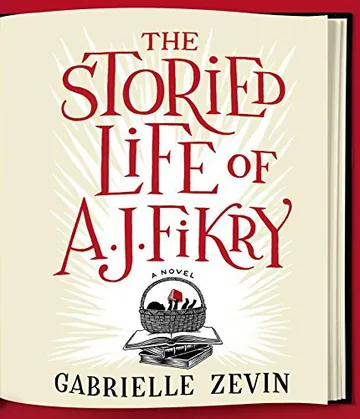
The first page of The Storied Life of A. J. Fikry
On the ferry from Hyannis to Alice Island, Amelia Loman paints her nails yellow and, while waiting for them to dry, skims her predecessor's notes. "Island Books, approximately $250,000.00 per annum in sales, the better portion of that in the summer months to folks on holiday," Harvey Rhodes reports. "Seven hundred square feet of selling space. No full-time employees other than owner. Very small children's section. Fledgling online presence. Poor community outreach. Inventory emphasizes the literary, which is good for us, but Fikry's tastes are very specific, and without Nic, he can't be counted on to hand-sell. Luckily for him, Island's the only game in town." Amelia yawns—she's nursing a slight hangover—and wonders if one persnickety little bookstore will be worth such a long trip. By the time her nails have hardened, her relentlessly bright-sided nature has kicked in: Of course it’s worth it! Her specialty is persnickety little bookstores and the particular breed that runs them. Her talents also include multitasking, selecting the right wine at dinner (and the coordinating skill, tending friends who’ve had too much to drink), houseplants, strays, and other lost causes.
Continue reading
As she steps off the ferry, her phone rings. She doesn’t recognize the number—none of her friends use their phones as phones anymore. Still, she is glad for the diversion and she doesn’t want to become the kind of person who thinks that good news can only come from calls one was already expecting and callers one already knows. The caller turns out to be Boyd Flanagan, her third online dating failure, who had taken her to the circus about six months back.
“I tried sending you a message a few weeks ago,” he says. “Did you get it?”
She tells him that she recently switched jobs so her devices have been screwed up. “Also, I’ve been rethinking the whole idea of online dating. Like whether it’s really for me.”
Boyd doesn’t seem to hear that last part. “Would you want to go out again?” he asks.
Re: their date. For a time, the novelty of the circus had distracted from the fact that they had nothing in common. By the end of dinner, the greater truth of their incompatibility had been revealed. Perhaps it should have been obvious from their inability to reach consensus on an appetizer or from his main course admission that he disliked “old things”—antiques, houses, dogs, people. Still, Amelia had not allowed herself to be certain until dessert, when she’d asked him about the book that had had the greatest influence on his life, and he’d replied Principles of Accounting, Part II.
Gently, she tells him no, she would rather not go out again.
She can hear Boyd breathing, fluttery and irregular. She worries that he might be crying. “Are you all right?” she asks.
“Don’t patronize me.”
Amelia knows she should hang up, but she doesn’t. Some part of her wants the story. What is the point of bad dates if not to have amusing anecdotes for your friends? “Excuse me?”
“You’ll notice I didn’t call you right away, Amelia,” he says. “I didn’t call you because I had met someone better, and when that didn’t work out, I decided to give you a second chance. So don’t be thinking you’re superior. You’ve got a decent smile, I’ll give you that, but your teeth are too big and so is your ass and you’re not twenty-five anymore even if you drink like you are. You shouldn’t look a gift horse in the mouth.” The gift horse begins to cry. “I’m sorry. I’m really sorry.”
“It’s fine, Boyd.”
“What’s wrong with me? The circus was fun, right? And I’m not so bad.”
“You were great. The circus was very creative.”
“But there must be a reason you don’t like me. Be honest.”
At this point, there are many reasons not to like him. She picks one. “Do you remember when I said I worked in publishing and you said you weren’t much of a reader?”
“You’re a snob,” he concludes.
“Zevin is a deft writer, clever and witty, and her affection for the book business is obvious.”
Publishers Weekly
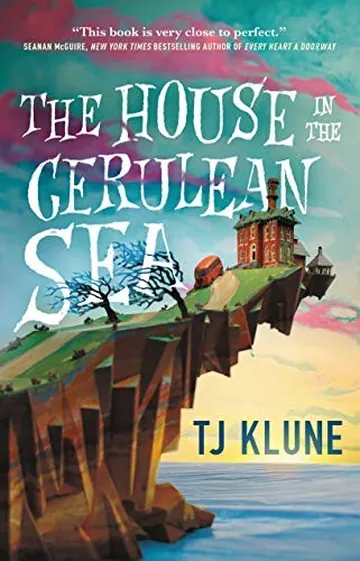
The first page of The House in the Cerulean Sea
“Oh dear,” Linus Baker said, wiping the sweat from his brow. “This is most unusual.”
That was an understatement. He watched in rapt wonder as an eleven-year-old girl named Daisy levitated blocks of wood high above her head. The blocks spun in slow, concentric circles. Daisy frowned in concentration, the tip of her tongue stuck out between her teeth. It went on for a good minute before the blocks slowly lowered to the floor. Her level of control was astounding.
“I see,” Linus said, furiously scribbling on his pad of paper. They were in the master’s office, a tidy room with government-issued brown carpet and old furniture. The walls were lined with terrible paintings of lemurs in various poses. The master had showed them off proudly, telling Linus painting was her passion, and that if she hadn’t become the master of this specific orphanage, she’d be traveling with a circus as a lemur trainer or even have opened up a gallery to share her artwork with the world. Linus believed the world was better off with the paintings staying in this room, but he kept the thought to himself. He wasn’t there to engage in amateur art criticism. “And how often do you—er, you know? Make things float?”
Continue reading
The master of the orphanage, a squat woman with frizzy hair, stepped forward. “Oh, not often at all,” she said quickly. She wrung her hands, eyes darting back and forth. “Perhaps once or twice ... a year?”
Linus coughed.
“A month,” the woman amended. “Silly me. I don’t know why I said a year. Slip of the tongue. Yes, once or twice a month. You know how it is. The older the children get, the more they ... do things.”
“Is that right?” Linus asked Daisy.
“Oh yes,” Daisy said. “Once or twice a month, and no more.” She smiled beatifically at him, and Linus wondered if she’d been coached on her answers before his arrival. It wouldn’t be the first time it’d happened, and he doubted it’d be the last.
“Of course,” Linus said. They waited as his pen continued to scratch along the paper. He could feel their gazes on him, but he kept his focus on his words. Accuracy demanded attention. He was nothing but thorough, and his visit to this particular orphanage had been enlightening, to say the least. He needed to jot down as many details as he could to complete his final report once he returned to the office.
The master fussed over Daisy, pulling her unruly black hair back, fixing it in place with plastic butterfly clips. Daisy was staring forlornly at her blocks on the floor as if she wished they were levitating once more, her bushy eyebrows twitching.
“Do you have control over it?” Linus asked.
Before Daisy could open her mouth, the master said, “Of course she does. We’d never allow her to—”
Linus held up his hand. “I would appreciate, madam, if I could hear from Daisy herself. While I have no doubt you have her best interests in mind, I find that children such as Daisy here tend to be more ... forthright.”
The master looked to speak again until Linus arched an eyebrow. She sighed as she nodded, taking a step back from Daisy.
After scribbling a final note, Linus capped his pen and set it and the pad of paper back in his briefcase. He stood from his chair and crouched down before Daisy, knees groaning in protest.
Daisy gnawed on her bottom lip, eyes wide.
“Daisy? Do you have control over it?”
She nodded slowly. “I think so? I haven’t hurt anyone since I was brought here.” Her mouth twisted down. “Not until Marcus. I don’t like hurting people.”
He could almost believe that. “No one said you did. But sometimes, we can’t always control the ... gifts we’re given.”
“A breezy and fun contemporary fantasy.”
Kirkus Reviews

The first page of A Gentleman in Moscow
Prosecutor Vyshinsky: State your name.
Rostov: Count Alexander Ilyich Rostov, recipient of the Order of Saint Andrew, member of the Jockey Club, Master of the Hunt.
Vyshinsky: You may have your titles; they are of no use to anyone else. But for the record, are you not Alexander Rostov, born in St. Petersburg, 24 October 1889?
Rostov: I am he.
Vyshinsky: Before we begin, I must say, I do not think that I have ever seen a jacket festooned with so many buttons.
Rostov: Thank you.
Vyshinsky: It was not meant as a compliment.
Rostov: In that case, I demand satisfaction on the field of honor.
[Laughter.]
Secretary Ignatov: Silence in the gallery.
Vyshinsky: What is your current address?
Rostov: Suite 317 at the Hotel Metropol, Moscow.
Vyshinsky: How long have you lived there?
Rostov: I have been in residence since the fifth of September 1918. Just under four years.
Vyshinsky: And your occupation?
Continue reading
Rostov: It is not the business of gentlemen to have occupations.
Vyshinsky: Very well then. How do you spend your time?
Rostov: Dining, discussing. Reading, reflecting. The usual rigmarole.
Vyshinsky: And you write poetry?
Rostov: I have been known to fence with a quill.
Vyshinsky: [Holding up a pamphlet] Are you the author of this long poem of 1913: Where Is It Now?
Rostov: It has been attributed to me.
Vyshinsky: Why did you write the poem?
Rostov: It demanded to be written. I simply happened to be sitting at the particular desk on the particular morning when it chose to make its demands.
Vyshinsky: And where was that exactly?
Rostov: In the south parlor at Idlehour.
Vyshinsky: Idlehour?
Rostov: The Rostov estate in Nizhny Novgorod.
Vyshinsky: Ah, yes. Of course. How apt. But let us return our attention to your poem. Coming as it did—in the more subdued years after the failed revolt of 1905—many considered it a call to action. Would you agree with that assessment?
Rostov: All poetry is a call to action.
Vyshinsky: [Checking notes] And it was in the spring of the following year that you left Russia for Paris . . . ?
Rostov: I seem to remember blossoms on the apple trees. So, yes, in all likelihood it was spring.
Vyshinsky: May 16 to be precise. Now, we understand the reasons for your self-imposed exile; and we even have some sympathy with the actions that prompted your flight. What concerns us here is your return in 1918. One wonders if you came back with the intention of taking up arms and, if so, whether for or against the Revolution.
Rostov: By that point, I’m afraid that my days of taking up arms were behind me.
Vyshinsky: Why then did you come back?
Rostov: I missed the climate.
[Laughter.]
Vyshinsky: Count Rostov, you do not seem to appreciate the gravity of your position. Nor do you show the respect that is due the men convened before you.
Rostov: The Tsarina had the same complaints about me in her day.
Ignatov: Prosecutor Vyshinsky. If I may . . .
Vyshinsky: Secretary Ignatov.
Ignatov: I have no doubt, Count Rostov, that many in the gallery are surprised to find you so charming; but I, for one, am not surprised in the least. History has shown charm to be the final ambition of the leisure class. What I do find surprising is that the author of the poem in question could have become a man so obviously without purpose.
Rostov: I have lived under the impression that a man’s purpose is known only to God.
Ignatov: Indeed. How convenient that must have been for you.
[The Committee recesses for twelve minutes.]
Ignatov: Alexander Ilyich Rostov, taking into full account your own testimony, we can only assume that the clear-eyed spirit who wrote the poem Where Is It Now? has succumbed irrevocably to the corruptions of his class—and now poses a threat to the very ideals he once espoused. On that basis, our inclination would be to have you taken from this chamber and put against the wall. But there are those within the senior ranks of the Party who count you among the heroes of the prerevolutionary cause.
“House arrest has never been so charming as in Towles’s second novel…”
Publishers Weekly
Questions
Quick answers
Is Lessons in Chemistry on this page?
Yes, it comes first. Read Elizabeth Zott’s opening, then see which of the other five voices you like next to hers.