YA dystopian books, from a royal contest to the tenth Hunger Games
Five novels for teenagers about futures gone wrong: a school where students who show signs of depression are taken away to have their memories erased, a girl with a map branded on her back, a contest in which thirty-five girls compete to marry a prince, a young Coriolanus Snow getting ready for the reaping and war machines that drain the girls who pilot them. Read the first page of each.
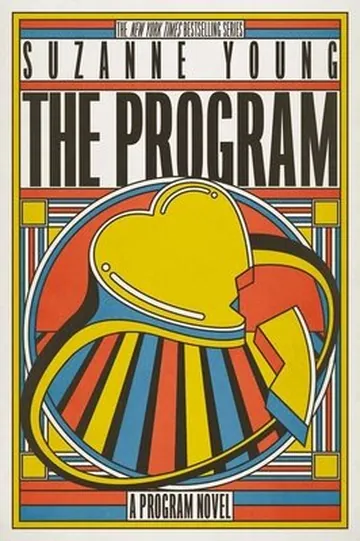
The first page of The Program
The air in the room tastes sterile. The lingering scent of bleach is mixing with the fresh white paint on the walls, and I wish my teacher would open the window to let in a breeze. But we’re on the third floor so the pane is sealed shut—just in case anyone gets the urge to jump.
I’m still staring at the paper on my desk when Kendra Phillips turns around in her seat, looking me over with her purple contacts. “You’re not done yet?”
I glance past her to make sure Mrs. Portman is distracted at the front of the room, and then I smile. “It’s far too early in the morning to properly psychoanalyze myself,” I whisper. “I’d almost rather learn about science.”
“Maybe a coffee spiked with QuikDeath would help you focus on the pain.”
My expression falters; just the mention of the poison enough to send my heart racing. I hold Kendra’s empty stare—a deadness behind it that even purple contacts can’t disguise. Her eyes are ringed with heavy circles from lack of sleep, and her face has thinned sharply. She’s exactly the kind of person who can get me in trouble, and yet I can’t look away.
Continue reading
I’ve known Kendra for years, but we’re not really friends, especially now. Not when she’s been acting depressed for close to a month. I try to avoid her, but today there’s something desperate about her that I can’t ignore. Something about the way her body seems to tremble even though she’s sitting still.
“God, don’t look so serious,” she says, lifting one bony shoulder. “I’m just kidding, Sloane. Oh, and hey,” she adds as if just remembering the real reason she turned to me in the first place. “Guess who I saw last night at the Wellness Center? Lacey Klamath.”
She leans forward as she tells me, but I’m struck silent. I had no idea that Lacey was back.
Just then the door opens with a loud click. I glance toward the front of the classroom and freeze, my breath catching in my throat. The day has just become significantly worse.
Two handlers with crisp white jackets and comb-smoothed hair stand in the doorway, their expressionless faces traveling over us as they seek someone out. When they start forward, I begin to wilt.
Kendra spins around in her seat, her back rigid and straight.
“Not me,” she murmurs, her hands clasped tightly in front of her like she’s praying. “Please, not me.”
From her podium, Mrs. Portman begins her lesson as if there’s no interruption. As if people in white coats should be waltzing in during her speech on the kinetic theory of matter. It’s the second time the handlers have interrupted class this week.
The men separate to opposite sides of the classroom, their shoes tapping on the linoleum floor as they come closer. I look away, opting to watch the leaves fall from the trees outside the window instead. It’s October, but the summer has bled into fall, bathing us all in unexpected Oregon sunshine. I wish I could be anywhere else right now.
The footsteps stop, but I don’t acknowledge them. I can smell the handlers near me—antiseptic, like rubbing alcohol and Band-Aids. I don’t dare move.
“Kendra Phillips,” a voice says gently. “Can you please come with us?”
I hold back the sound that’s trying to escape from behind my lips, a combination of relief and sympathy. I refuse to look at Kendra, terrified that the handlers will notice me. Please don’t notice me.
“No,” Kendra says to them, her voice choked off. “I’m not sick.”
“Ms. Phillips,” the voice says again, and this time I have to look. The dark-haired handler takes Kendra by the elbow, guiding her from the chair. Kendra immediately lashes out, yanking her arm from his grasp as she tries to crawl over her desk.
Both men descend on her as Kendra thrashes and screams. She’s barely five feet, but she’s fighting hard—harder than the others. I feel the tension rolling off the rest of the class, all of us hoping for a quick resolution. Hoping that we’ll make it another day without getting flagged.
“I’m not sick!” Kendra yells, breaking from their hold once again.
Mrs. Portman finally stops her lesson as she looks on with a pained expression. The calm she tries to exude is fraying at the edges. Next to me a girl starts crying and I want to tell her to shut up, but I don’t want to attract attention. She’ll have to fend for herself.
“Young’s chilling and suspenseful story…”
Publishers Weekly
Content note: teen suicide
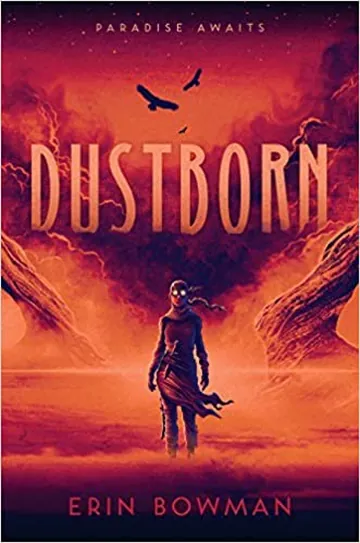
The first page of Dustborn
There’s a storm coming.
I can see it out across the plains, a cloud of haze along the horizon that’s bearing down on Dead River like a blanket of shadow. It’s a good four clicks off, maybe more, but dust storms move fast. Already the threadbare flags on the huts flap wildly.
I hurry on to the lake. “Big storm to the west,” I call out to Old Fang. The wrinkled trapper is kneeling on the dock beside the dam, checking my traps for frogs or fish, not that we get many of either anymore. Dead River’s been slowly dying for years, the lake drying up and the banks growing wider. I’ve had to extend the dock several times just so the traps can still sit in water. Old Fang searches out the storm. The churning clouds crackle and glint with lightning. “That’s the second one in ten days. We can’t get a break.”
Continue reading
It’s not untrue. “Any catch?”
He shakes his head. We should have moved in the winter, but now the endless stink of summer is ahead of us. There’s no chance of a pilgrimage for at least four moons, not unless we want to die in the heat, and even the damn frogs have had the sense to move on.
Of course, frogs can’t read the stars, and I know we need to have faith. The night skies warn of dangers ahead, of dry land and dust-caked tongues, but if we just sit tight, they also promise a bounty. Flowing rivers. Green land. There’s to be a rebirth. I’ve seen it with my own eyes, and even before I could see it, there was Indie pointing it out to me in her sisterly way, and before she could read the stars, there was Ma, pointing it out to both of us. Still, it’s hard to keep believing the sky when every sign here, on the land, shows nothing but death and decay. Old Fang squints at the empty buckets I’m carrying, secured to the piece of driftwood I’ve got propped on my shoulders. “You grab the haul,” he grunts. “I’ll rally the pack.”
From back near camp, Ma’s voice is audible on the wind. She’s already shouting orders to our people. I also catch the twinkle of my bone chimes, and once those start singing, it means a hell of a storm. Ma’ll need all the help she can get. I give Old Fang a quick nod, and he hobbles off. I pull my scarf over my mouth and nose, looping the loose end over my head to protect some of my hair. Then I scamper down the bank and sprint across the cracked, parched lakebed, the buckets clipping my hips as I run. Used to be I could grab a haul right from the bank. The river might have always been “dead,” flowing only in the spring or after a rare rain, but the lake was a beauty when we first arrived. Now I have to go out a ways to reach water. Not even the dam helps much anymore.
The hard earth becomes damp dirt underfoot, then sticky mud, then shallows. I trudge out to my shins and throw down the buckets, listening to the glorious sound of water gurgling into their depths before I heave them back out.
“Will keep readers turning the pages.”
Kirkus Reviews

The first page of The Selection
When we got the letter in the post, my mother was ecstatic. She had already decided that all our problems were solved, gone forever. The big hitch in her brilliant plan was me. I didn’t think I was a particularly disobedient daughter, but this was where I drew the line.
I didn’t want to be royalty. And I didn’t want to be a One. I didn’t even want to try.
I hid in my room, the only place to avoid the chattering of our full house, trying to come up with an argument that would sway her. So far, I had a solid collection of my honest opinions. I didn’t think there was a single one she would listen to.
I couldn’t avoid her much longer. It was approaching dinnertime, and as the oldest child left in the house, cooking duties fell on me. I pulled myself out of bed and walked into the snake pit.
Continue reading
I got a glare from Mom but no words.
We did a silent dance through the kitchen and dining room as we prepared chicken, pasta, and apple slices, and set the table for five. If I glanced up from a task, she’d fix me with a fierce look as if she could shame me into wanting the same things she did. She tried that every so often. Like if I didn’t want to take on a particular job because I knew the family hosting us was unnecessarily rude. Or if she wanted me to do a massive cleaning when we couldn’t afford to have a Six come and help.
Sometimes it worked. Sometimes it didn’t. And this was one area where I was unswayable.
She couldn’t stand it when I was stubborn. But I got that from her, so she shouldn’t have been surprised. This wasn’t just about me, though. Mom had been tense lately. The summer was ending, and soon we’d be faced with cold. And worry.
Mom set down the pitcher of tea in the center of the table with an angry thud. My mouth watered at the thought of tea with lemon. But I would have to wait; it would be such a waste to have my glass now and then have to drink water with my meal.
“Would it kill you to fill out the form?” she said, no longer able to contain herself. “The Selection could be a wonderful opportunity for you, for all of us.”
I sighed aloud, thinking that filling out that form might actually be something close to death.
It was no secret that the rebels—the underground colonies that hated Illéa, our large and comparatively young country—made their attacks on the palace both violent and frequent. We’d seen them in action in Carolina before. One of the magistrates’ houses was burned to the ground, and a handful of Twos had their cars vandalized. There was even a magnificent jailbreak once, but considering they only released a teenage girl who’d managed to get herself pregnant and a Seven who was a father to nine, I couldn’t help thinking they were in the right that time.
But beyond the potential danger, I felt like it would hurt my heart to even consider the Selection. I couldn’t help smiling as I thought about all the reasons I had to stay exactly where I was.
“These last few years have been very hard on your father,” she hissed. “If you have any compassion at all, you might think of him.”
Dad. Yeah. I really did want to help Dad. And May and Gerad. And, I supposed, even my mother. When she talked about it that way, there was nothing to smile about. Things had been strained around here for far too long. I wondered if Dad would see this as a way back to normal, if any amount of money could make things better.
“…deftly builds the chemistry between America and Maxon…”
Publishers Weekly
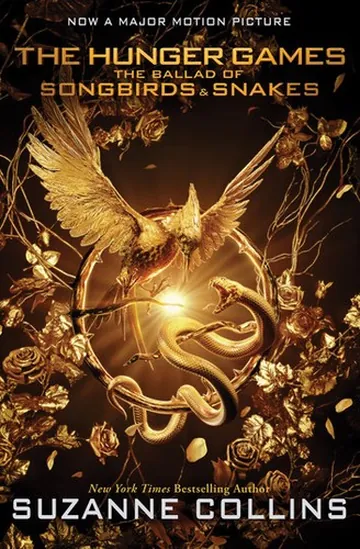
The first page of The Ballad of Songbirds and Snakes
Coriolanus released the fistful of cabbage into the pot of boiling water and swore that one day it would never pass his lips again. But this was not that day. He needed to eat a large bowl of the anemic stuff, and drink every drop of broth, to prevent his stomach from growling during the reaping ceremony. It was one of a long list of precautions he took to mask the fact that his family, despite residing in the penthouse of the Capitol’s most opulent apartment building, was as poor as district scum. That at eighteen, the heir to the once-great house of Snow had nothing to live on but his wits.
His shirt for the reaping was worrying him. He had an acceptable pair of dark dress pants bought on the black market last year, but the shirt was what people looked at. Fortunately, the Academy provided the uniforms it required for daily use. For today’s ceremony, however, students were instructed to be dressed fashionably but with the solemnity the occasion dictated.
Continue reading
Tigris had said to trust her, and he did. Only his cousin’s cleverness with a needle had saved him so far. Still, he couldn’t expect miracles.
The shirt they’d dug from the back of the wardrobe — his father’s, from better days — was stained and yellowed with age, half the buttons missing, a cigarette burn on one cuff. Too damaged to sell in even the worst of times, and this was to be his reaping shirt? This morning he had gone to her room at daybreak, only to find both his cousin and the shirt missing. Not a good sign. Had Tigris given up on the old thing and braved the black market in some last-ditch effort to find him proper clothing? And what on earth would she possess worth trading for it? Only one thing — herself — and the house of Snow had not yet fallen that far. Or was it falling now as he salted the cabbage?
He thought of people putting a price on her. With her long, pointed nose and skinny body, Tigris was no great beauty, but she had a sweetness, a vulnerability that invited abuse. She would find takers, if she had a mind to. The idea made him feel sick and helpless and, consequently, disgusted with himself.
From deep in the apartment he heard the recording of the Capitol anthem, “Gem of Panem,” kick on. His grandmother’s tremulous soprano voice joined in, bouncing off the walls. Gem of Panem,
Mighty city,
Through the ages, you shine anew.
As always, she was painfully off-key and slightly behind tempo. The first year of the war, she’d played the recording on national holidays for five-year-old Coriolanus and eight-year-old Tigris in order to build their sense of patriotism. The daily recital hadn’t begun until that black day when the district rebels had surrounded the Capitol, cutting it off from supplies for the remaining two years of the war. “Remember, children,” she’d say, “we are but besieged — we have not surrendered!” Then she would warble the anthem out of the penthouse window as the bombs rained down. Her small act of defiance.
We humbly kneel
To your ideal,
And the notes she could never quite hit . . .
And pledge our love to you!
“The twists and heartbreaks captivate despite tragic inevitabilities.”
Kirkus Reviews
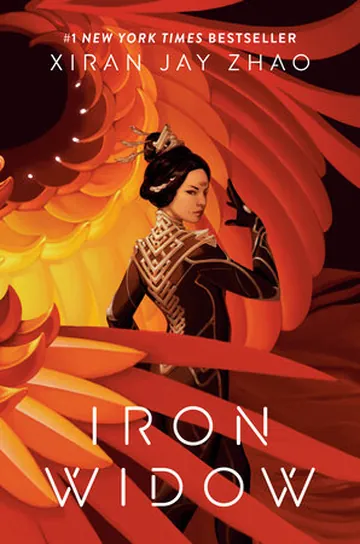
The first page of Iron Widow
The Hunduns were coming. A whole herd of them, rumbling across the wilds, stirring up a dark storm of dust through the night. Their rotund, faceless bodies, made of spirit metal, glinted under the silver half-moon and sky full of glittering stars.
A lesser pilot would have had to fight off nerves to go meet them in battle, but Yang Guang wasn’t fazed. At the foot of his watchtower just outside the Great Wall, he compelled his Chrysalis, the Nine-Tailed Fox, to launch into action. It was as tall as a seven- or eight-story building and bristly green. Its metallic claws pounded across the earth, shaking it.
A Chrysalis was no ordinary war machine. Yang Guang didn’t maneuver it with steering wheels or levers, like he would an electric carriage or a hovercraft. No, he became it. While his mortal body sat dormant in the cockpit, its arms around the concubine-pilot he’d taken to battle tonight, his mind psychically commanded every part of the Nine-Tailed Fox, making it pounce toward the incoming herd on the horizon. Far out on either side of him, the silhouettes of other active-duty Chrysalises raced forth as well.
Continue reading
Through hair-thin acupuncture needles along his pilot seat that bit into his spine, Yang Guang channeled his qi, his life force, to power the Fox. Qi was the vital essence that sustained everything in the world, from the sprouting of leaves to the blazing of flames to the turning of the planet. Not only did he draw on his own, he reached across the Chrysalis’s psychic link and sapped up his concubine-pilot’s as well. Her mind wasn’t strong enough to put up any resistance as he did so; it was lost deep inside his. Pieces of her memories flurried through him, but he did his best to ignore them. It was best not to know too much about his concubines. The only thing he needed was the interaction of her qì with his own, which multiplied his spirit pressure, making it possible for him to command a Chrysalis so large.
Trickles of common-class Hunduns reached Yang Guang first, like oversized metal bugs eager to burrow into the Fox and kill him. Their various colors were dull under the starlight. But some lit up, shooting weaponized qì out of their bodies in luminous blasts or crackling bolts. If Yang Guang had faced them as a human, they’d have loomed as big as houses and vaporized him instantly, but when he piloted the Fox, they were too small to hurt him. As he smashed them with the Fox’s claws, bursts of foreign emotion shot through him—grief and terror and rage, as riotous as static. He didn’t know how exactly Chrysalises were made from Hundun husks—only the highest-level engineers were allowed to know—but even centuries of improving their craft hadn’t vanquished the kink that made pilots feel whatever the Hunduns felt when they pierced a Hundun’s hull.
Pilots didn’t talk much about this in public, but resisting these distracting emotions was a surprisingly rigorous part of battle. Yang Guang was one of the most powerful pilots alive precisely because he could detach from them so well. Powering through the mental onslaught, he kept pummeling the Hunduns. The Fox’s nine tails swished and creaked behind him like nine new limbs, slapping larger Hunduns away with resonant clangs.
Yang Guang had no pity for them. The Hunduns were invaders from the cosmos who’d pulverized the height of human civilization some two thousand years ago and shattered humanity into scattered tribes.
Questions
Quick answers
Is The Ballad of Songbirds and Snakes part of The Hunger Games?
Yes. It is a prequel set 64 years before the trilogy, with Coriolanus Snow at eighteen, mentoring a tribute in the tenth Hunger Games.