Post-apocalyptic novels about what people keep when the world ends
An actor dies onstage as King Lear, a pilot keeps his old plane running, and a president sees the end of the world in a lit match. These six novels begin before, during or long after it.
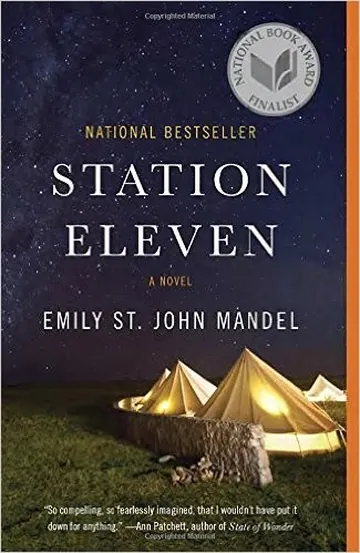
The first page of Station Eleven
The king stood in a pool of blue light, unmoored. This was act 4 of King Lear, a winter night at the Elgin Theatre in Toronto. Earlier in the evening, three little girls had played a clapping game onstage as the audience entered, childhood versions of Lear's daughters, and now they'd returned as hallucinations in the mad scene. The king stumbled and reached for them as they flitted here and there in the shadows. His name was Arthur Leander. He was fifty-one years old and there were flowers in his hair. "Dost thou know me?" The actor playing Gloucester asked. "I remember thine eyes well enough," Arthur said, distracted by the child version of Cordelia, and this was when it happened. There was a change in his face, he stumbled, he reached for a column but misjudged the distance and struck it hard with the side of his hand. "Down from the waist they are Centaurs," he said, and not only was this the wrong line but the delivery was wheezy, his voice barely audible.
Continue reading
He cradled his hand to his chest like a broken bird. The actor portraying Edgar was watching him closely. It was still possible at that moment that Arthur was acting, but in the first row of the orchestra section a man was rising from his seat. He'd been training to be a paramedic. The man's girlfriend tugged at his sleeve, hissed, "Jeevan! What are you doing?" And Jeevan himself wasn't sure at first, the rows behind him murmuring for him to sit. An usher was moving towards him. Snow began to fall over the stage. "The wren goes to't," Arthur whispered, and Jeevan, who knew the play very well, realized that the actor had skipped back twelve lines. "The wren..." "Sir," the usher said, "would you please..."
But Arthur Leander was running out of time. He swayed, his eyes unfocused, and it was obvious to Jeevan that he wasn’t Lear anymore. Jeevan pushed the usher aside and made a dash for the steps leading up to the stage, but a second usher was jogging down the aisle, which forced Jeevan to throw himself at the stage without the benefit of stairs. It was higher than he’d thought and he had to kick the first usher, who’d grasped hold of his sleeve. The snow was plastic, Jeevan noted peripherally, little bits of translucent plastic, clinging to his jacket and brushing against his skin. Edgar and Gloucester were distracted by the commotion, neither of them looking at Arthur, who was leaning on a plywood column, staring vacantly. There were shouts from backstage, two shadows approaching quickly, but Jeevan had reached Arthur by now and he caught the actor as he lost consciousness, eased him gently to the floor. The snow was falling fast around them, shimmering in blue-white light. Arthur wasn’t breathing. The two shadows—security men—had stopped a few paces away, presumably catching on by now that Jeevan wasn’t a deranged fan. The audience was a clamour of voices, flashes from cell-phone cameras, indistinct exclamations in the dark.
“Jesus Christ,” Edgar said. “Oh Jesus.” He’d dropped the British accent he’d been using earlier and now sounded as if he were from Alabama, which in fact he was. Gloucester had pulled away the gauze bandage that had covered half his face—by this point in the play his character’s eyes had been put out—and seemed frozen in place, his mouth opening and closing like a fish.
Arthur’s heart wasn’t beating. Jeevan began CPR. Someone shouted an order and the curtain dropped, a whoosh of fabric and shadow that removed the audience from the equation and reduced the brilliance of the stage by half. The plastic snow was still falling. The security men had receded. The lights changed, the blues and whites of the snowstorm replaced by a fluorescent glare that seemed yellow by comparison. Jeevan worked silently in the margarine light, glancing sometimes at Arthur’s face. Please, he thought, please. Arthur’s eyes were closed.
“…quietly ambitious take on a post-apocalyptic world where some strive to preserve art, culture and kindness.”
Kirkus Reviews

The first page of The Dog Stars
I keep the Beast running, I keep the 100 low lead on tap, I foresee attacks. I am young enough, I am old enough. I used to love to fish for trout more than almost anything.
My name is Hig, one name. Big Hig if you need another.
If I ever woke up crying in the middle of a dream, and I'm not saying I did, it's because the trout are gone every one. Brookies, rainbows, browns, cutthroats, cutbows, every one.
The tiger left, the elephant, the apes, the baboon, the cheetah. The titmouse, the frigate bird, the pelican (gray), the whale (gray), the collared dove. Sad but. Didn't cry until the last trout swam upriver looking for maybe cooler water.
Melissa, my wife, was an old hippy. Not that old. She looked good. In this story she might have been Eve, but I'm not Adam. I am more like Cain. They didn't have a brother like me.
Continue reading
Did you ever read the Bible? I mean sit down and read it like it was a book? Check out Lamentations. That's where we're at, pretty much. Pretty much lamenting. Pretty much pouring our hearts out like water.
They said at the end it would get colder after it gets warmer. Way colder. Still waiting. She's a surprise this old earth, one big surprise after another since before she separated from the moon who circles and circles like the mate of a shot goose.
No more geese. A few. Last October I heard the old bleating after dusk and saw them, five against the cold bloodwashed blue over the ridge. Five all fall, I think, next April none.
I hand pump the 100 low lead aviation gas out of the old airport tank when the sun is not shining, and I have the truck too that was making the fuel delivery. More fuel than the Beast can burn in my lifetime if I keep my sorties local, which I plan to, I have to. She’s a small plane, a 1956 Cessna 182, really a beaut. Cream and blue. I’m figuring I’m dead before the Beast gives up the final ghost. I will buy the farm. Eighty acres of bottomland hay and corn in a country where there is still a cold stream coming out of the purple mountains full of brookies and cuts. Before that I will make my roundtrips. Out and back.
I have a neighbor. One. Just us at a small country airport a few miles from the mountains. A training field where they built a bunch of houses for people who couldn’t sleep without their little planes, the way golfers live on a golf course. Bangley is the name on the registration of his old truck, which doesn’t run anymore. Bruce Bangley. I fished it out of the glove box looking for a tire pressure gauge I could take with me in the Beast. A Wheat Ridge address. I don’t call him that, though, what’s the point, there’s only two of us. Only us for at least a radius of eight miles, which is the distance of open prairie to the first juniper woods on the skirt of the mountain.
I just say, Hey. Above the juniper is oak brush then black timber. Well, brown. Beetle killed and droughted. A lot of it standing dead now, just swaying like a thousand skeletons, sighing like a thousand ghosts, but not all. There are patches of green woods, and I am their biggest fan. I root for them out here on the plain. Go Go Go Grow Grow Grow! That’s our fight song. I yell it out the window as I fly low over. The green patches are spreading year by year. Life is tenacious if you give it one little bit of encouragement. I could swear they hear me.
“…perhaps the world’s most poetic survival guide…”
Publishers Weekly
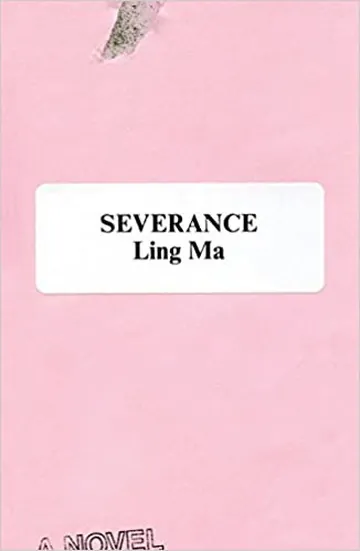
The first page of Severance
After the End came the Beginning. And in the Beginning, there were eight of us, then nine—that was me, a number that would only decrease. We found one another after fleeing New York for the safer pastures of the countryside. We'd seen it done in the movies, though no one could say which one exactly. A lot of things didn't play out as they had been depicted on-screen.
We were brand strategists and property lawyers and human resources specialists and personal finance consultants. We didn't know how to do anything so we Googled everything. We Googled how to survive in wild, which yielded images of poison ivy, venomous insects, and bear tracks. That was okay but we wanted to know how to go on the offensive. Against everything. We Googled how to build fire and watched YouTube videos of fires being lit with flint against steel, with flint against flint, with magnifying glass and sun.
Continue reading
We couldn't find the requisite flint, didn't know how to identify it even, and before we tried using Bob's bifocals, someone found a Bic in a jean jacket. The fire brought us through the night and delivered us into a morning that took us to a deserted Walmart. We stockpiled bottled water and exfoliating body wash and iPods and beers and tinted moisturizer in our stolen Jeeps. In the back of the store we found guns and ammo, camo outfits, scopes and grips. We Googled how to shoot gun, and when we tried, we were spooked by the recoil, by the salty smell and smoke, by the liturgical drama of the whole thing in the woods. But actually we loved to shoot them, the guns. We liked to shoot them wrong even, with a loose hand, the pitch forward and the pitch back. Under our judicious trigger fingers, beer bottles died, Vogue magazines died, Chia Pets died, oak saplings died, squirrels died, elk died. We feasted.
Google would not last long. Neither would the internet. Or any of the infrastructure, but in the beginning of the Beginning let us brag, if only to ourselves in the absence of others. Because who was there to envy us, to be proud of us? Our Googlings darkened, turned inward. We Googled maslow’s pyramid to see how many of the need levels we could already fulfill. The first two. We Googled 2011 fever survivors, hoping to find others like us, and when all we found were the same outdated, inconclusive news articles, we Googled 7 stages grief to track our emotional progress. We were at Anger, the slower among us lagging behind at Denial. We Googled is there a god, clicked I’m Feeling Lucky, and were directed to a suicide hotline site. In the twelve rings it took for us to hang up, we held our breaths for someone else, some stranger’s voice confirming that we weren’t the only ones living, despite Bob’s adamant assertions. There was no answer.
From this and other observations, it was deduced that we were alone, truly alone.
“Smart, funny, humane, and superbly well-written.”
Kirkus Reviews
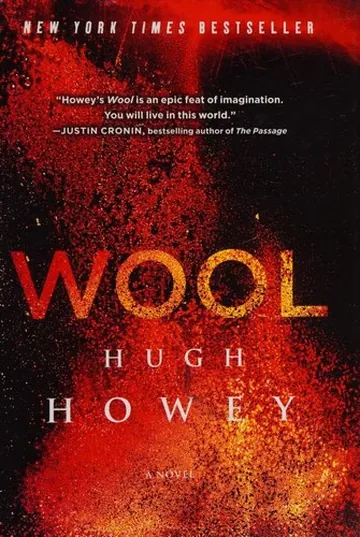
The first page of Wool
The children were playing while Holston climbed to his death; he could hear them squealing as only happy children do. While they thundered about frantically above, Holston took his time, each step methodical and ponderous, as he wound his way around and around the spiral staircase, old boots ringing out on metal treads. The treads, like his father's boots, showed signs of wear. Paint clung to them in feeble chips, mostly in the corners and undersides, where they were safe. Traffic elsewhere on the staircase sent dust shivering off in small clouds. Holston could feel the vibrations in the railing, which was worn down to the gleaming metal. That always amazed him: how centuries of bare palms and shuffling feet could wear down solid steel. One molecule at a time, he supposed. Each life might wear away a single layer, even as the silo wore away that life.
Each step was slightly bowed from generations of traffic, the edge rounded down like a pouting lip. In the center, there was almost no trace of the small diamonds that once gave the treads their grip. Their absence could only be inferred from the pattern to either side, the small pyramidal bumps rising from the flat steel with their crisp edges and flecks of paint.
Continue reading
Holston lifted an old boot to an old step, pressed down, and did it again. He lost himself in what the untold years had done, the ablation of molecules and lives, layers and layers ground to fine dust. And he thought, not for the first time, that neither life nor staircase had been meant for such an existence. The tight confines of that long spiral, threading through the buried silo like a straw in a glass, had not been built for such abuse. Like much of their cylindrical home, it seemed to have been made for other purposes, for functions long since forgotten. What was now used as a thoroughfare for thousands of people, moving up and down in repetitious daily cycles, seemed more apt in Holston’s view to be used only in emergencies and perhaps by mere dozens.
Another floor went by—a pie-shaped division of dormitories. As Holston ascended the last few levels, this last climb he would ever take, the sounds of childlike delight rained down even louder from above. This was the laughter of youth, of souls who had not yet come to grips with where they lived, who did not yet feel the press of the earth on all sides, who in their minds were not buried at all, but alive. Alive and unworn, dripping happy sounds down the stairwell, trills that were incongruous with Holston’s actions, his decision and determination to go outside.
As he neared the upper level, one young voice rang out above the others, and Holston remembered being a child in the silo—all the schooling and the games. Back then, the stuffy concrete cylinder had felt, with its floors and floors of apartments and workshops and hydroponic gardens and purification rooms with their tangles of pipes, like a vast universe, a wide expanse one could never fully explore, a labyrinth he and his friends could get lost in forever.
But those days were more than thirty years distant. Holston’s childhood now felt like something two or three lifetimes ago, something someone else had enjoyed. Not him. He had an entire lifetime as sheriff weighing heavy, blocking off that past. And more recently, there was this third stage of his life—a secret life beyond childhood and being sheriff. It was the last layers of himself ground to dust; three years spent silently waiting for what would never come, each day longer than any month from his happier lifetimes.
At the top of the spiral stairway, Holston’s hand ran out of railing. The curvy bar of worn steel ended as the stairwell emptied into the widest rooms of the entire silo complex: the cafeteria and the adjoining lounge.
“Some elements of Wool work brilliantly: the first two sections are frightening, intriguing and mysterious.”
The Guardian
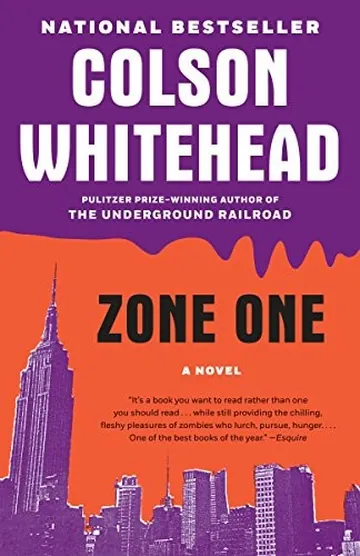
The first page of Zone One
He always wanted to live in New York. His Uncle Lloyd lived downtown on Lafayette, and in the long stretches between visits he daydreamed about living in his apartment. When his mother and father dragged him to the city for that season's agreed-upon exhibit or good-for-you Broadway smash, they usually dropped in on Uncle Lloyd for a quick hello. These afternoons were preserved in a series of photographs taken by strangers. His parents were holdouts in an age of digital multiplicity, raking the soil in lonesome areas of resistance: a coffee machine that didn't tell time, dictionaries made out of paper, a camera that only took pictures. The family camera did not transmit their coordinates to an orbiting satellite. It did not allow them to book airfare to beach resorts with close access to rain forests via courtesy shuttle. There was no prospect of video, high-def or otherwise. The camera was so backward that every lurching specimen his father enlisted from the passersby was able to operate it sans hassle, no matter the depth of cow-eyed vacancy in their tourist faces or local wretchedness inverting their spines.
Continue reading
His family posed on the museum steps or beneath the brilliant marquee with the poster screaming over their left shoulders, always the same composition. The boy stood in the middle, his parents’ hands dead on his shoulders, year after year. He didn’t smile in every picture, only that percentage culled for the photo album. Then it was in the cab to his uncle’s and up the elevator once the doorman screened them. Uncle Lloyd dangled in the doorframe and greeted them with a louche “Welcome to my little bungalow.”
As his parents were introduced to Uncle Lloyd’s latest girlfriend, the boy was down the hall, giddy and squeaking on the leather of the cappuccino sectional and marveling over the latest permutations in home entertainment. He searched for the fresh arrival first thing. This visit it was the wireless speakers haunting the corners like spindly wraiths, the next he was on his knees before a squat blinking box that served as some species of multimedia brainstem. He dragged a finger down their dark surfaces and then huffed on them and wiped the marks with his polo shirt. The televisions were the newest, the biggest, levitating in space and pulsing with a host of extravagant functions diagrammed in the unopened owner’s manuals. His uncle got every channel and maintained a mausoleum of remotes in the storage space inside the ottoman. The boy watched TV and loitered by the glass walls, looking out on the city through smoky anti-UV glass, nineteen stories up.
The reunions were terrific and rote, early tutelage in the recursive nature of human experience. “What are you watching?” the girlfriends asked as they padded in bearing boutique seltzer and chips, and he’d say “The buildings,” feeling weird about the pull the skyline had on him. He was a mote cycling in the wheels of a giant clock. Millions of people tended to this magnificent contraption, they lived and sweated and toiled in it, serving the mechanism of metropolis and making it bigger, better, story by glorious story and idea by unlikely idea. How small he was, tumbling between the teeth. But the girlfriends were talking about the monster movies on TV, the women in the monster movies bolting through the woods or shriveling in the closet trying not to make a sound or vainly flagging down the pickup that might rescue them from the hillbilly slasher. The ones still standing at the credit roll made it through by dint of an obscure element in their character. “I can’t stand these scary stories,” the girlfriends said before returning to the grown-ups, attempting an auntly emanation as if they might be the first of their number promoted to that office. His father’s younger brother was fastidious when it came to expiration dates.
He liked to watch monster movies and the city churning below. He fixed on odd details. The ancient water towers lurking atop obstinate old prewars and, higher up, the massive central-air units that hunkered and coiled on the striving high-rises, glistening like extruded guts. The tar-paper pates of tenements.
“Whitehead transforms the zombie novel into an allegory of contemporary Manhattan…”
Kirkus Reviews
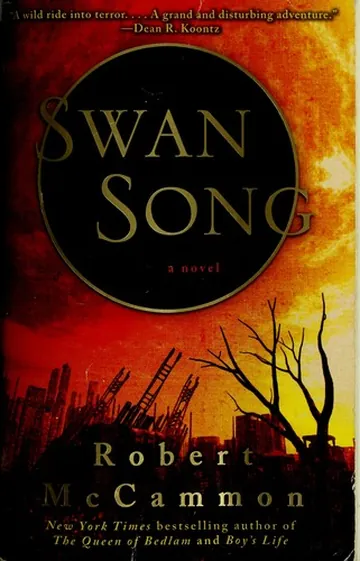
The first page of Swan Song
Once upon a time we had a love affair with fire, the president of the United States thought as the match that he'd just struck to light his pipe flared beneath his fingers.
He stared into it, mesmerized by its color—and as the fire grew he had the vision of a tower of flame a thousand feet tall, whirling across the country he loved, torching cities and towns, turning rivers to steam, ripping across the ruins of heartland farms and casting the ashes of seventy million human beings into a black sky. He watched with dreadful fascination as the flame crawled up the match, and he realized that there, on a tiny scale, was the power of both creation and destruction; it could cook food, illuminate the darkness, melt iron and sear human flesh. Something that resembled a small, unblinking scarlet eye opened in the center of the flame, and he wanted to scream. He had awakened at two in the morning from a nightmare of holocaust; he'd begun crying and couldn't stop, and the first lady had tried to calm him, but he just kept shaking and sobbing like a child. He'd sat in the Oval Office until dawn, going over the maps and top-security reports again and again, but they all said the same thing: First Strike. The fire burned his fingers. He shook the match out and dropped it into the ashtray embossed with the presidential seal in front of him. The thin thread of smoke began to curl up toward the vent of the air-filtration system.
Continue reading
"Sir?" someone said.
He looked up, saw a group of strangers sitting in the Situations Room with him, saw the high-resolution computer map of the world on the screen before him, the array of telephones and video screens set in a semicircle around him like the cockpit of a jet fighter, and he wished to God that someone else could sit in his seat, that he was still just a senator and he didn't know the truth about the world. "Sir?"
He ran his hand across his forehead. His skin felt clammy. Fine time to be coming down with the flu, he thought, and he almost laughed at the absurdity of it. The president gets no sick days, he thought, because a president's not supposed to be sick. He tried to focus on who at the oval table was speaking to him; they were all watching him—the vice-president, nervous and sly; Admiral Narramore, ramrod-straight in his uniform with a chestful of service decorations; General Sinclair, crusty and alert, his eyes like two bits of blue glass in his hard-seamed face; Secretary of Defense Hannan, who looked as kindly as anyone's old grandfather but who was known as "Iron Hans" by both the press corps and his associates; General Chivington, the ranking authority on Soviet military strength; Chief of Staff Bergholz, crewcut and crisp in his ubiquitous dark blue pinstriped suit; and various other military officials and advisors.
"Yes?" the president asked Bergholz.
Hannan reached for a glass of water, sipped from it and said, "Sir? I was asking if you wanted me to go on." He tapped the page of the open report from which he'd been reading.
"Oh." My pipe's gone out, he thought. Didn't I just light it? He looked at the burned match in the ashtray, couldn't remember how it had gotten there. For an instant he saw John Wayne's face in his mind, a scene from some old black-and-white movie he'd seen as a kid; the Duke was saying something about the point of no return. "Yes," the president said. "Go on."
Hannan glanced quickly around the table at the others. They all had copies of the report before them, as well as stacks of other Eyes Only coded reports fresh off the NORAD and SAC communications wires.
Questions
Quick answers
Where is The Road?
It is in our stack of dark dystopian books, with its first page.