Books like The Night Circus, for strange places you want to walk through
The Night Circus arrives overnight in black and white, and Erin Morgenstern writes it so you want to walk through. These five give you other places like that: an underground library, a magical England, a house of endless halls, an island, a menacing forest.
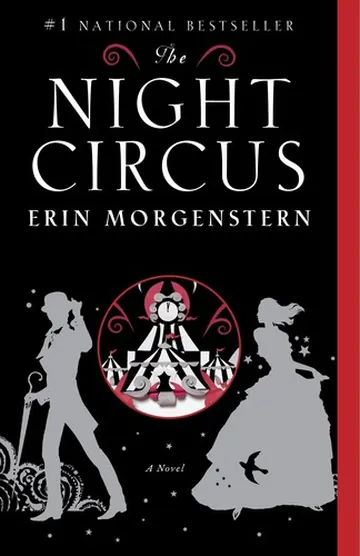
The first page of The Night Circus
The circus arrives without warning. No announcements precede it, no paper notices on downtown posts and billboards, no mentions or advertisements in local newspapers. It is simply there, when yesterday it was not.
The towering tents are striped in white and black, no golds and crimsons to be seen. No color at all, save for the neighboring trees and the grass of the surrounding fields. Black-and-white stripes on grey sky; countless tents of varying shapes and sizes, with an elaborate wrought-iron fence encasing them in a colorless world. Even what little ground is visible from outside is black or white, painted or powdered, or treated with some other circus trick.
But it is not open for business. Not just yet.
Within hours everyone in town has heard about it. By afternoon the news has spread several towns over. Word of mouth is a more effective method of advertisement than typeset words and exclamation points on paper pamphlets or posters. It is impressive and unusual news, the sudden appearance of a mysterious circus. People marvel at the staggering height of the tallest tents. They stare at the clock that sits just inside the gates that no one can properly describe.
Continue reading
And the black sign painted in white letters that hangs upon the gates, the one that reads:
Opens at Nightfall Closes at Dawn "What kind of circus is only open at night?" people ask. No one has a proper answer, yet as dusk approaches there is a substantial crowd of spectators gathering outside the gates.
You are amongst them, of course. Your curiosity got the better of you, as curiosity is wont to do. You stand in the fading light, the scarf around your neck pulled up against the chilly evening breeze, waiting to see for yourself exactly what kind of circus only opens once the sun sets.
The ticket booth clearly visible behind the gates is closed and barred. The tents are still, save for when they ripple ever so slightly in the wind. The only movement within the circus is the clock that ticks by the passing minutes, if such a wonder of sculpture can even be called a clock. The circus looks abandoned and empty. But you think perhaps you can smell caramel wafting through the evening breeze, beneath the crisp scent of the autumn leaves. A subtle sweetness at the edges of the cold.
The sun disappears completely beyond the horizon, and the remaining luminosity shifts from dusk to twilight. The people around you are growing restless from waiting, a sea of shuffling feet, murmuring about abandoning the endeavor in search of someplace warmer to pass the evening. You yourself are debating departing when it happens.
First, there is a popping sound. It is barely audible over the wind and conversation. A soft noise like a kettle about to boil for tea. Then comes the light.
All over the tents, small lights begin to flicker, as though the entirety of the circus is covered in particularly bright fireflies. The waiting crowd quiets as it watches this display of illumination. Someone near you gasps. A small child claps his hands with glee at the sight.
When the tents are all aglow, sparkling against the night sky, the sign appears.
Stretched across the top of the gates, hidden in curls of iron, more firefly-like lights flicker to life. They pop as they brighten, some accompanied by a shower of glowing white sparks and a bit of smoke. The people nearest to the gates take a few steps back. At first, it is only a random pattern of lights.
“Debut author Morgenstern doesn’t miss a beat in this smashing tale of greed, fate, and love set in a turn of the 20th-century circus.”
Publishers Weekly
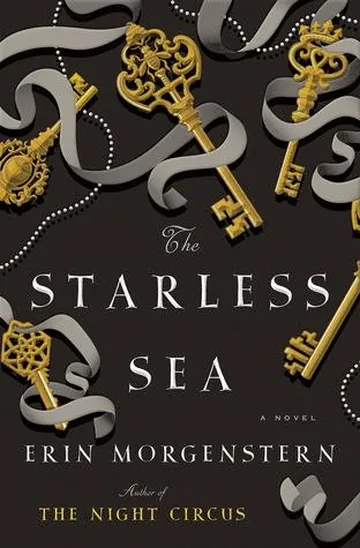
The first page of The Starless Sea
There is a pirate in the basement.
(The pirate is a metaphor but also still a person.)
(The basement could rightly be considered a dungeon.)
The pirate was placed here for numerous acts of a piratey nature considered criminal enough for punishment by those non-pirates who decide such things.
Someone said to throw away the key, but the key rests on a tarnished ring on a hook that hangs on the wall nearby.
(Close enough to see from behind the bars. Freedom kept in sight but out of reach, left as a reminder to the prisoner. No one remembers that now on the key side of the bars. The careful psychological design forgotten, distilled into habit and convenience.)
(The pirate realizes this but withholds comment.)
The guard sits in a chair by the door and reads crime serials on faded paper, wishing he were an idealized, fictional version of himself. Wondering if the difference between pirates and thieves is a matter of boats and hats.
Continue reading
After a time he is replaced by another guard. The pirate cannot discern the precise schedule, as the basement-dungeon has no clocks to mark the time and the sound of the waves on the shore beyond the stone walls muffles the morning chimes, the evening merriment.
This guard is shorter and does not read. He wishes to be no one but himself, he lacks the imagination to conjure alter egos, even the imagination to empathize with the man behind the bars, the only other soul in the room beyond the mice. He pays elaborate amounts of attention to his shoes when he is not asleep. (He is usually asleep.)
Approximately three hours after the short guard replaces the reading guard, a girl comes.
The girl brings a plate of bread and a bowl of water and sets them outside the pirate’s cell with hands shaking so badly that half the water spills. Then she turns and scampers up the stairs.
The second night (the pirate guesses it is night) the pirate stands as close to the bars as he can and stares and the girl drops the bread nearly out of reach and spills the bowl of water almost entirely.
The third night the pirate stays in the shadows of the back corner and manages to keep most of his water.
The fourth night a different girl comes.
This girl does not wake the guard. Her feet fall more softly on the stones and any sound they make is stolen away by the waves or by the mice.
This girl stares into the shadows at the barely visible pirate, gives a little disappointed sigh, and places the bread and bowl by the bars. Then she waits.
The pirate remains in the shadows.
After several minutes of silence punctuated by the guard’s snoring, the girl turns away and leaves.
When the pirate retrieves his meal he finds the water has been mixed with wine.
The next night, the fifth night if it is night at all, the pirate waits by the bars for the girl to descend on her silent feet.
Her steps halt only briefly when she sees him.
The pirate stares and the girl stares back.
He holds out a hand for his bowl and his bread but the girl places them on the ground instead, her eyes never leaving his, not allowing so much as the hem of her gown to drift into his reach. Bold yet coy. She gives him a hint of a bow as she returns to her feet, a gentle nod of her head, a movement that reminds him of the beginning of the dance.
(Even a pirate can recognize the beginning of a dance.)
The next night the pirate stays back from the bars, a polite distance that could be closed in a single step, and the girl comes a breath closer.
Another night and the dance continues.
“As in The Night Circus, Morgenstern is at her best when she imagines worlds and rooms and parties in vivid detail…”
Kirkus Reviews
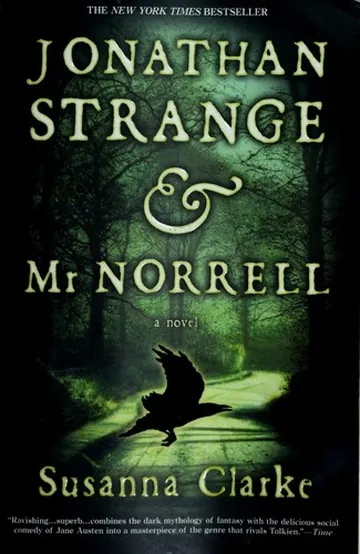
The first page of Jonathan Strange & Mr Norrell
Some years ago there was in the city of York a society of magicians. They met upon the third Wednesday of every month and read each other long, dull papers upon the history of English magic.
They were gentleman-magicians, which is to say they had never harmed any one by magic – nor ever done any one the slightest good. In fact, to own the truth, not one of these magicians had ever cast the smallest spell, nor by magic caused one leaf to tremble upon a tree, made one mote of dust to alter its course or changed a single hair upon any one’s head. But, with this one minor reservation, they enjoyed a reputation as some of the wisest and most magical gentlemen in Yorkshire.
A great magician has said of his profession that its practitioners “... must pound and rack their brains to make the least learning go in, but quarrelling always comes very naturally to them,” and the York magicians had proved the truth of this for a number of years.
Continue reading
In the autumn of 1806 they received an addition in a gentleman called John Segundus. At the first meeting that he attended Mr Segundus rose and addressed the society. He began by complimenting the gentlemen upon their distinguished history; he listed the many celebrated magicians and historians that had at one time or another belonged to the York society. He hinted that it had been no small inducement to him in coming to York to know of the existence of such a society. Northern magicians, he reminded his audience, had always been better respected than southern ones. Mr Segundus said that he had studied magic for many years and knew the histories of all the great magicians of long ago. He read the new publications upon the subject and had even made a modest contribution to their number, but recently he had begun to wonder why the great feats of magic that he read about remained on the pages of his book and were no longer seen in the street or written about in the newspapers. Mr Segundus wished to know, he said, why modern magicians were unable to work the magic they wrote about. In short, he wished to know why there was no more magic done in England.
It was the most commonplace question in the world. It was the question which, sooner or later, every child in the kingdom asks his governess or his schoolmaster or his parent. Yet the learned members of the York society did not at all like hearing it asked and the reason was this: they were no more able to answer it than any one else.
The President of the York society (whose name was Dr Foxcastle) turned to John Segundus and explained that the question was a wrong one. “It presupposes that magicians have some sort of duty to do magic – which is clearly nonsense. You would not, I imagine, suggest that it is the task of botanists to devise more flowers? Or that astronomers should labour to re-arrange the stars? Magicians, Mr Segundus, study magic which was done long ago. Why should any one expect more?”
An elderly gentleman with faint blue eyes and faintly-coloured clothes (called either Hart or Hunt – Mr Segundus could never quite catch the name) faintly said that it did not matter in the least whether any body expected it or not. A gentleman could not do magic. Magic was what street sorcerers pretended to do in order to rob children of their pennies. Magic (in the practical sense) was much fallen off. It had low connexions. It was the bosom companion of unshaven faces, gypsies, house-breakers; the frequenter of dingy rooms with dirty yellow curtains. Oh no! A gentleman could not do magic. A gentleman might study the history of magic (nothing could be nobler) but he could not do any. The elderly gentleman looked with faint, fatherly eyes at Mr Segundus and said that he hoped Mr Segundus had not been trying to cast spells.
Mr Segundus blushed.
“…an eerie world of signs and wonders where every object may have secret meaning.”
Publishers Weekly
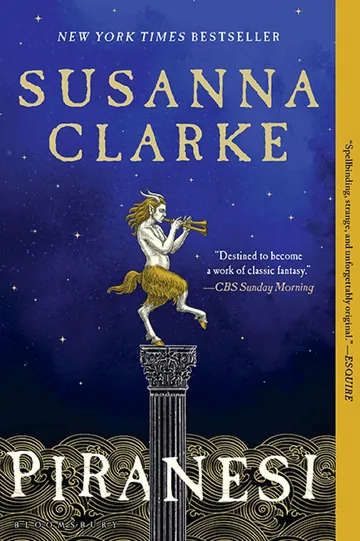
The first page of Piranesi
When the Moon rose in the Third Northern Hall I went to the Ninth Vestibule to witness the joining of three Tides. This is something that happens only once every eight years.
The Ninth Vestibule is remarkable for the three great Staircases it contains. Its Walls are lined with marble Statues, hundreds upon hundreds of them, Tier upon Tier, rising into the distant heights.
I climbed up the Western Wall until I reached the Statue of a Woman carrying a Beehive, fifteen metres above the Pavement. The Woman is two or three times my own height and the Beehive is covered with marble Bees the size of my thumb. One Bee — this always gives me a slight sensation of queasiness — crawls over her left Eye. I squeezed Myself into the Woman’s Niche and waited until I heard the Tides roaring in the Lower Halls and felt the Walls vibrating with the force of what was about to happen.
Continue reading
First came the Tide from the Far Eastern Halls. This Tide ascended the Easternmost Staircase without violence. It had no colour to speak of and its Waters were no more than ankle deep. It spread a grey mirror across the Pavement, the surface of which was marbled with streaks of milky Foam.
Next came the Tide from the Western Halls. This Tide thundered up the Westernmost Staircase and hit the Eastern Wall with a great Clap, making all the Statues tremble. Its Foam was the white of old fishbones, and its churning depths were pewter. Within seconds its Waters were as high as the Waists of the First Tier of Statues.
Last came the Tide from the Northern Halls. It hurled itself up the middle Staircase, filling the Vestibule with an explosion of glittering, ice-white Foam. I was drenched and blinded. When I could see again Waters were cascading down the Statues. It was then that I realised I had made a mistake in calculating the volumes of the Second and Third Tides. A towering Peak of Water swept up to where I crouched. A great Hand of Water reached out to pluck me from the Wall. I flung my arms around the Legs of the Woman carrying a Beehive and prayed to the House to protect me. The Waters covered me and for a moment I was surrounded by the strange silence that comes when the Sea sweeps over you and drowns its own sounds. I thought that I was going to die; or else that I would be swept away to Unknown Halls, far from the rush and thrum of Familiar Tides. I clung on.
Then, just as suddenly as it began, it was over. The Joined Tides swept on into the surrounding Halls. I heard the thunder and crack as the Tides struck the Walls. The Waters in the Ninth Vestibule sank rapidly down until they barely covered the Plinths of the First Tier of Statues.
I realised that I was holding on to something. I opened my hand and found a marble Finger from some Faraway Statue that the Tides had placed there.
“Clarke imagines where all that magic goes when it leaves our world and what it would be like to be trapped in that place.”
Kirkus Reviews
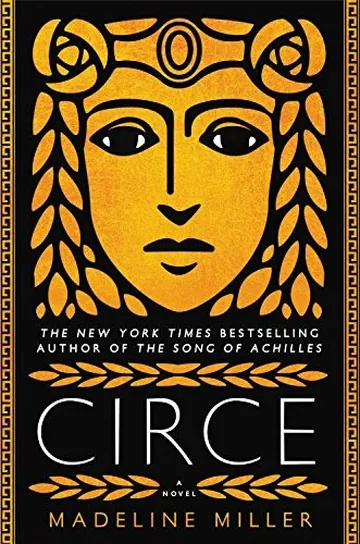
The first page of Circe
When I was born, the name for what I was did not exist. They called me nymph, assuming I would be like my mother and aunts and thousand cousins. Least of the lesser goddesses, our powers were so modest they could scarcely ensure our eternities. We spoke to fish and nurtured flowers, coaxed drops from the clouds or salt from the waves. That word, nymph, paced out the length and breadth of our futures. In our language, it means not just goddess, but bride.
My mother was one of them, a naiad, guardian of fountains and streams. She caught my father’s eye when he came to visit the halls of her own father, Oceanos. Helios and Oceanos were often at each other’s tables in those days. They were cousins and equal in age, though they did not look it. My father glowed bright as just-forged bronze, while Oceanos had been born with rheumy eyes and a white beard to his lap. Yet they were both Titans, and preferred each other’s company to those new-squeaking gods upon Olympus who had not seen the making of the world.
Continue reading
Oceanos’ palace was a great wonder, set deep in the earth’s rock. Its high-arched halls were gilded, the stone floors smoothed by centuries of divine feet. Through every room ran the faint sound of Oceanos’ river, source of the world’s fresh waters, so dark you could not tell where it ended and the rock-bed began. On its banks grew grass and soft grey flowers, and also the unnumbered children of Oceanos, naiads and nymphs and river-gods. Otter-sleek, laughing, their faces bright against the dusky air, they passed golden goblets among themselves and wrestled, playing games of love. In their midst, outshining all that lily beauty, sat my mother.
Her hair was a warm brown, each strand so lustrous it seemed lit from within. She would have felt my father’s gaze hot as gusts from a bonfire. I see her arrange her dress so it drapes just so over her shoulders. I see her dab her fingers, glinting, in the water. I have seen her do a thousand such tricks a thousand times. My father always fell for them. He believed the world’s natural order was to please him.
‘Who is that?’ my father said to Oceanos.
Oceanos had many golden-eyed grandchildren from my father already, and was glad to think of more. ‘My daughter Perse. She is yours if you want her.’
The next day, my father found her by her fountain-pool in the upper world. It was a beautiful place, crowded with fat-headed narcissus, woven over with oak branches. There was no muck, no slimy frogs, only clean, round stones giving way to grass. Even my father, who cared nothing for the subtleties of nymph arts, admired it.
My mother knew he was coming. Frail she was, but crafty, with a mind like a spike-toothed eel. She saw where the path to power lay for such as her, and it was not in bastards and riverbank tumbles. When he stood before her, arrayed in his glory, she laughed. Lie with you? Why should I?
My father, of course, might have taken what he wanted. But Helios flattered himself that all women went eager to his bed, slave girls and divinities alike. His altars smoked with the proof, offerings from big-bellied mothers and happy by-blows.
‘It is marriage,’ she said to him, ‘or nothing. And if it is marriage, be sure: you may have what girls you like in the field, but you will bring none home, for only I will hold sway in your halls.’
Conditions, constrainment. These were novelties to my father, and gods love nothing more than novelty. ‘A bargain,’ he said, and gave her a necklace to seal it, one of his own making, strung with beads of rarest amber. Later, when I was born, he gave her a second strand, and another for each of my three siblings. I do not know which she treasured more: the luminous beads themselves, or the envy of her sisters when she wore them. I think she would have gone right on collecting them into eternity until they hung from her neck like a yoke on an ox if the high gods had not stopped her. By then they had learned what the four of us were. You may have other children, they told her, only not with him. But other husbands did not give amber beads. It was the only time I ever saw her weep.
“Miller makes Homer pertinent to women facing 21st-century monsters.”
Kirkus Reviews
Content note: sexual violence
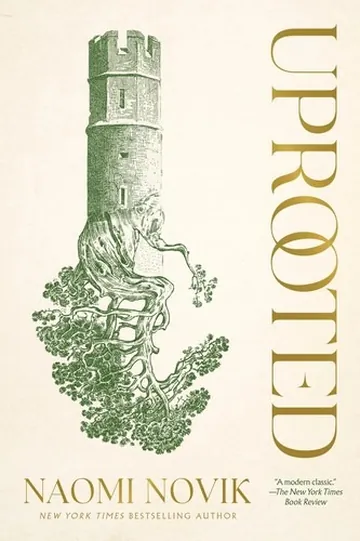
The first page of Uprooted
Our Dragon doesn't eat the girls he takes, no matter what stories they tell outside our valley. We hear them sometimes, from travelers passing through. They talk as though we were doing human sacrifice, and he were a real dragon. Of course that's not true: he may be a wizard and immortal, but he's still a man, and our fathers would band together and kill him if he wanted to eat one of us every ten years. He protects us against the Wood, and we're grateful, but not that grateful.
He doesn't devour them really; it only feels that way. He takes a girl to his tower, and ten years later he lets her go, but by then she's someone different. Her clothes are too fine and she talks like a courtier and she’s been living alone with a man for ten years, so of course she’s ruined, even though the girls all say he never puts a hand on them. What else could they say? And that’s not the worst of it—after all, the Dragon gives them a purse full of silver for their dowry when he lets them go, so anyone would be happy to marry them, ruined or not.
Continue reading
But they don’t want to marry anyone. They don’t want to stay at all.
“They forget how to live here,” my father said to me once, unexpectedly. I was riding next to him on the seat of the big empty wagon, on our way home after delivering the week’s firewood. We lived in Dvernik, which wasn’t the biggest village in the valley or the smallest, or the one nearest the Wood: we were seven miles away. The road took us up over a big hill, though, and at the top on a clear day you could see along the river all the way to the pale grey strip of burned earth at the leading edge, and the solid dark wall of trees beyond. The Dragon’s tower was a long way in the other direction, a piece of white chalk stuck in the base of the western mountains.
I was still very small—not more than five, I think. But I already knew that we didn’t talk about the Dragon, or the girls he took, so it stuck in my head when my father broke the rule.
“They remember to be afraid,” my father said. That was all.
Then he clucked to the horses and they pulled on, down the hill and back into the trees.
It didn’t make much sense to me. We were all afraid of the Wood. But our valley was home. How could you leave your home?
And yet the girls never came back to stay. The Dragon let them out of the tower, and they came back to their families for a little while—for a week, or sometimes a month, never much more. Then they took their dowry-silver and left. Mostly they would go to Kralia and go to the University. Often as not they married some city man, and otherwise they became scholars or shopkeepers, although some people did whisper about Jadwiga Bach, who’d been taken sixty years ago, that she became a courtesan and the mistress of a baron and a duke. But by the time I was born, she was just a rich old woman who sent splendid presents to all her grandnieces and nephews, and never came for a visit.
So that’s hardly like handing your daughter over to be eaten, but it’s not a happy thing, either.
“…familiar as a Grimm fairy tale yet fresh, original, and totally irresistible.”
Publishers Weekly
Questions
Quick answers
What should I read after The Night Circus?
For two rival magicians in a version of 1800s England, Jonathan Strange & Mr Norrell. By the same author, The Starless Sea. For a strange, dreamlike house, Piranesi.
Which is the most like The Night Circus?
It depends what you loved. Jonathan Strange & Mr Norrell shares its rival-magicians plot, The Starless Sea shares the author’s lyrical, nested storytelling, and Piranesi shares the sense of a strange place you want to walk through.